Bible Quotes About Strength: Hope for Hard Times
You are reading this because something in your life has taken more out of you than you have left to give. Maybe it’s a diagnosis, a financial collapse, a relationship that fell apart, or a grief that hasn’t loosened its grip. When that happens, people search for bible quotes about strength not because they want a pretty verse to post, but because they need something steady to hold onto when their own strength has run out. This article goes further than a list of verses. You’ll find the historical context behind each major passage, the original Hebrew and Greek meaning of “strength,” a translation guide for the King James Version’s older language, and practical frameworks for applying these verses to a hard season.

By the end, you’ll understand not just what these verses say, but why they were written, who first needed them, and how they were meant to be lived out.
Structural Strength: Bible Quotes for Resiliency in Hard Times
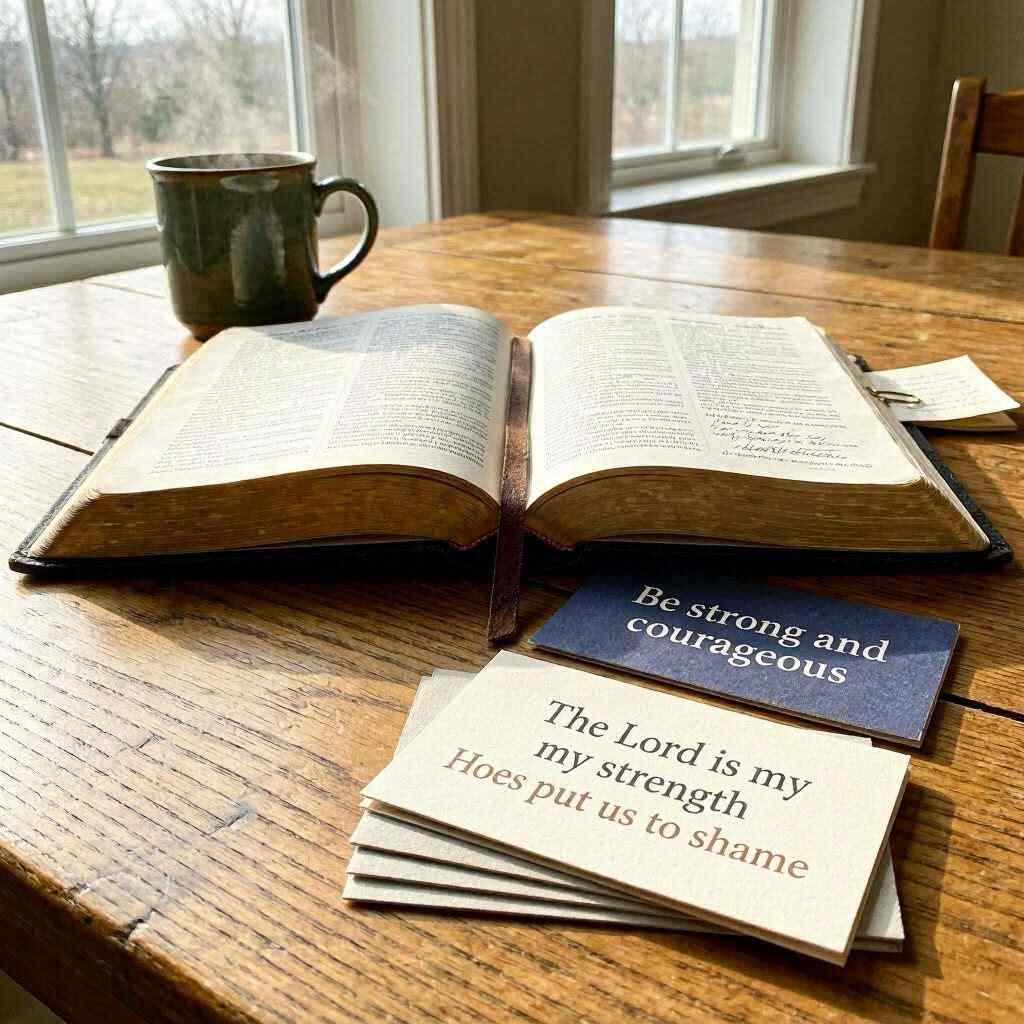
When life puts you under pressure you didn’t choose, bible quotes about strength in hard times function less like decoration and more like structural support — verses meant to hold weight, not just sound nice. Many of these passages were not written from a place of comfort. They came out of exile, illness, betrayal, and loss, which is exactly why they still speak to people in crisis today.
Take Isaiah 40:31, one of the most quoted strength verses in Scripture: those who wait on the Lord will renew their strength, rising like eagles, running without growing weary, walking without fainting. This was not written to a comfortable nation. Isaiah spoke this promise to a people facing the Babylonian exile — forced displacement, the loss of their homeland, and decades of uncertainty about whether they would ever return. The original audience wasn’t looking for motivation; they were looking for evidence that they hadn’t been abandoned. Strength, in this context, wasn’t about gritting your teeth and pushing through. It was about reorienting your dependence away from your own depleted resources and toward something that doesn’t run out.
Psalm 46:1 offers a different angle: God is described as a refuge and strength, a very present help in trouble. Scholars generally connect this psalm to a season of national threat in Jerusalem, possibly during an invasion crisis, when the city itself felt unstable. The Hebrew word translated “very present” carries the sense of being found, readily available, not distant or delayed. That distinction matters for someone in crisis today. A lot of suffering is compounded by the fear that help is far away or slow to arrive. This verse was written specifically to counter that fear.
Then there is Philippians 4:13, frequently quoted and just as frequently misunderstood: “I can do all things through Christ which strengtheneth me.” Paul did not write this from a position of comfort or achievement. He wrote it from prison, in a passage where he had just finished describing how he had learned to be content whether he had plenty or nothing at all. The “all things” he’s describing isn’t athletic victory or career success — it’s the capacity to endure both abundance and lack without being undone by either. Stripped of its context, the verse becomes a slogan. Read in context, it becomes a survival tool for anyone whose circumstances are outside their control.
What almost no competing resource explains clearly is the psychology behind why people reach for these verses in the first place. Grief, chronic illness, financial collapse, and burnout all share a common feature: they overwhelm a person’s sense of personal capability. The mind, under that kind of pressure, starts asking a very specific question — not “how do I fix this” but “do I have what it takes to survive this.” Biblical strength language answers that second question directly. It does not promise that circumstances will improve on a timeline you control. It promises that your capacity to endure is not limited to your own reserves. That reframing is often what allows a grieving or exhausted person to take the next step, even when the larger problem remains unsolved.
It’s also worth being honest about something most devotional content avoids: joy and suffering are not opposites in Scripture the way they are in casual conversation. James 1:2-4 instructs believers to count trials as joy, not because suffering itself is pleasant, but because of what endurance produces — maturity, completeness, and a kind of resilience that comfort alone cannot build. This is not toxic positivity, and it should never be presented that way. The text doesn’t ask anyone to pretend pain doesn’t hurt. It asks the reader to trust that pain isn’t wasted, which is a very different claim.
Hard Times Crisis Navigation Matrix
Different crises call for different starting points. Use this table to find the verse, context, and lesson that matches what you’re actually facing right now.
| Crisis Type | Primary Verse | Historical Context | Core Strength Lesson | Practical Application |
|---|---|---|---|---|
| Grief | Psalm 34:18 — “The Lord is nigh unto them that are of a broken heart.” | Written by David during a period of personal danger and emotional collapse, when he feared for his life. | Nearness, not explanation, is the promise. God draws close to brokenness rather than waiting for it to resolve. | Stop searching for a reason your loss happened. Instead, name the grief out loud in prayer and allow yourself to sit in it without rushing toward resolution. |
| Financial Distress | Philippians 4:19 — “My God shall supply all your need.” | Paul wrote this thanking the Philippian church for financial support sent to him while he was imprisoned and dependent on others. | Provision is framed as relational, not transactional — it comes through community as often as through circumstance. | Identify one practical need this week and ask for help from your community rather than carrying the pressure alone. |
| Relational Breakdown | Psalm 147:3 — “He healeth the broken in heart, and bindeth up their wounds.” | Part of a psalm of communal restoration written after the Israelites returned from exile and were rebuilding a fractured community. | Healing is described as active, not passive — wounds are bound up, not simply left to heal on their own. | Take one concrete step toward reconciliation or boundary-setting this week, rather than waiting for the relationship to resolve itself. |
| Chronic Illness | 2 Corinthians 4:16 — “Though our outward man perish, yet the inward man is renewed day by day.” | Paul wrote this while describing physical hardships so severe he elsewhere called them a “thorn in the flesh” that was never removed. | Strength is decoupled from physical healing. Inner renewal is presented as a daily process, not a one-time event. | Build one small daily practice — prayer, journaling, or quiet reflection — that renews you regardless of how your body feels that day. |
If you take one thing from this section, let it be this: biblical strength was never marketed as the absence of struggle. It was offered as companionship inside the struggle, and that distinction should shape how you read every verse that follows.
Foundational Bible Verse Quotes on Inner Fortitude
Beyond the headline verses, a handful of foundational bible verse quotes about strength describe what’s happening internally when someone endures hardship without collapsing. These verses matter because resilience isn’t a single dramatic moment — it’s usually a quiet, repeated choice made under pressure no one else sees.
Psalm 73:26 captures this honestly: “My flesh and my heart faileth: but God is the strength of my heart and my portion for ever.” The psalmist isn’t claiming invulnerability. He’s admitting collapse — flesh and heart both failing — while pointing to something underneath that collapse that hasn’t given out. This is an important distinction for anyone who feels guilty about how tired or fragile they currently are. The verse doesn’t require you to feel strong. It locates strength somewhere other than your own emotional state.
Habakkuk 3:19 offers a vivid image of internal endurance: “The Lord God is my strength, and he will make my feet like hinds’ feet, and he will make me to walk upon mine high places.” Habakkuk wrote this after wrestling openly with God over the injustice and violence he saw around him — the verse comes at the end of a prayer that starts in complaint, not confidence. The image of a deer’s feet refers to sure-footed movement across dangerous, uneven terrain. Endurance here isn’t about avoiding difficult ground. It’s about being equipped to move across it without falling.
Nehemiah 8:10 adds another dimension: “the joy of the Lord is your strength.” This was spoken to a community that had just returned from exile and was weeping as they heard the Law read aloud, overwhelmed by how far they’d drifted. Nehemiah’s response wasn’t to deepen their grief but to redirect them toward joy as a source of fortitude, not a reward for already being strong. Internal resilience, across these passages, is consistently described as something received and renewed, not something manufactured through willpower alone.
The Indivisible Bond of Biblical Strength and Courage
Scripture rarely treats strength and courage as separate qualities. Bible quotes about strength and courage are almost always paired in the same verse, which tells you something important: biblical courage isn’t raw bravery generated from confidence. It’s a response that becomes possible once a person trusts that they aren’t facing a threat alone.
The clearest example is Joshua 1:9: “Be strong and of a good courage; be not afraid, neither be thou dismayed: for the Lord thy God is with thee whithersoever thou goest.” This command was given to Joshua at the most vulnerable moment of his leadership — Moses had just died, and Joshua was about to lead an entire nation into hostile, unfamiliar territory with no precedent to follow. The command to be strong and courageous isn’t generic encouragement. It’s tactical instruction issued to someone facing a specific, terrifying transition of responsibility. What’s easy to miss is the reasoning clause that follows: courage is commanded because of presence, not because the danger has been minimized. Joshua wasn’t told the conquest would be easy. He was told he wouldn’t be doing it alone.
This pattern repeats throughout the conquest narrative. Joshua 1:6-7 and 1:9 form a deliberate three-part repetition of the same command, which biblical scholars often note as a literary signal of urgency — God doesn’t say it once and move on; the instruction is reinforced because fear doesn’t dissolve after a single reassurance. That repetition is itself instructive. Courage in Scripture is rarely framed as an instant transformation. It’s framed as something that needs to be reaffirmed, often multiple times, before it actually takes hold in a person’s actions.
Deuteronomy 31:6 extends the same logic to the entire community Joshua was leading: “Be strong and of a good courage, fear not, nor be afraid of them: for the Lord thy God, he it is that doth go with thee; he will not fail thee, nor forsake thee.” The phrase “he will not fail thee, nor forsake thee” directly answers the deepest fear behind most hesitation — not fear of difficulty itself, but fear of facing difficulty abandoned. This is why biblical courage so rarely shows up as adrenaline-driven bravado. It shows up as people taking the next difficult step because they’ve concluded they are not facing it solo.
What happens when courage fails — and it does, even for people the Bible holds up as faithful — is just as instructive as what happens when it succeeds. Elijah, after one of the most dramatic spiritual victories in the Old Testament, collapses into fear and despair almost immediately afterward in 1 Kings 19, fleeing for his life and asking God to let him die. Scripture doesn’t treat this as a moral failure to be glossed over. God’s response to Elijah isn’t a rebuke — it’s food, rest, and a quiet conversation. That sequence matters for modern readers who equate courage with consistency. Biblical courage was never presented as a permanent state achieved once and maintained forever. It was presented as something renewed, sometimes after rest and basic care, not after a pep talk.
Strength-Courage Feedback Loop
Biblical courage doesn’t appear out of nowhere — it follows a recognizable pattern across multiple narratives. Use this framework to identify where you currently are in the cycle.
Step 1: Divine Promise.
Every instance of biblical courage begins with a stated assurance — a promise that the person is not facing their circumstance alone. For Joshua, this was God’s explicit commitment to go with him. For you, this might mean returning to a specific verse or promise that addresses your exact fear, rather than searching for general encouragement.
Step 2: Internal Belief.
A promise only becomes useful once it’s actually trusted, not just heard. This step is often the hardest, because belief under pressure doesn’t arrive instantly — it usually requires repetition, the way Joshua needed to hear the same command three times before stepping forward.
Step 3: Courageous Action.
Belief that doesn’t move into action stays theoretical. Joshua’s courage became real the moment he led the people across the Jordan, not while he was still standing on the riverbank. If you’re stuck at this step, identify the smallest possible action that would count as movement, not the largest.
Step 4: Reinforced Faith.
Action under pressure, even imperfect action, tends to confirm whether the promise from Step 1 was reliable. This is where trust deepens — not through abstract reflection, but through lived evidence that the promise held.
Step 5: Increased Strength.
Reinforced faith builds capacity for the next challenge, which is why courage in Scripture tends to compound over a person’s life rather than appearing as a single peak experience. If you can identify where you currently sit in this loop, you can name exactly what’s missing — whether it’s a promise you haven’t returned to, a belief you haven’t tested, or an action you’ve been avoiding.
Empowered by Love: The Ultimate Motivation Behind True Strength
It’s easy to treat courage and love as unrelated virtues, but bible quotes about strength and love consistently present love as the actual engine behind sustained courage, not a separate, softer quality alongside it.
1 Corinthians 16:13-14 places the two side by side deliberately: “Watch ye, stand fast in the faith, quit you like men, be strong. Let all your things be done with charity.” Paul doesn’t present strength and love as competing priorities — strength is the posture, and love is the substance that gives the posture its purpose. Strength without love, in this framing, risks becoming hardness; love without strength risks becoming passivity that can’t withstand pressure.
1 John 4:18 goes further, describing a direct mechanical relationship between the two: “perfect love casteth out fear: because fear hath torment.” This isn’t poetic language — it’s a causal claim. Fear is described as a form of torment specifically because it anticipates punishment or loss, and love that is fully trusted removes that anticipation. For someone whose courage keeps collapsing under fear, this verse suggests the missing ingredient isn’t more willpower. It’s a deeper confidence in being loved unconditionally, which removes the threat fear is reacting to in the first place.
This dynamic shows up concretely in sacrificial courage throughout Scripture — Ruth’s decision to stay with Naomi despite having every reason to return to safety and security in her homeland, or the courage described in John 15:13, where laying down one’s life for a friend is named as the greatest expression of love. In both cases, courage isn’t generated by confidence in personal strength. It’s generated by attachment strong enough to outweigh the cost of acting. If you’re trying to build courage in a hard season, this section suggests starting somewhere unexpected: not by trying to feel braver, but by reconnecting with what or who you actually love enough to act for.
When Weakness Becomes Strength: The Bible’s Greatest Paradox
Modern self-help culture treats weakness as a problem to overcome on the way to strength. Scripture, particularly in Paul’s writing, treats weakness as the actual location where strength is found — not the obstacle before it, but the doorway into it. This is one of the most theologically significant and least understood threads connected to bible quotes about strength, and almost no competing article addresses it with any depth.
The clearest articulation comes from 2 Corinthians 12:9-10, where Paul describes pleading three times for God to remove an unnamed “thorn in the flesh” — a chronic affliction scholars have debated for centuries, ranging from a physical ailment to ongoing persecution. The thorn was never removed. Instead, Paul records God’s response: “My grace is sufficient for thee: for my strength is made perfect in weakness.” Paul’s reaction to this is striking — he doesn’t grudgingly accept it; he says he will “rather glory” in his weaknesses, “that the power of Christ may rest upon” him. This is not resignation. It’s a deliberate reframing of where strength actually originates.
This matters enormously for anyone who has prayed repeatedly for a hardship to be removed and watched it remain. Competing content almost universally avoids this passage because it complicates the simpler, more marketable promise that faith removes obstacles. The honest biblical pattern is more complicated and, for many readers, more useful: some thorns stay. The theology here doesn’t promise removal. It promises sufficiency — that grace meets the exact size of the ongoing need, not that the need disappears.
Philippians 4:13 belongs in this conversation too, and it deserves direct correction here. As mentioned earlier, this verse is frequently lifted out of its context — printed on athletic gear, used to promise success in competition or business — when its actual context is contentment amid both abundance and lack, written from prison. The “all things” Paul references in the surrounding verses are specifically the capacity to be “abased” and to “abound,” to know both “how to be full and how to be hungry.” Misapplying this verse to guarantee achievement sets people up for confusion or spiritual crisis when hard work doesn’t produce the promised outcome. Understood correctly, it’s a far more durable promise: the capacity to remain steady regardless of which direction circumstances move.
The Greek word behind much of Paul’s strength language is dunamis, the root of the English word “dynamite” — it conveys not gentle encouragement but explosive, inherent power. When Paul writes that Christ’s strength is “made perfect in weakness,” the Greek construction suggests that weakness isn’t merely tolerated by this power — it’s the specific condition under which the power reaches its full expression. This isn’t a minor linguistic detail. It reframes the entire emotional experience of feeling depleted. Exhaustion, in this theological framework, isn’t a sign that you’ve run out of what you need. It’s described as the precise condition under which a different, non-self-generated power becomes available.
None of this should be flattened into easy comfort. The honest weight of this paradox is that it asks something difficult: surrender, not triumph, as the starting point. That’s a hard sell in a culture that prizes self-sufficiency, and Scripture doesn’t pretend otherwise. Paul’s own language — pleading three times, only to be told no — reflects real wrestling, not instant peace.
Weakness-to-Strength Transformation Framework
This five-step framework traces the pattern Paul describes, moving from depletion to empowerment without skipping the difficult middle steps.
Step 1: Human Limitation.
This is the starting point everyone resists naming — the honest acknowledgment that your own resources, willpower, or resilience have reached their limit. Paul names his limitation directly rather than minimizing it, which models something important: admitting limitation isn’t a spiritual failure, it’s a prerequisite for what follows. Most people stall here because they keep trying to solve the limitation through sheer effort rather than naming it plainly.
Step 2: Surrender.
Surrender is not passivity — it’s the deliberate decision to stop relying exclusively on personal capability. Paul’s three prayers for the thorn’s removal show that surrender often isn’t instant; it can follow repeated requests for a different outcome before the person stops fighting the limitation itself. If you’re in this step, expect resistance. Wanting the hard thing removed is not a lack of faith.
Step 3: Grace Reception.
Grace, in this framework, is received rather than earned — it’s the “sufficient” provision God names in response to Paul’s thorn. This step often feels anticlimactic compared to what people expect; grace rarely arrives as a dramatic rescue. It tends to arrive as just enough capacity for today, not a permanent solution to the underlying problem.
Step 4: Divine Empowerment.
This is where dunamis becomes active — strength that operates through, not despite, the limitation named in Step 1. Empowerment at this stage doesn’t remove the thorn; it changes what the thorn is capable of doing to the person carrying it.
Step 5: Resilient Living.
The final step isn’t a return to pre-crisis normalcy — it’s a new, more durable way of functioning that has integrated the limitation rather than waiting for its removal. Paul continued his ministry, the thorn still present, operating from a stability that didn’t depend on the problem going away. If you’ve been waiting for your circumstance to resolve before you can function again, this final step suggests a different possibility: function built around the limitation, not after it.
Classical Majesty: KJV Bible Quotes About Strength and Power
The King James Version remains the most frequently searched translation for kjv bible quotes about strength, and there’s a reason its language has endured for over four centuries — the imagery it uses for protection and power is dense, layered, and largely unfamiliar to modern readers, which means most people quote it without fully understanding what it’s saying.
Psalm 18:2 stacks several of these images together: “The Lord is my rock, and my fortress, and my deliverer; my God, my strength, in whom I will trust; my buckler, and the horn of my salvation, and my high tower.” David wrote this psalm, according to its superscription, after he had been delivered from Saul and from his enemies — a season defined by years of fleeing, hiding in caves, and surviving on the run rather than ruling securely. Every image in that verse reflects something a fugitive would have needed: a fortress for shelter, a buckler for defense, a high tower for visibility and safety. This wasn’t abstract poetry to David. It was a literal inventory of what kept him alive.
Two Hebrew words sit underneath much of this strength vocabulary: chazak, which conveys being made firm, strong, or courageous — often used as a command, as in “be strong” — and koach, which refers more to inherent power or capacity, the kind of strength something possesses rather than is given in a moment. Recognizing the difference matters. When Joshua is commanded to be chazak, it’s an instruction to actively steady himself. When the psalmist describes God as his koach, it’s describing an inherent reserve of power being made available to him. The KJV’s English often uses “strength” for both words, flattening a distinction the original language preserved.
Archaic Term Translation Decoder
Use this table to translate the King James Version’s older protective imagery into language that carries the same emotional weight today.
| KJV Term | Literal Meaning | Modern Equivalent | Emotional Meaning | Example Verse |
|---|---|---|---|---|
| Fortress | A fortified structure built for defense against siege or attack | A secure stronghold; a safe house | Unshakeable protection in active danger | Psalm 18:2 |
| Refuge | A place of shelter from pursuit or storm | A safe haven; sanctuary | Relief and rest from being chased or exposed | Psalm 46:1 |
| Buckler | A small, handheld shield used to deflect close-range blows | Personal protective gear; a shield against immediate threats | Defense against attacks aimed directly at you | Psalm 18:2 |
| High Tower | An elevated fortified position offering visibility and safety | A watchtower or lookout point above danger | Perspective and safety from above the threat | Psalm 18:2 |
| Stronghold | A fortified place that is extremely difficult to capture | An impenetrable safe place | Security so complete it cannot be breached | Psalm 27:1 |
| Deliverer | One who actively rescues someone from captivity or danger | A rescuer; someone who intervenes directly | Active rescue, not passive sympathy | Psalm 18:2 |
| Shield | A protective barrier carried into battle | Armor; a defensive barrier | Protection that moves with you into conflict | Psalm 28:7 |
| Rock | A massive, immovable stone formation, often used for elevated refuge in the wilderness | A stable, unmovable foundation | Permanence and reliability that doesn’t shift | Psalm 18:2 |
This wasn’t poetic flourish for an ancient audience. People in David’s world genuinely fled to literal rocks, caves, and fortified high ground to survive. The emotional resonance of these verses comes from the fact that the protection being described was concrete and physical before it became spiritual metaphor — readers weren’t being asked to imagine an abstraction. They were being reminded of something they’d actually depended on to stay alive.
Translation differences across versions aren’t a sign of unreliability — they reflect genuine decisions about how to render Hebrew and Greek concepts that don’t map cleanly onto single English words. The KJV tends to preserve more of the original imagery, even when it requires unfamiliar vocabulary, while modern translations often prioritize immediate clarity over preserving that imagery. Neither approach is wrong; they serve different purposes. Knowing this can relieve a common, unspoken anxiety — that disagreement between translations means something is being hidden or mistranslated, when in most cases it simply reflects a translator’s choice between literal preservation and contemporary readability.
Sustaining Power: Bible Quotes Linking Ultimate Strength and Eternal Hope
Modern usage treats hope as a synonym for optimism — a hopeful feeling about how things might turn out. Bible quotes about strength and hope describe something considerably more durable: hope as an active, forward-anchored discipline that sustains endurance, not a passive emotional state waiting on circumstances to improve.
Isaiah 40:31 returns here from a different angle than in the Hard Times section above. The promise that those who wait on the Lord will renew their strength uses a Hebrew verb for “wait” that implies active expectation, not passive killing of time. This was spoken into the specific despair of exile — a community uncertain whether restoration would ever come within their lifetime. The image of rising on eagles’ wings doesn’t describe escape from hardship; it describes sustained capacity to keep moving through it, running without weariness and walking without fainting, which is a far more realistic promise for a long, grinding hardship than for a single dramatic rescue.
Hebrews 6:19 offers the defining image for biblical hope: “Which hope we have as an anchor of the soul, both sure and stedfast.” An anchor doesn’t move a ship forward, and it doesn’t remove the storm around it. It holds the ship steady so the storm doesn’t capsize it. This is precisely how biblical hope functions — not as a force that resolves the crisis, but as a stabilizing force that keeps a person from being destroyed while the crisis runs its course. This distinction matters because it sets a realistic expectation. Hope, biblically defined, isn’t a guarantee that your waiting season will end soon. It’s a guarantee that you won’t be capsized while you wait.
Romans 5:3-4 connects hope directly to endurance through a deliberate sequence: tribulation produces patience, patience produces experience, and experience produces hope. Hope, in this framework, isn’t the starting point of faith — it’s the outcome of having endured something difficult and discovered, through that endurance, that the foundation held. This means hope often can’t be manufactured through positive thinking alone; it tends to be built retroactively, through having survived hard seasons before and recognizing the pattern.
This is a meaningfully different framework from modern wishful thinking, which typically focuses on a desired outcome and hopes circumstances bend toward it. Biblical hope is less concerned with predicting the outcome and more concerned with sustaining the person through an uncertain timeline. That’s why waiting seasons — unanswered prayers, uncertain medical outcomes, prolonged recovery — are treated throughout Scripture not as failures of faith but as the precise terrain where hope is built and tested.
Hope-Endurance Evaluation System
Use this checklist to identify where your hope might be quietly leaking, even if you haven’t consciously noticed the erosion.
Thought Patterns
- I catch myself assuming the worst outcome is the most likely one.
- I rarely picture a future beyond the current crisis.
- I dismiss small signs of progress as meaningless or temporary.
Emotional Reactions
4. I feel numb rather than hopeful when I think about the future. 5. Setbacks feel like confirmation that nothing will improve. 6. I feel guilty or foolish for hoping at all.
Spiritual Habits
7. I’ve stopped bringing this specific situation to prayer regularly. 8. I avoid Scripture or reflection because it feels disconnected from my current pain. 9. I rely entirely on my own assessment of the situation rather than seeking outside perspective.
Future Expectations
10. I struggle to name even one thing I’m waiting for with genuine expectation.
Scoring:
If you answered yes to 0-3 items, your hope is likely strong but worth maintaining intentionally. A score of 4-6 suggests moderate hope erosion — consider returning to one specific promise (like Isaiah 40:31 or Hebrews 6:19) and revisiting it daily this week. A score of 7-10 suggests hope has been significantly depleted, and this is worth addressing directly with a pastor, counselor, or trusted person rather than working through alone — depleted hope often needs outside support to rebuild, not just personal reflection.
A Closer Look: The People Behind the Promises
| Author | Circumstance | Type of Suffering | Strength Theme | Signature Verse |
|---|---|---|---|---|
| David | Fleeing King Saul for years, often hiding in caves and wilderness strongholds | Persecution, betrayal, constant physical danger | God as fortress and refuge | Psalm 18:2 |
| Isaiah | Prophesying to a nation facing Babylonian exile and eventual restoration | National displacement, prolonged uncertainty | Renewed strength through active waiting | Isaiah 40:31 |
| Joshua | Inheriting leadership of Israel immediately after Moses’ death, facing military conquest | Fear of failure, enormous responsibility | Courage rooted in promised presence | Joshua 1:9 |
| Paul | Imprisoned repeatedly, suffering an unresolved chronic affliction | Physical limitation, persecution, captivity | Strength made perfect in weakness | 2 Corinthians 12:9 |
| Moses | Leading a newly freed but frightened and rebellious people through the wilderness | Self-doubt, overwhelming leadership burden | Strength through divine commissioning despite personal inadequacy | Exodus 15:2 |
These weren’t abstract theologians writing comfortable reflections. Every name on this list wrote or received their strength promise while still inside the hardship it addresses — not afterward, looking back from safety. That’s part of why these verses have outlasted nearly every other ancient text people still quote today.
Frequently Asked Questions
What is considered the most famous Bible quote about strength?
Isaiah 40:31 is widely regarded as the most famous bible quote about strength, with its promise that those who wait on the Lord will renew their strength, rising up with wings as eagles, running without growing weary, and walking without fainting. The verse comes from a section of Isaiah addressing the Babylonian exile, written to a community facing displacement and decades of uncertainty about ever returning home. Its enduring popularity comes from how directly it speaks to depletion — it doesn’t promise the hardship will end quickly, but promises renewable strength for as long as the waiting continues. The imagery of soaring, running, and walking represents three different paces of endurance, suggesting the promise applies to dramatic seasons and the slow, grinding ones alike.
How do I practically apply quotes from the Bible about strength to my daily routine?
Practical application starts with consistent meditation rather than one-time reading — choose a single verse, such as Isaiah 40:31 or Philippians 4:13, and return to it daily for at least a week rather than collecting many verses briefly. Repetition matters because strength verses function less like information and more like reorientation; one reading rarely shifts a depleted mindset, but repeated return to the same promise gradually does. Pair this with a specific practical step tied to your situation, using the Crisis Navigation Matrix above to identify one concrete action matching your circumstance. Finally, speak the verse aloud during moments of acute stress rather than only during quiet devotional time — this builds the habit of reaching for it under real pressure, which is when these verses were always meant to be used.
Where Strength Actually Comes From
If there’s one thread running through every verse, every author, and every hard season covered here, it’s this: biblical strength was never marketed as something you generate from inside yourself when you have nothing left. It’s consistently described as something received — in weakness, in waiting, in fear, in grief — not something earned by performing wellness or positivity. That’s not a small distinction. It means you don’t need to feel strong before you’re allowed to call on these promises. The exhaustion you’re carrying right now isn’t a disqualification. According to the very texts explored here, it might be exactly the condition under which this kind of strength becomes available. If you’re navigating a specific season right now, explore our related guides on bible verses about hope, bible verses about courage, or trusting God during hard times to go deeper into the part of this journey you’re facing today.