

TheLaptopAdviser LaptopsReviews: Laptop Research, Reviews, and Smart Buying
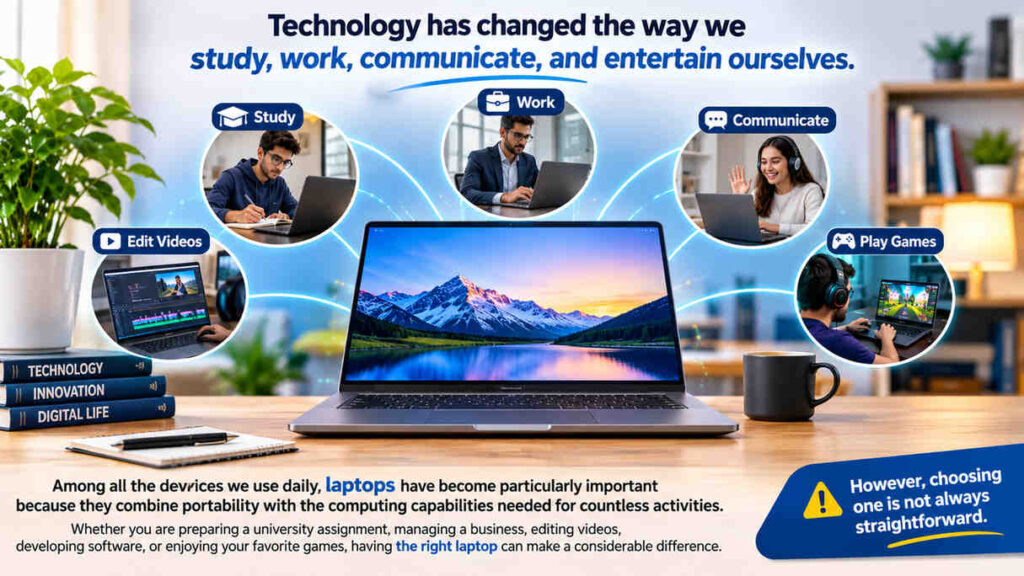
Technology has changed the way we study, work, communicate, and entertain ourselves. Among all the devices we use daily, laptops have become particularly important because they combine portability with the computing capabilities needed for countless activities. Whether you are preparing a university assignment, managing a business, editing videos, developing software, or enjoying your favorite games, having the right laptop can make a considerable difference.
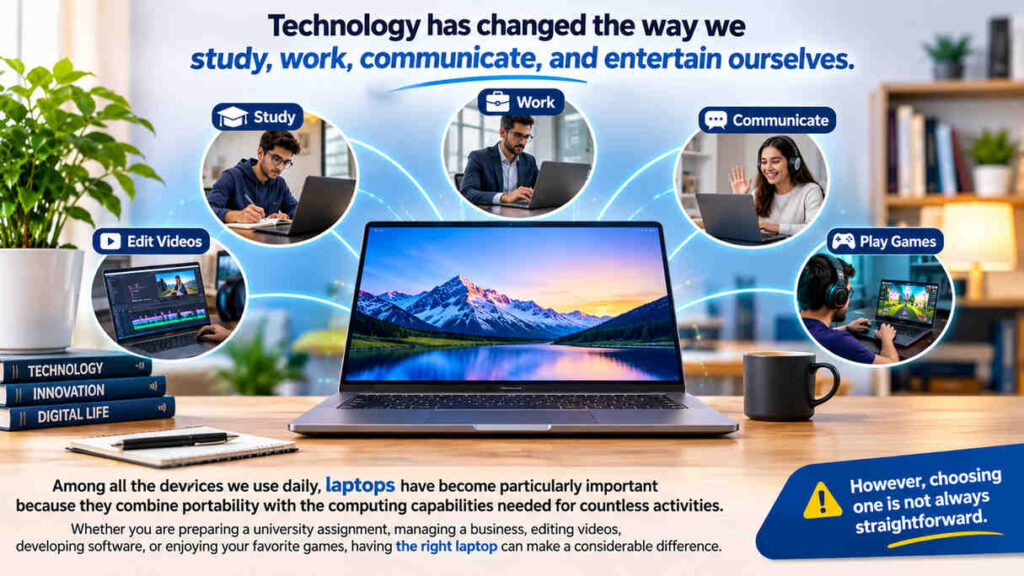
However, choosing one is not always straightforward.
TheLaptopAdviser LaptopsReviews: Complete Laptop Buying Guide

| Laptop Feature | What to Look For | Best For |
|---|---|---|
| Processor (CPU) | Modern Intel Core, Core Ultra, AMD Ryzen, or Apple silicon processor | All users |
| RAM | 8GB for basic tasks; 16GB for comfortable multitasking; 32GB for demanding work | Students and professionals |
| SSD Storage | 512GB SSD as a practical starting point; 1TB for larger storage needs | All users |
| Graphics (GPU) | Integrated graphics for everyday tasks; dedicated GPU for demanding graphics | Gamers and designers |
| Display Quality | Check resolution, brightness, color accuracy, and refresh rate | Students and creators |
| Battery Life | Compare independent battery tests rather than advertised estimates | Travelers and students |
| Keyboard | Comfortable keys, good spacing, and responsive typing | Writers and office workers |
| Build Quality | Strong hinges, durable chassis, and quality materials | Everyday users |
| Cooling System | Effective heat management and reasonable fan noise | Gamers and professionals |
| Connectivity | USB-A, USB-C, HDMI, Wi-Fi, and other required ports | Business users |
| Portability | Lightweight design and convenient dimensions | Students and travelers |
| Warranty | Verify coverage, repair services, and replacement options | All buyers |
| Student Laptop | Good battery, SSD, comfortable keyboard, and sufficient RAM | University students |
| Business Laptop | Reliable performance, security, and professional features | Business professionals |
| Gaming Laptop | Dedicated GPU, powerful CPU, and high-refresh-rate display | Gamers |
| Programming Laptop | Modern processor, 16GB–32GB RAM, and SSD | Software developers |
| Video Editing Laptop | Powerful processor, capable GPU, and sufficient memory | Video editors |
| Price and Value | Compare specifications, warranty, and performance against cost | Budget-conscious buyers |
Visit an online marketplace, and you will find hundreds of models featuring different processors, memory configurations, graphics solutions, screen technologies, and price ranges. Some laptops promise impressive performance, while others focus on lightweight designs, longer battery life, or professional features. With so many choices available, how can an ordinary buyer decide which machine is actually worth purchasing?
This is where researching TheLaptopAdviser LaptopsReviews becomes relevant. People searching for this keyword are generally interested in laptop information, technology discussions, product reviews, and guidance that can make purchasing decisions easier.
A useful laptop guide should do more than describe technical specifications. It should explain what those specifications mean, how different components work together, and why certain features matter for particular users.
In this article, we will explore laptop categories, hardware technologies, buying considerations, performance expectations, and practical maintenance advice. The goal is simple: help you understand laptops better so you can make a confident and informed decision.
1. Understanding the Purpose of The Laptop Adviser
The Laptop Adviser is associated with online laptop information and technology-related content. For readers discovering the name through search engines, understanding the subject of the platform is a natural starting point.
Laptop information websites generally help people explore different computer models, understand hardware terminology, and discover considerations that may influence a purchasing decision.
Think about someone buying a laptop for the first time. They might know that they need a computer for university, but they may not understand the difference between an Intel Core processor and an AMD Ryzen processor. They might also be unfamiliar with RAM, SSD storage, integrated graphics, and display refresh rates.
A helpful technology resource makes these unfamiliar subjects easier to understand.
Rather than overwhelming readers with complicated terminology, it connects technical information with real-life situations. For example, a student needs a different combination of features from a professional video editor.
That distinction is important because a laptop should be selected according to its intended purpose, not simply because its specifications look impressive.
What Readers Expect From a Laptop Information Website
When people visit a laptop-related website, they usually want practical answers.
They may be researching a particular model, comparing two manufacturers, or trying to understand which specifications are suitable for their budget.
Some common questions include:
- Which processor is suitable for everyday computing?
- How much RAM is necessary for multitasking?
- Is a dedicated graphics card worth purchasing?
- What makes a laptop comfortable for long working sessions?
- How important is battery capacity?
- Which features should students prioritize?
- How can buyers identify good value for money?
These questions demonstrate why clear explanations are important.
A useful review should help readers understand not only what a laptop offers but also whether its features match their personal requirements.
Why Reliable Laptop Information Matters
Buying a laptop without researching it is similar to purchasing a car without checking its engine, fuel efficiency, or maintenance requirements.
The exterior may look impressive, but appearances cannot tell you everything.
A laptop might have an attractive aluminum body but an uncomfortable keyboard. Another may offer excellent processing power but struggle with heat during demanding workloads.
Reliable information helps buyers look beyond advertising and examine the details that influence everyday ownership.
2. How Laptop Reviews Help You Make Better Decisions
Laptop reviews are useful because they bring different aspects of a computer together in one place.
Reading specifications is important, but specifications alone rarely explain the complete user experience.
For instance, two laptops may have the same amount of RAM and similar processors. Yet one might perform better during extended workloads because of its cooling design and power configuration.
This is why a meaningful review should examine the complete system.
Understanding Performance Beyond Specifications
Performance is not determined by one component.
The processor, graphics hardware, memory, storage, and cooling system all contribute to how a laptop behaves.
Imagine a laptop with a powerful processor but only 8GB of memory. It might handle a demanding application reasonably well, but multitasking could become uncomfortable when several other programs are running.
Similarly, a gaming laptop might feature a dedicated graphics processor but deliver inconsistent performance because of thermal limitations.
A good review should explain these relationships instead of presenting hardware specifications as isolated numbers.
Identifying the Advantages and Limitations of a Laptop
Every laptop involves compromises.
A lightweight computer may sacrifice some upgrade flexibility. A high-performance gaming machine may be heavier and require more frequent charging. A premium display may increase the purchase price.
Understanding these trade-offs is essential.
When researching a model, pay attention to both positive and negative observations. A balanced evaluation gives readers a clearer picture of what they can realistically expect.
3. Exploring Different Laptop Categories
Before comparing individual models, identify which category best matches your requirements.
Different laptops are designed around different priorities. Understanding these categories can save considerable research time.
Traditional Laptops
Traditional laptops feature a conventional clamshell design with a display connected to a keyboard through a hinge.
They remain popular because they provide a familiar computing experience and are available in many sizes and price ranges.
These machines are suitable for:
- Office productivity.
- Internet browsing.
- Educational activities.
- Video streaming.
- Personal projects.
- General household computing.
Traditional laptops can also offer powerful hardware configurations for professional applications.
Ultrabooks and Thin-and-Light Laptops
Some users prioritize mobility above everything else.
Thin-and-light laptops are designed for people who frequently move between offices, classrooms, homes, and travel destinations.
Their major advantages may include:
- Lightweight construction.
- Compact dimensions.
- Convenient carrying.
- Efficient processors.
- Long battery life on suitable models.
- Premium display options.
However, thin designs sometimes limit cooling capacity or upgrade possibilities.
Before purchasing one, investigate whether its hardware meets your actual workload.
Gaming and Performance Laptops
Gaming laptops focus on graphics-intensive activities and demanding applications.
They frequently include dedicated GPUs, advanced cooling systems, high-refresh-rate displays, and performance-oriented processors.
Although gaming is their primary selling point, these computers can also support certain creative and technical workloads.
For example, 3D designers, video editors, and simulation users may benefit from powerful graphics hardware.
The main disadvantages can include additional weight, greater power consumption, and increased fan noise.
Workstations for Professional Users
Mobile workstations are designed for demanding professional environments.
They may offer powerful processors, professional graphics options, extensive memory configurations, and specialized software certification.
Engineers, architects, researchers, and designers sometimes require this category because their applications involve complex calculations, simulations, and large projects.
A workstation is not necessary for every office employee. It becomes valuable when professional workloads genuinely require its capabilities.
4. Understanding Modern Laptop Hardware
Laptop hardware determines what a computer can accomplish.
If you understand the main components, comparing different models becomes much easier.
Processor Technology
The central processing unit, or CPU, handles instructions and calculations required by applications and the operating system.
Modern laptop processors are designed with different combinations of performance cores, efficiency cores, and power-management technologies.
Popular processor families include Intel Core, Intel Core Ultra, AMD Ryzen, and Apple silicon.
However, choosing a processor involves more than comparing brand names.
Consider its generation, performance class, power consumption, and intended workload.
For basic office tasks, a modern entry-level processor may be perfectly adequate. For demanding software development, content creation, or engineering applications, a more powerful configuration may be appropriate.
Graphics Processing Units
A graphics processing unit, commonly called a GPU, handles visual calculations.
There are two major categories to understand.
Integrated graphics: These are built into the processor or system-on-chip and share system resources. They are generally suitable for everyday computing, video playback, and many lightweight creative activities.
Dedicated graphics: These use separate graphics hardware and their own memory. They are particularly useful for demanding games, 3D applications, and certain professional workloads.
If your primary activities involve documents, browsing, and presentations, integrated graphics may be sufficient.
However, if you work with advanced visual applications, investigate dedicated graphics options.
Memory and Storage
RAM and storage perform different jobs, although people sometimes confuse them.
RAM temporarily stores information that applications need while operating.
Storage keeps your files, programs, and operating system even after the laptop is switched off.
A general RAM reference is:
| RAM | General Usage |
|---|---|
| 8GB | Basic computing and lighter workloads |
| 16GB | Comfortable everyday multitasking |
| 32GB | Demanding productivity and creative applications |
| 64GB or more | Specialized professional workloads |
For storage, SSD technology is generally preferred in modern laptops.
A 512GB SSD is a practical starting point for many buyers. However, photographers, video editors, and gamers may need additional capacity.
Remember to check whether the laptop supports storage expansion before purchasing.
Display and Screen Technology
A display influences almost every part of the laptop experience.
Whether you are reading an article, attending a meeting, designing graphics, or watching a film, screen quality matters.
Important factors include:
- Resolution.
- Brightness.
- Contrast.
- Color accuracy.
- Refresh rate.
- Viewing angles.
- Screen size.
- Surface finish.
IPS displays are common because they provide good viewing angles, while OLED displays can deliver deep blacks and impressive contrast.
Neither technology is automatically perfect for everyone.
A photographer may prioritize color accuracy, while a gamer may care more about refresh rate and response time.
5. Laptop Performance for Different Everyday Activities
One of the biggest mistakes buyers make is choosing hardware without considering what they actually intend to do.
A laptop should support your routine comfortably.
For example, someone who spends most of the day writing documents does not need the same machine as someone rendering 3D animations.
Here is a practical breakdown.
| Activity | Important Features |
|---|---|
| Web browsing | Efficient CPU and sufficient RAM |
| Online classes | Webcam, microphone, battery life |
| Office work | Comfortable keyboard and reliable performance |
| Programming | CPU performance and adequate memory |
| Photo editing | Good display and sufficient RAM |
| Video editing | Powerful CPU, GPU, RAM, and SSD |
| Gaming | Dedicated GPU and effective cooling |
| 3D design | Strong CPU, GPU, and memory |
This approach makes the selection process more logical.
Instead of purchasing the most powerful laptop available, identify the requirements of your applications and select a suitable configuration.
6. Finding the Right Laptop for Students
Students depend on computers for research, assignments, presentations, communication, and online learning.
However, educational requirements vary significantly.
A business student may primarily use spreadsheets, documents, and presentation software. An engineering student might require specialized applications that demand more processing and graphics capabilities.
Before purchasing a student laptop, consider the following features.
Portability: A lightweight device is convenient when moving between classrooms and libraries.
Battery life: Students may spend several hours away from charging facilities.
Keyboard comfort: Writing assignments becomes easier with a comfortable typing experience.
Memory: Sufficient RAM helps when switching between research websites, documents, and applications.
Storage: An SSD provides responsive startup and application loading.
Connectivity: USB ports, wireless networking, and display connections can be useful for academic work.
Students should also check the minimum hardware requirements recommended by their educational institutions.
There is little benefit in purchasing a laptop that cannot comfortably run the software required for a particular course.
7. Choosing a Laptop for Business and Remote Work
Business laptops are often expected to operate reliably throughout the working day.
Employees may use them for video meetings, presentations, financial spreadsheets, customer communication, and document management.
Remote workers have additional considerations because their working environments can change.
A suitable laptop should offer a dependable webcam, good microphone quality, stable wireless connectivity, and a comfortable keyboard.
Security also deserves attention.
Features such as fingerprint readers, TPM security, supported encryption technologies, and biometric authentication can help protect business information.
If your work involves sensitive files, investigate the operating system’s security features and the manufacturer’s update support.
Another important consideration is technical support.
For a business, a laptop failure can interrupt important work. Reliable warranty coverage and accessible repair services may therefore be worth paying extra for.
8. Gaming Laptop Reviews: What Should You Examine?
Gaming laptops are more complicated to evaluate because several hardware components influence gaming performance.
A powerful graphics processor is important, but the complete configuration matters.
Graphics Performance and Frame Rates
When reading gaming laptop reviews, look for actual gaming benchmarks where available.
Frame rates can vary significantly depending on resolution, graphics settings, game optimization, and cooling conditions.
A laptop delivering excellent results in one game may perform differently in another.
Therefore, comparisons should use similar settings and testing conditions.
Cooling and Thermal Management
Gaming creates heat.
A laptop’s cooling system must remove that heat while maintaining comfortable operating temperatures.
Reviews that examine sustained performance, temperatures, and fan noise provide useful information.
Do not judge a gaming laptop entirely by its appearance or advertised graphics specifications.
Display and Gaming Experience
A high-refresh-rate screen can make supported games feel smoother.
However, the graphics hardware must generate enough frames to benefit from the additional refresh rate.
Competitive gamers may prioritize responsiveness, while players who enjoy cinematic games may care more about resolution and image quality.
Keyboard and Connectivity
Gaming laptops often include additional keyboard features and multiple ports.
Check whether the keyboard feels comfortable, whether the trackpad is practical, and whether external monitors and gaming accessories can connect conveniently.
9. Laptop Battery Life and Power Efficiency
Battery life can determine how convenient a laptop feels outside the home or office.
Imagine working on an important presentation during a journey and discovering that your battery is nearly empty.
That is not an enjoyable situation.
Battery performance depends on several factors, including battery capacity, processor efficiency, screen brightness, background applications, and workload.
A laptop performing simple browsing tasks may last much longer than the same machine running demanding creative software.
When evaluating battery claims, look for independent testing.
Pay attention to the workload used during testing, because a video playback test does not represent the same conditions as continuous gaming or professional editing.
Power efficiency is also becoming increasingly important as manufacturers develop processors designed to balance performance and energy consumption.
10. Laptop Design, Portability, and Build Quality
A laptop is a device you may carry and use every day.
Consequently, its physical construction deserves attention.
Start by examining the chassis.
Does it feel rigid? Does the screen wobble excessively? Are the hinges stable? Does the keyboard flex during typing?
These details can influence long-term satisfaction.
Weight is another important consideration.
A heavier laptop may be acceptable for a permanent desk setup, but it can become inconvenient when carried daily.
Also examine the available ports.
Some slim laptops provide only a small selection of connections, potentially requiring additional adapters.
If you frequently connect external displays, storage devices, or professional equipment, port availability should be part of your decision.
11. Comparing Laptop Brands and Models
Comparing laptop brands is useful, but buyers should avoid assuming that every product from a particular manufacturer offers the same quality.
Most major manufacturers sell several product families designed for different budgets and requirements.
For example, a company’s entry-level laptop may use different construction materials and hardware from its premium professional models.
When comparing two devices, examine their exact configurations.
Pay particular attention to:
- Processor model.
- Graphics hardware.
- RAM capacity.
- Storage type and capacity.
- Display specifications.
- Battery capacity.
- Weight.
- Available ports.
- Warranty conditions.
A comparison table can make differences easier to understand.
| Comparison Area | Laptop A | Laptop B |
|---|---|---|
| Processor | Check exact model | Check exact model |
| RAM | Compare capacity | Compare capacity |
| Storage | Compare SSD size | Compare SSD size |
| Display | Compare resolution and quality | Compare resolution and quality |
| Battery | Check independent results | Check independent results |
| Weight | Check actual weight | Check actual weight |
| Warranty | Verify coverage | Verify coverage |
Never assume that a laptop is better simply because it belongs to a premium product family.
The actual configuration and user experience matter much more.
12. How to Evaluate Laptop Reviews Online
Not every online review provides the same level of information.
Some reviewers conduct extensive physical testing, while others summarize manufacturer specifications.
Understanding this difference helps readers evaluate information more carefully.
A useful laptop review should explain how conclusions were reached.
For example, if an article claims that a laptop has excellent battery life, does it provide testing conditions?
If it describes gaming performance, does it include benchmark results?
If it discusses screen quality, does it examine brightness and color accuracy?
Look for these characteristics when researching laptop information:
- Clear product identification.
- Accurate specifications.
- An explanation of the testing process.
- Realistic performance observations.
- Honest advantages and disadvantages.
- Updated information.
- Transparent commercial relationships.
It is also wise to compare several independent reviews.
One reviewer’s experience may be influenced by a particular workload, testing environment, or product configuration.
Multiple perspectives provide a broader understanding.
13. Common Laptop Purchasing Mistakes
Even when buyers conduct research, certain mistakes can lead to disappointing purchases.
Let’s examine some problems worth avoiding.
Choosing a Laptop Only Because of Its Brand
Brand reputation can provide useful context, but it should never replace product-level research.
A well-known manufacturer can produce both excellent and disappointing models.
Always investigate the specific laptop.
Ignoring the Exact Processor Model
Two laptops may advertise processors from the same family while offering considerably different performance.
Check the complete model number and generation.
Purchasing Insufficient Memory
If your workload involves multitasking or professional software, limited memory can become frustrating.
Consider future requirements rather than focusing exclusively on your current needs.
Overlooking Screen Quality
A laptop may offer impressive hardware but an ordinary display.
If you spend many hours reading, designing, or editing photographs, screen quality deserves additional attention.
Ignoring Local Warranty Support
Buyers should understand where repairs can be performed and whether replacement parts are available.
This is particularly important when purchasing imported laptops.
Buying Without Checking Upgrade Options
Some devices allow RAM and storage expansion, while others have limited upgrade possibilities.
Check the manufacturer’s documentation before making a decision.
14. Understanding Laptop Prices and Value for Money
Price is an important part of every laptop purchasing decision.
However, the cheapest available model is not necessarily the most economical choice over time.
A computer with limited memory or storage may require an earlier replacement. A slightly more expensive model with better construction and appropriate specifications could offer greater long-term value.
To understand value for money, compare what you receive against what you actually need.
For example, a student might benefit more from a laptop with a comfortable keyboard, dependable battery, and sufficient memory than from a gaming machine with expensive graphics hardware.
Similarly, a professional designer may justify spending more on a color-accurate display and powerful graphics performance.
When comparing prices, remember to consider:
- Warranty coverage.
- Software licensing.
- Accessories.
- Upgrade costs.
- Repair availability.
- Battery replacement costs.
- Retailer return policies.
For Pakistani buyers, comparing local retailers is particularly important because imported models, warranty arrangements, and configurations can differ.
Always verify the exact model number before comparing prices.
15. Laptop Security, Privacy, and Software Support
Performance is important, but security should not be overlooked.
Your laptop may contain personal photographs, financial documents, professional files, passwords, and private conversations.
Protecting this information requires good security practices.
Start with regular operating system updates.
Security updates can address vulnerabilities and improve system stability.
Use strong passwords and enable multifactor authentication for important accounts.
Where supported, consider full-disk encryption and biometric authentication.
You should also:
- Download applications from trusted sources.
- Avoid suspicious email attachments.
- Use reputable security software.
- Back up important documents.
- Lock your device when unattended.
- Review application permissions.
Software support matters as well.
Before purchasing a laptop, check its operating system compatibility and expected support period.
A computer that no longer receives essential security updates can become increasingly unsuitable for sensitive activities.
16. Artificial Intelligence and the Future of Laptops
Artificial intelligence is becoming an increasingly visible part of modern computing.
New laptop platforms may include dedicated neural processing units, commonly called NPUs, alongside traditional CPUs and GPUs.
These processors are designed to accelerate certain AI-related tasks.
Depending on hardware and software support, applications may use these capabilities for:
- Background noise reduction.
- Image enhancement.
- Video effects.
- Speech processing.
- Productivity assistance.
- Certain local AI workloads.
However, an AI-related specification does not automatically make a laptop suitable for every AI application.
Some tasks require substantial GPU memory, processing power, or cloud-based services.
Buyers should understand which features are supported by the specific software they intend to use.
Another developing area is improved energy efficiency.
As laptop processors become more sophisticated, manufacturers are working to balance computing performance, battery life, and thermal management.
These developments may influence future laptop designs considerably.
17. Practical Tips for Maintaining Your Laptop
A laptop can remain useful for years when it receives appropriate care.
Maintenance does not need to be complicated.
A few consistent habits can help preserve its condition.
Keep the operating system updated: Regular updates help maintain security and software compatibility.
Clean the device carefully: Use appropriate materials for cleaning the screen, keyboard, and exterior.
Protect cooling vents: Avoid using your laptop on surfaces that block airflow.
Monitor storage space: Remove unnecessary files and applications.
Back up important information: Keep additional copies of valuable documents.
Avoid unnecessary physical pressure: Do not place heavy objects on the closed laptop.
Use suitable charging equipment: Follow the manufacturer’s recommendations.
Transport it safely: A padded laptop bag can help reduce accidental damage.
Battery care is also important.
Avoid exposing the laptop to excessive heat, and follow the manufacturer’s recommendations for charging and battery management.
If the device becomes unusually hot, noisy, or slow, investigate the cause rather than ignoring the problem.
18. How TheLaptopAdviser LaptopsReviews Fits Into Your Research
Searching for TheLaptopAdviser LaptopsReviews reflects an interest in laptop-related information and guidance.
However, readers should approach any technology website with a clear purpose.
Instead of visiting a review page simply to find a product recommendation, think about the questions you want answered.
Are you trying to understand whether a laptop is suitable for your university course?
Do you want to compare the performance of two processors?
Are you interested in gaming hardware, professional computers, or affordable everyday devices?
Identifying your questions helps you evaluate whether an article provides genuinely useful information.
A well-organized laptop research process can follow five steps.
Step 1: Identify Your Requirements
Write down the applications and activities you expect to use regularly.
Step 2: Establish Your Budget
Determine how much you can comfortably spend.
Step 3: Understand the Specifications
Learn which processor, memory, graphics, and storage configurations suit your requirements.
Step 4: Compare Available Models
Examine several alternatives rather than relying on one recommendation.
Step 5: Verify Before Purchasing
Check the exact configuration, warranty, retailer reputation, and return policy.
This process reduces unnecessary confusion and makes the final decision more logical.
The most valuable laptop information is not information that simply encourages you to purchase a particular machine. It is information that helps you understand your choices.
19. Conclusion: Making Smarter Laptop Purchasing Decisions
Choosing the right laptop is about understanding your requirements and finding a computer that can meet them comfortably. Processor performance, RAM, storage, graphics capabilities, display quality, battery life, and build construction all contribute to the overall experience. However, not every buyer needs the same combination of features.
The topic TheLaptopAdviser LaptopsReviews offers an opportunity to explore laptop information, purchasing guidance, technology discussions, and product comparisons from a reader-focused perspective. Whether you are a student, professional, business owner, gamer, or everyday computer user, researching before purchasing can help you avoid unnecessary expenses and disappointing choices. Take your time, compare specifications, examine genuine testing evidence, and consider long-term reliability. Ultimately, the best laptop is not necessarily the most expensive or powerful model. It is the computer that fits your everyday needs, respects your budget, and makes your digital life easier.
Frequently Asked Questions (FAQs)
1. What does TheLaptopAdviser LaptopsReviews mean?
TheLaptopAdviser LaptopsReviews is a search keyword associated with The Laptop Adviser and laptop-related review information. People searching for this phrase may be interested in computer specifications, laptop comparisons, technology articles, and purchasing advice.
2. Why are laptop reviews important before purchasing?
Laptop reviews provide information about hardware, performance, battery life, display quality, and physical construction. They can help buyers identify potential limitations and compare different models before making a financial commitment.
3. Which laptop specifications should I check first?
Start with the processor, RAM, storage, graphics hardware, and display. After that, examine battery life, keyboard quality, weight, connectivity, and warranty coverage. The most important specifications depend on your intended activities.
4. Is a laptop with 16GB RAM suitable for multitasking?
Yes. For many everyday users, 16GB RAM provides a comfortable multitasking experience. It can support browsing, office applications, video meetings, and several programs running together. More demanding professional applications may benefit from additional memory.
5. Should students purchase gaming laptops?
Most students do not need gaming laptops for ordinary academic activities. However, students studying game development, 3D design, animation, or certain engineering disciplines may benefit from their additional graphics performance.
6. What is more important: processor speed or RAM?
Both are important, but their importance depends on your workload. The processor handles calculations and instructions, while RAM supports active applications and multitasking. A balanced configuration generally provides a better experience than focusing on only one component.
7. How can I identify a trustworthy laptop review?
Look for accurate specifications, clear testing methods, realistic performance observations, and honest discussions of disadvantages. Reviews that provide independent benchmarks and actual product testing can offer particularly useful evidence.
8. Is buying an older laptop model a good idea?
An older model can offer good value if its hardware remains suitable for your requirements. However, check its processor generation, battery condition, software support, warranty, and upgrade possibilities before purchasing.
9. How can I make my laptop last longer?
Maintain software updates, protect the device from physical damage, keep cooling vents clear, manage storage, and back up important files. Following proper charging and cleaning recommendations can also help preserve the device.
10. How do I choose the best laptop within my budget?
First, identify your daily requirements and maximum spending limit. Then compare several laptops based on processor performance, memory, storage, display quality, battery life, and warranty. Select the model that offers the best combination of useful features rather than paying extra for specifications you do not need.