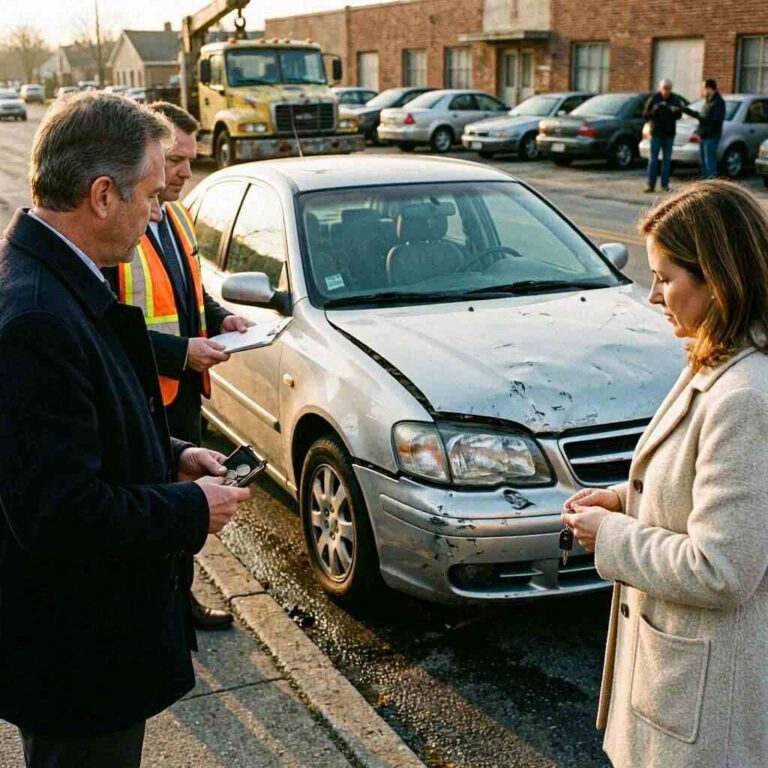
Renters Insurance vs Homeowners Insurance: What’s the Real Difference?
Most people treat insurance as a background expense — something set up once and forgotten until renewal. The problem with that approach becomes obvious the first time something actually goes wrong. A laptop disappears from an apartment. A kitchen fire damages a condo. A guest slips on icy front steps and the medical bills arrive shortly after. At that point, what someone assumed about their coverage and what their policy actually says become two very different things.
The straightforward version: renters insurance protects tenants and their belongings, while homeowners insurance protects both the owner and the physical structure they own. But that framing skips what actually matters — who absorbs the financial loss when property is destroyed, someone gets hurt, or a home becomes unlivable for three months.
Two misconceptions drive the most costly mistakes. Renters often assume their landlord’s insurance covers them. Homeowners often assume their policy covers everything. Neither is true. Insurance is built around ownership, responsibility, and documented risk — and the distance between what people assume and what policies actually cover can easily reach six figures.
The difference becomes far clearer once you stop thinking about insurance as a product category and start thinking about it as financial risk transfer.
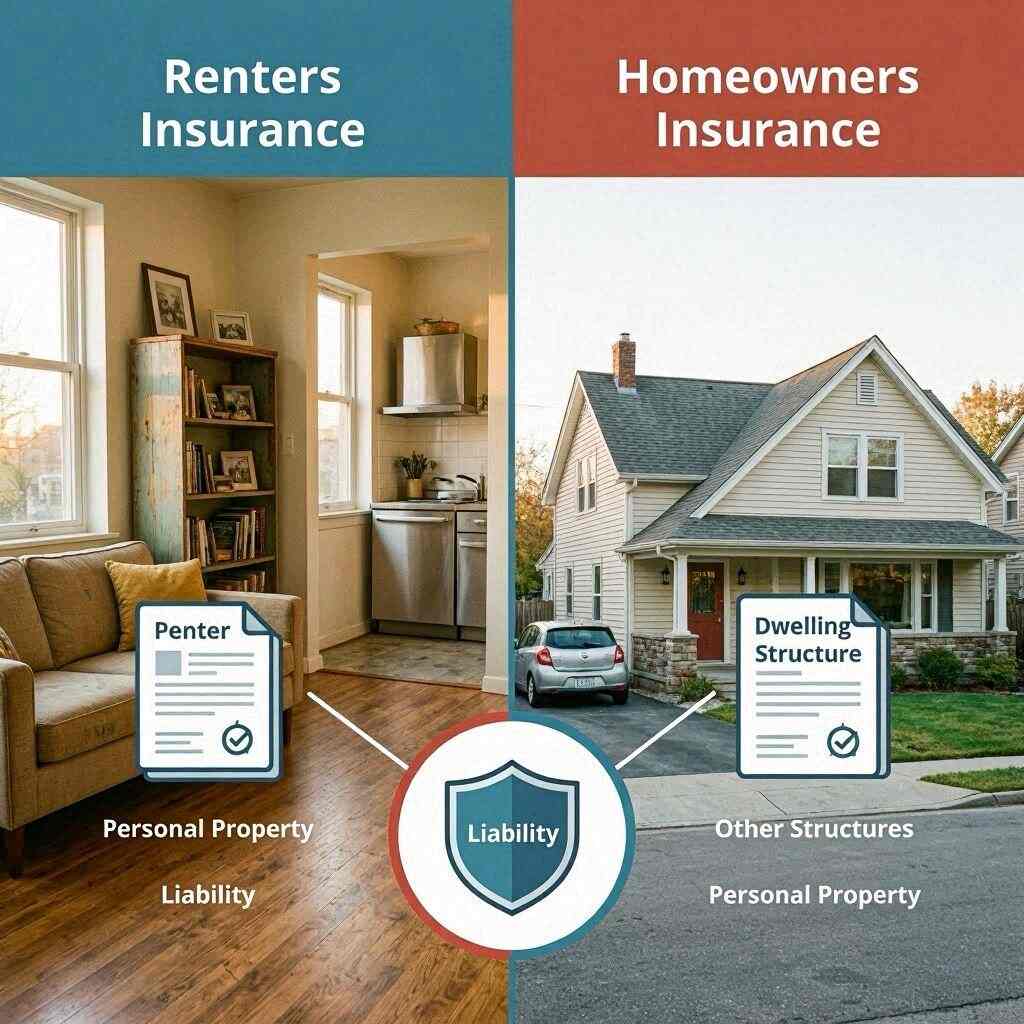
Renters Insurance vs Homeowners Insurance at a Glance
| Feature | Renters Insurance | Homeowners Insurance |
|---|---|---|
| Covers building structure | No | Yes |
| Covers personal belongings | Yes | Yes |
| Liability protection | Yes | Yes |
| Temporary living expenses | Usually included | Usually included |
| Required by mortgage lender | No | Often yes |
| Sometimes required by landlord | Yes | No |
| Typical monthly cost | $10–$30 in most US markets | $100–$300+ depending on state and home value |
| Designed for | Tenants | Property owners |
The price gap comes down to one thing: homeowners insurance is insuring a building. Renters insurance is not.
When you own the property, you carry financial responsibility for both the structure and everything inside it. Rebuilding a home after a fire or hurricane can cost $200,000 to $500,000 or more — and insuring against that exposure costs proportionally more.
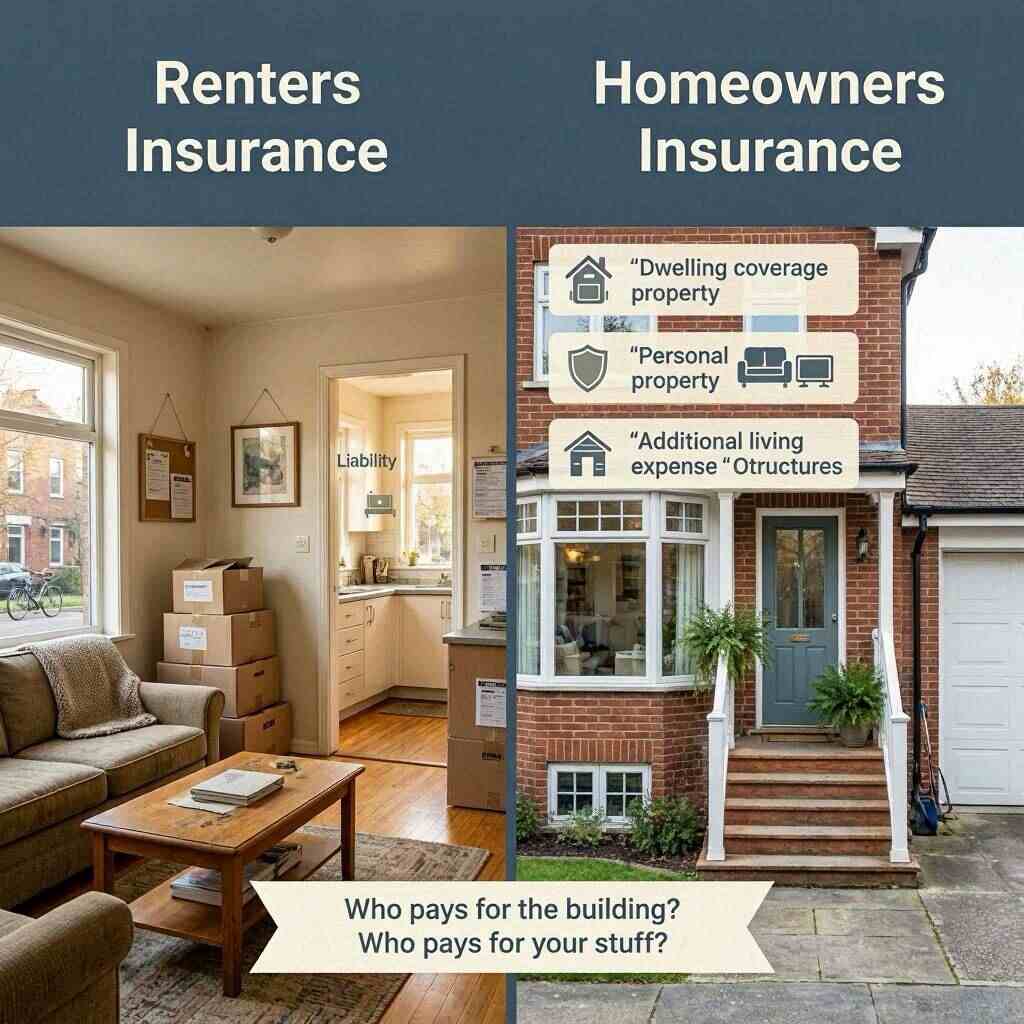
What Renters Insurance Actually Covers
Renters insurance is consistently underestimated, both in cost and value. Most renters mentally file it as “protection for my stuff,” which undersells the policy’s most financially significant component: liability.
Personal Belongings
Renters insurance covers personal property lost or damaged from covered events — fire, theft, smoke, vandalism, windstorms, and certain water damage. Covered items typically include furniture, clothing, electronics, appliances, bicycles, sports equipment, and jewelry.
The gap most renters discover too late is scope. Walk through a modest two-bedroom apartment and price replacing everything simultaneously: furniture, mattresses, electronics, kitchenware, clothing, tools. A place that doesn’t feel particularly furnished can easily contain $25,000 to $50,000 in personal property. Most renters dramatically underestimate that number until they have to confront it all at once.
The scenario that makes it concrete: A kitchen fire in your building gets contained within 30 minutes. The structure is fine. But smoke infiltrates your unit, ruining your mattress, couch, television, clothing, and laptop. Your landlord’s insurance repairs the building. It replaces nothing you own.
Liability Protection
Liability is the coverage renters rarely think about — until they need it.
Personal liability applies when someone is injured in your unit, you accidentally damage another person’s property, your dog bites someone, or your negligence affects neighboring units. An overflowing bathtub that floods the apartment below is among the more common examples.
The financial exposure there is real. Water damage to a downstairs unit can run $10,000 to $30,000 in repairs, plus the other tenant’s damaged belongings. Without renters insurance, that’s your personal liability to resolve — out of pocket, often with an attorney involved.
Most renters policies carry limits between $100,000 and $300,000. For a monthly premium that often costs less than a streaming subscription, that protection is difficult to dismiss.
Additional Living Expenses (Loss of Use)
When a covered event makes your rental uninhabitable, renters insurance typically pays for hotel stays, temporary rentals, restaurant meals, and related displacement costs — referred to in most policies as “loss of use” coverage.
Housing displacement receives far less attention than property replacement, but in cities with tight rental markets, temporary accommodations can run $150 to $300 per night for weeks while repairs are completed. It’s an expense almost no renter has a plan for in advance.
What Renters Insurance Usually Doesn’t Cover
The most expensive gaps in a renters policy are the ones that aren’t obvious upfront.
Flooding is the largest. A burst pipe under specific circumstances may be covered. Water rising from outside — storm flooding, overflowing rivers, rain backing up from saturated ground — requires a separate flood insurance policy, typically through the National Flood Insurance Program (NFIP) or a private flood insurer. Renters in coastal cities, flood-prone neighborhoods, or areas near drainage infrastructure often assume standard policies protect them from rising water. They don’t.
Other notable exclusions: earthquake damage, pest infestations, intentional damage, normal wear and tear, and belongings that exceed policy limits. High-value jewelry, collectibles, and professional equipment often require scheduled endorsements to be fully covered.
On roommates: your renters policy covers you. An unrelated roommate’s belongings aren’t automatically included unless they’re specifically listed — a detail that typically surfaces only after something goes missing.
What Homeowners Insurance Covers
Homeowners insurance is broader because homeowners carry broader financial exposure. The policy protects both the structure and everything that property ownership implies about liability and risk.
Dwelling Coverage (Structure)
This is the defining feature — what separates homeowners insurance from every other personal insurance product.
Standard homeowners policies (the HO-3 is the most common form for single-family homes) protect the physical structure against covered perils: fire, windstorms, hail, lightning, smoke, certain water damage, and falling objects. Walls, roof, flooring, built-in systems, attached garages — all fall within dwelling coverage.
The financial stakes are worth understanding with some precision. Rebuilding costs have climbed sharply in recent years, driven by sustained inflation in lumber, labor, and materials. A home that would have cost $250,000 to rebuild five years ago may require $350,000 or more today. Homeowners who established their dwelling coverage at purchase and haven’t revisited it since may be carrying a meaningful gap — insuring at yesterday’s rebuilding costs while facing today’s.
This is also why mortgage lenders require homeowners insurance as a loan condition. The lender holds a financial stake in the property too.
Other Structures
Coverage typically extends to structures not attached to the main home — fences, sheds, detached garages, gazebos. This is usually capped at around 10% of the dwelling limit, which matters if you have a substantial workshop or outbuilding.
Personal Property
Homeowners insurance covers belongings inside the home against covered losses. Standard policies often cap jewelry coverage at $1,500 to $2,500 and may apply separate sublimits to collectibles, firearms, and high-end electronics. Owners of valuable items should review those limits carefully and consider scheduled endorsements that insure specific pieces at their appraised value.
One often-overlooked feature: many homeowners policies extend limited coverage to personal property stolen or damaged away from home — including items in a vehicle. Limits vary significantly by policy, but off-premises theft is a coverage point worth asking about directly.
Liability Coverage
Owning property creates a broader liability profile than renting does. Your front steps, driveway, backyard, the tree that drops a limb onto a neighbor’s fence — all of it represents potential exposure. Dog bites are among the most frequently filed liability claims homeowners face.
Typical policies start at $100,000, but $300,000 to $500,000 is the range most commonly recommended for anyone with meaningful assets to protect. Umbrella policies extend coverage to $1 million or more and are generally more affordable than homeowners expect.
Consider this: a guest trips on an uneven section of your walkway, fractures a wrist, and misses six weeks of work. Medical bills, legal claims, and lost wages can compound quickly — and without adequate liability coverage, every dollar of that arrives as a personal obligation.
Additional Living Expenses
When a covered event makes the home temporarily uninhabitable, the policy pays for hotels, temporary housing, meals, and related costs. After major fires, hurricanes, or severe storms, displacement can stretch for months. The cumulative expense of living elsewhere while also managing repairs often reaches tens of thousands of dollars.
What Homeowners Insurance Usually Doesn’t Cover
The assumption that homeowners insurance covers “everything” is one of the more expensive beliefs in personal finance.
Flood damage is excluded from standard policies. Water damage from a burst pipe may be covered; rising water from storms and flooding is a different category entirely. FEMA’s National Flood Insurance Program handles flood risk separately, and private flood insurance options have expanded in recent years. In flood-prone states — Florida, Louisiana, Texas — or anywhere near a FEMA-designated Special Flood Hazard Area, separate flood coverage is effectively not optional.
Earthquake coverage is typically excluded as well. California, Oregon, Washington, and other seismically active states require standalone earthquake policies. Given the cost of structural damage after even a moderate quake, this is worth understanding independently of standard homeowners coverage.
Maintenance-related damage receives no coverage. A roof failing after 25 years is a maintenance problem, not a covered loss event. Mold developing from an unaddressed slow leak is a maintenance problem. Insurers investigate claims carefully, and the line between sudden covered damage and gradual neglect often determines whether a large claim gets paid or denied.
The Financial Risk Gap Most People Underestimate
Most comparison articles land on the same shorthand: renters insurance covers belongings, homeowners insurance covers the home. Accurate. Also incomplete in a way that shapes real decisions.
The deeper difference isn’t about what’s covered — it’s about the scale of what can go wrong.
A renter’s worst-case scenario generally involves losing personal property and navigating liability claims. Serious, but bounded. A $40,000 property loss and a $100,000 liability claim, while devastating, is recoverable over time.
A homeowner’s worst-case scenario operates at a fundamentally different magnitude. After a major fire, hurricane, or tornado, the simultaneous exposure can look like this:
- $300,000 to $500,000 in rebuilding costs
- $20,000 to $50,000 in temporary housing
- $15,000 to $30,000 in debris removal
- Personal property replacement throughout
- Liability claims arising from the same event
Uninsured, that combination can be financially terminal. Homeowners insurance isn’t simply a larger renters policy — it protects against a categorically different class of potential loss, which is why it costs significantly more.
Does Your Landlord’s Insurance Cover Your Belongings?
No — and this misconception accounts for more uninsured tenant losses than almost anything else in the rental market.
Landlord insurance covers the building structure, common areas, and the landlord’s financial interest in the property. Protecting tenants is not what it’s built to do, and it doesn’t do it.
After an apartment fire, the landlord’s policy may fund structural repairs. The smoke-damaged furniture, ruined clothing, and destroyed electronics in your unit — none of that falls within the landlord’s insurer’s scope. The same logic applies to burglary: the landlord’s policy may cover a broken door lock. The stolen laptop and camera equipment are yours to replace.
Some landlords now require tenants to carry renters insurance specifically because it reduces liability disputes after incidents. That requirement, when it exists in a lease, protects both parties.
What Each Type of Insurance Actually Costs
Renters Insurance
In most US markets, renters insurance runs $10 to $30 per month for standard coverage — roughly $120 to $360 annually. Renters in California, Florida, or Louisiana may pay somewhat more depending on local risk factors. The premium stays low because the insurer carries no exposure for the building itself, which is by far the most expensive element to insure.
Coverage limits, deductibles, and liability amounts all influence price. Choosing replacement cost coverage over actual cash value will increase premiums modestly — but the difference in claims outcomes often isn’t modest at all.
Homeowners Insurance
Costs here vary more dramatically than most people realize when they’re buying their first home.
- National average falls roughly in the $1,200 to $2,000 per year range for a standard home — a number that can be misleading without geographic context
- In hurricane-exposed states like Florida, Texas, and Louisiana, premiums regularly run $3,000 to $6,000 annually, and substantially higher in coastal zones; Florida in particular has seen multiple private insurers exit the market entirely in recent years
- Wildfire zones across California, Colorado, and the broader West have experienced sharp premium increases; in some high-risk areas, private carriers have stopped writing new policies, leaving homeowners dependent on state-managed last-resort programs
- Hail-prone corridors through the Midwest and Great Plains face elevated roof-damage claims that consistently push premiums upward — states like Texas, Colorado, and Kansas see significant hail exposure built into their rates
- Homes with aging roofs, prior claim history, or coastal exposure pay higher rates regardless of state
One pricing dynamic that catches many homeowners off guard: rebuilding-cost inflation. As construction costs rise, insurers adjust replacement estimates upward — sometimes substantially. A homeowner who set dwelling coverage at purchase and hasn’t revisited it may be carrying a meaningful gap between their insured value and what it would actually cost to rebuild today.
Worth understanding separately: many policies in hurricane-prone states carry a separate hurricane or wind deductible that applies specifically to wind-related damage. These deductibles are often calculated as a percentage of the home’s insured value — 2% of a $400,000 home is $8,000 out of pocket before coverage begins. This is distinct from the standard deductible that applies to other claims.
The Deductible Trade-Off
Higher deductibles reduce monthly premiums, and that trade-off looks straightforward until a storm causes $15,000 in damage and the homeowner realizes their $5,000 deductible means a significant check before coverage applies.
Before choosing a higher deductible to lower monthly costs, the relevant question is concrete: could you access that amount comfortably during an emergency? If not easily, the monthly savings may not be worth the exposure when it matters.
Real-World Scenarios: Who Pays What
Apartment Fire
A kitchen fire spreads before it’s contained, damaging multiple units.
- Landlord’s insurance: structural repairs — walls, flooring, building systems
- Tenant’s renters insurance: personal belongings, hotel costs during displacement, potential liability if tenant negligence contributed
Without renters insurance, the tenant’s losses are entirely the tenant’s problem.
Burst Pipe in an Owned Home
A pipe freezes and bursts during a cold snap, flooding two rooms and ruining flooring, drywall, and furniture.
- Homeowners insurance: structural repairs, water damage remediation, furniture replacement, temporary housing
- One caveat: Insurers often investigate whether the homeowner took reasonable precautions. A vacant home left without heat running during a cold front may face complications at the claims stage — particularly if the insurer determines the damage was preventable.
Apartment Theft
A burglar breaks in while the tenant is traveling. Laptop, camera equipment, and jewelry are taken.
- Landlord’s insurance: door or lock repair, possibly
- Renters insurance: stolen items covered after deductible, up to policy limits
Worth knowing: many renters policies also cover belongings stolen from a vehicle or elsewhere off-premises, though limits are typically lower than the standard policy maximum. High-value jewelry or professional equipment may require a scheduled endorsement regardless.
Guest Injury at a Home
A visitor slips on wet pavers in the backyard, fractures an ankle, and retains an attorney.
- Homeowners liability coverage: medical bills, legal defense, potential settlement
- Without coverage, every dollar of that claim is a personal financial obligation with no transfer mechanism
Mistakes People Regret After Claims
Assuming the Landlord Covers Their Belongings
The most common and most painful error. The landlord’s policy protects the landlord’s investment — nothing more.
Choosing Actual Cash Value Instead of Replacement Cost
Actual cash value pays the depreciated worth of what was lost. A five-year-old $1,500 laptop might yield $300 in an ACV settlement. Replacement cost pays what it actually costs to replace the item today. After a fire where everything needs replacing at once, that distinction becomes very concrete, very quickly.
The premium difference between the two is usually modest. The claims difference rarely is.
Filing Small Claims That Raise Future Premiums
This one rarely appears in comparison articles, but it’s genuinely consequential.
Filing frequent claims — even legitimate ones — can raise premiums at renewal or trigger non-renewal in some markets. Insurers track claim history, and policyholders who file multiple small claims in a short window are viewed differently than those who file rarely.
For minor losses that fall just above the deductible, it’s often worth calculating whether the claim payout outweighs the potential multi-year premium increase. For larger, clearly covered losses, filing makes obvious sense. The middle ground deserves deliberate thought.
Not Updating Coverage After Renovations
A finished basement, kitchen remodel, or added bathroom raises rebuilding costs. A policy written before those improvements may leave the home meaningfully underinsured — not because of any change in premiums, but simply because the coverage limit no longer reflects what it would actually cost to rebuild.
Ignoring Flood Risk
Standard policies don’t cover flooding, and FEMA flood zone maps — while useful — tend to underrepresent actual risk in many areas, particularly as storm patterns have intensified. Flood insurance often warrants consideration beyond what FEMA formally maps as high-risk. The NFIP offers policies in most communities, and private flood insurance options have expanded considerably.
Insuring at Market Value Instead of Rebuild Cost
Market value includes land. Insurance covers rebuilding cost. In competitive real estate markets, those figures can diverge sharply — a home worth $600,000 on the market may require only $280,000 to rebuild. Insuring at market value inflates premiums without improving protection and can create confusion about what the policy actually covers.
Underestimating Liability Exposure
Property coverage dominates most insurance conversations, and liability tends to get treated as a secondary concern. In practice, lawsuits from injuries, dog bites, contractor accidents, and neighbor property damage often carry more financial risk than property losses. For homeowners with meaningful assets, coverage limits and umbrella policies deserve genuine attention — not just the minimum the mortgage lender requires.
Who Needs Which Type of Coverage
Renters in apartments or leased homes: Renters insurance. Even renters who feel they don’t own much benefit substantially from the liability protection alone — for many people, that component matters more than the property coverage.
Condo owners: More nuanced than either category on its own. Condo associations carry a master policy covering shared building structures, but individual owners typically need an HO-6 policy for interior structures, personal belongings, liability, and loss of use. One additional layer worth understanding: loss assessment coverage. If the association’s master policy has a high deductible and a shared-area loss exceeds it, the shortfall is often divided among unit owners. Loss assessment coverage in an HO-6 policy protects against that exposure. The line between what the master policy handles and where personal responsibility begins varies by building — reading both documents before assuming coverage is worth the effort.
Single-family homeowners: Not optional in any practical sense. Most mortgage lenders require it, and the financial exposure of going uninsured against fire, storm damage, or liability claims is severe.
Renters in high-risk locations: Standard renters insurance still applies, but flood and earthquake coverage deserve separate evaluation based on geography. A renter in coastal South Carolina faces fundamentally different risk than one in Columbus, Ohio — and standard policy language doesn’t change based on where you live.
People mid-transition: Someone selling one home while temporarily renting may briefly need both types of coverage. Transitions are a frequent coverage gap — worth confirming directly with an insurer rather than assuming either policy extends into the interim period.
Replacement Cost vs Actual Cash Value: The Choice That Shapes Claims Outcomes
This is among the most financially significant decisions in any insurance policy, and it’s consistently underexplained in comparison content.
Actual Cash Value (ACV) pays what the item is worth today — original cost minus depreciation. A three-year-old $2,000 couch might yield $600 in an ACV settlement.
Replacement Cost Value (RCV) pays what it would cost to replace that item with a comparable new one at current prices. That same couch pays out closer to $2,000.
When everything needs replacing simultaneously — after a fire, a major theft, or severe water damage — the difference between ACV and RCV settlements becomes immediate and tangible. Replacing an apartment full of furniture and electronics at depreciated values often leaves a significant financial gap. Replacement cost coverage closes it.
The premium difference is real but typically modest. For most renters and homeowners, it’s the right upgrade.
One additional note for thorough documentation: maintaining a home inventory — photos, serial numbers, receipts for major purchases — doesn’t just help at claims time. It tends to resolve valuation disputes faster and with less friction, particularly for electronics, jewelry, and anything with meaningful depreciation built in.
Frequently Asked Questions
Is renters insurance required by law?
No US state legally mandates it. That said, landlords can — and increasingly do — require proof of coverage as a lease condition. Some lease agreements specify minimum liability limits that tenants must maintain throughout the rental period.
Does a landlord’s insurance policy cover tenants?
No. Landlord insurance (sometimes called a dwelling policy) covers the structure and the landlord’s financial interest. A tenant’s belongings, personal liability, and displacement costs fall entirely outside its scope. This is among the most consequential insurance misconceptions in the rental market.
Does renters insurance cover water damage?
Sudden and accidental water damage — a burst pipe — may be covered. Flooding from external sources (storm water, rising rivers, overflowing municipal drainage) is not covered under standard renters policies. Gradual damage from a slow, unreported leak may also be denied as a maintenance issue. The distinction matters, and reading policy language before assuming coverage is worth doing before you need to file.
What’s the difference between an HO-3 and HO-6 policy?
An HO-3 is the standard homeowners policy for single-family homes — it covers the dwelling structure on an open-perils basis (most risks are covered unless explicitly excluded) and personal property on a named-perils basis. An HO-6 is designed for condo owners, covering the interior of the unit, personal belongings, and liability — but not the shared building structure, which the condo association’s master policy handles. For condo owners, understanding precisely where the master policy ends and personal coverage begins is one of the more important things to get right.
Can you have both renters and homeowners insurance at the same time?
Yes. There are legitimate situations where carrying both makes sense — renting out an owned property while living elsewhere, transitional periods between buying and renting, or managing an investment property. An insurance agent can map out coverage overlap and gaps for any specific situation.
What is not covered under homeowners insurance?
The most significant exclusions: floods, earthquakes, sewer backup (typically an add-on endorsement), normal wear and tear, maintenance neglect, pest infestations, and gradual damage. Claims can also be denied when an insurer determines that deferred maintenance contributed to the loss — a distinction that comes up more often than many homeowners expect.
Is renters insurance worth it for a small apartment?
Generally, yes. Even renters with modest belongings tend to own more than they’ve mentally accounted for, and the liability protection is arguably the most important component regardless of property value. A single injury claim in your unit can easily exceed the total replacement value of everything you own.
What happens if you don’t have homeowners insurance?
Every cost — rebuilding, repairs, liability claims, temporary housing — becomes a personal financial obligation with no transfer mechanism. Most mortgage lenders require active coverage as a loan condition; a lapse can technically trigger default provisions in the mortgage agreement. Beyond the contractual requirement, the financial exposure of owning a home without coverage is a risk that rarely makes sense to carry.
How do insurers determine what a stolen item is worth?
Under ACV policies, depreciated market value drives the settlement — based on comparable sales, age, and condition. Under replacement cost policies, the current retail cost of a comparable replacement is used. Keeping receipts, purchase records, and photos of high-value items strengthens claims outcomes under either approach and reduces the likelihood of valuation disputes that slow the process.
How much coverage is usually enough?
For renters: walk through your space and price replacing everything before choosing a coverage limit — most people discover they own more than they thought. For liability, $100,000 is a common starting point, but $300,000 is frequently recommended for anyone with even modest assets. For homeowners: dwelling coverage should reflect current local rebuilding costs, not market value. A local contractor’s estimate or your insurer’s replacement cost calculator can establish the right figure. Revisiting it every few years — and after any significant renovations — is a reasonable habit that most homeowners skip until they have a reason not to.
Final Thoughts
Renters insurance and homeowners insurance exist for the same underlying reason — to transfer financial risk away from individuals and toward an insurer built to absorb it. They accomplish that in structurally different contexts, for people carrying structurally different levels of financial exposure.
Renters insurance protects what you bring into a property: your belongings, your liability, your ability to keep life functioning when something disrupts it. Homeowners insurance protects all of that plus the structure itself — where catastrophic financial exposure actually lives.
What consistently surprises people is how much value sits in the coverage they never think about until they need it: liability protection, temporary housing support, legal defense. These aren’t edge cases buried in the fine print. They’re the situations that determine whether a difficult year stays manageable or becomes genuinely destabilizing.
The more useful question isn’t “what’s the cheapest policy I can get away with?” It’s “what financial risks could actually upend my life — and do I have a plan for them?” Insurance purchased from that question tends to hold up a lot better than insurance purchased from a price comparison.