What to Do After a Car Accident: A Complete Legal Guide
Picture this: you’re driving home after a long day, music on, mind drifting — and then, out of nowhere, crash. Your heart races, your hands tremble, and your brain goes completely blank. What do you do? What are you supposed to do?
Car accidents are one of those things we all hope will never happen to us, but statistically, most drivers will be involved in at least one collision during their lifetime. The difference between walking away financially and legally protected — or getting caught in a nightmare of claims, disputes, and out-of-pocket losses — often comes down to what you do in the minutes and hours immediately after the accident.
As a law expert, I’ve seen people make the same costly mistakes over and over again. This guide is your roadmap. Follow it, and you’ll be in a far stronger position — legally, financially, and medically — no matter what happens on the road.
Stay Calm and Assess the Situation
This sounds almost insultingly obvious, but it’s genuinely the hardest part. Adrenaline floods your system, your emotions spike, and panic can override rational thought almost instantly. Taking three slow, deliberate breaths before you do anything else isn’t just feel-good advice — it’s practical strategy.
Before you open the car door, take stock. Is your vehicle in a dangerous position? Are other cars still moving around you? Is there any risk of fire or further collision? A quick mental inventory of your immediate surroundings will dictate every step that follows. Think of yourself as the calm eye of the storm — everything depends on you keeping your head right now.
Check for Injuries — Yours and Others
Once the initial shock settles, your first priority is human life. Check yourself for injuries before you move. It might sound counterintuitive to sit still when instinct tells you to jump out, but moving suddenly after a collision — particularly one involving a neck or back impact — can aggravate injuries you haven’t yet felt.
Then check your passengers. Can they move? Are they conscious? Are they breathing normally?
If anyone is seriously injured, do not attempt to move them unless there is an immediate danger (such as fire). Moving a person with a spinal injury can cause paralysis. Call emergency services and follow their instructions precisely.
Even if everyone seems fine, take note. Shock has a remarkable ability to mask pain, and injuries like whiplash, internal bleeding, or concussion can take hours — sometimes days — to manifest.
Move to Safety (If You Can)
If the collision is minor and the vehicles are driveable, UK law actually requires you to move them out of the flow of traffic where possible. Leaving a car in the middle of a busy road is a hazard in itself and can result in further accidents.
Switch on your hazard lights immediately. If you have a high-visibility jacket and a warning triangle in your vehicle (which is good practice even though not legally mandatory in the UK), use them. Position the triangle at least 45 metres behind your vehicle on the same side of the road.
Never stand between your vehicle and oncoming traffic. Move to the pavement or a safe verge and stay there until the scene is secure.
Call 999 — When and Why It’s Non-Negotiable
In the UK, you are legally obligated to report an accident to the police if:
- Anyone has been injured
- The other driver fails to stop or refuses to give their details
- You suspect the other driver is under the influence of drugs or alcohol
- There is significant damage to road infrastructure (signs, barriers, etc.)
- Animals (excluding cats) have been injured
Even when none of these apply, calling 999 — or at minimum 101 for non-emergencies — creates an official record of the incident. That police report becomes an invaluable piece of evidence later. Insurance companies love paperwork, and a third-party police record carries enormous weight in any subsequent dispute.
If the police don’t attend the scene, you are legally required to report the accident at a police station within 24 hours.
Never Admit Fault at the Scene
Why Admitting Fault Is a Legal Trap
This is perhaps the single most important piece of legal advice I can give you. Even if you genuinely believe you were at fault, do not say so at the scene. The reason isn’t about dishonesty — it’s about the fact that in the immediate aftermath of a collision, you simply don’t have all the facts.
Road accidents are rarely black and white. The other driver may have been speeding. There may be a road defect involved. CCTV footage might reveal something neither of you saw. By admitting fault on the spot, you may be accepting liability for an accident that is actually shared, or even primarily the other party’s fault. That one sentence could cost you thousands.
What to Say (and Not Say)
Keep your communication at the scene factual and neutral. Stick to exchanging the necessary details (more on that in a moment). Avoid phrases like:
- “I’m so sorry, I didn’t see you.”
- “That was completely my fault.”
- “I should have been paying more attention.”
Instead, opt for neutral statements: “Are you okay?” or “Let’s exchange details.” That’s it. Save the analysis for your solicitor.
Gather Evidence Like a Pro
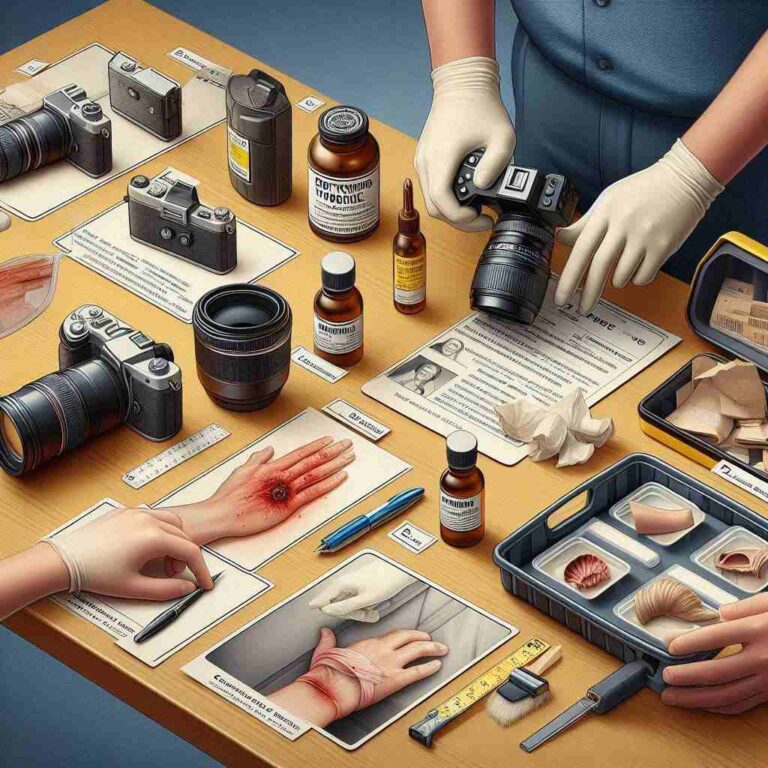
Photos and Videos
Your smartphone is your most powerful tool right now. Use it.
Photograph everything — and I mean everything:
- All vehicles involved, from multiple angles
- Close-ups of damage to each vehicle
- The position of the vehicles before they’re moved
- Skid marks, debris, or fluid on the road
- Traffic lights, road signs, and road markings
- Weather conditions and visibility
- Any injuries visible on yourself or passengers
Take a short video too. A sweeping video of the entire scene captures context that individual photos can miss.
Witness Information
Were there bystanders who saw what happened? Their accounts can be gold dust in a disputed claim. Politely ask for their name and contact number. You don’t need a written statement on the spot — just their details so your solicitor or insurer can follow up later.
Dash cam footage, if you have it, should be secured immediately. Don’t overwrite it.
Exchange Information with the Other Driver
What Details You Legally Need
Under Section 170 of the Road Traffic Act 1988, any driver involved in a road accident must stop and, if required, provide their details. You are legally entitled to — and must provide — the following:
- Full name and address
- Vehicle registration number
- Insurance details (insurer name and policy number)
- Make, model, and colour of vehicle
If the other driver owns the vehicle, that’s usually straightforward. If it’s a company vehicle, note the company name and any fleet reference visible on the vehicle.
Do not take anything for granted. Photograph the other driver’s licence plate and insurance documents directly from their phone or paper — memory is unreliable after a shock.
Report the Accident to Your Insurer
Timing Matters
Most insurance policies require you to report an accident promptly — often within 24 hours, though some extend to a few days. Failure to report in time can, in some cases, give your insurer grounds to complicate or reduce your claim. Check your policy wording the moment you’re safely home.
What to Tell Them
When you call your insurer, stick to the facts. Describe what happened clearly and chronologically. Don’t speculate about fault. Don’t make assumptions about the other driver’s intentions. Your insurer will ask the relevant questions — your job is to answer them honestly and precisely.
Keep a note of who you spoke to, the date and time of the call, and any reference number you’re given. This creates your own paper trail alongside theirs.
Seek Medical Attention Even If You Feel Fine
Hidden Injuries and Legal Implications
I cannot stress this enough: go and see a doctor, even if you feel perfectly fine. Whiplash, for example, is notorious for arriving 24 to 72 hours after an accident. Concussion symptoms can be subtle and delayed. Internal bleeding can go unnoticed for hours.
From a legal perspective, seeking medical attention promptly achieves two critical things:
- It creates a contemporaneous medical record linking your injuries directly to the accident — something any personal injury solicitor will tell you is essential.
- It demonstrates that you took reasonable steps to mitigate your injuries, which insurers and courts view favourably.
If you wait two weeks to see a doctor and then bring a personal injury claim, the other side’s insurer will argue — often successfully — that your injuries are unrelated to the accident or that your own delay made them worse.
Document Everything: Your Paper Trail Is Your Power
Start a dedicated accident file — physical or digital — and put everything in it:
- Photos and videos from the scene
- Police report or reference number
- Medical records and GP/hospital visit receipts
- Receipts for any accident-related expenses (taxi fares while your car is off the road, prescription costs, physiotherapy)
- Written notes of every phone call you make or receive regarding the accident (date, time, who you spoke to, what was said)
- Correspondence with insurers and any third parties
Think of this file as your legal ammunition. The more comprehensive it is, the stronger your position in any claim or dispute.
Understanding Your Legal Rights After a Car Accident
Fault vs. No-Fault Claims
In the UK, the fault-based system means that the party responsible for the accident is liable for the damages caused. If the other driver was at fault, their third-party liability insurance should cover your vehicle repairs, medical expenses, and other losses.
If liability is disputed — which it often is — the insurers will negotiate between themselves, sometimes involving an independent assessor or, in serious cases, litigation.
Personal Injury Claims
If you’ve been injured as a result of someone else’s negligence, you have the right to pursue a personal injury claim. In England and Wales, you generally have three years from the date of the accident to bring a claim (under the Limitation Act 1980), though earlier is always better while evidence is fresh.
Recoverable losses in a personal injury claim can include:
- General damages (pain, suffering, and loss of amenity)
- Special damages (financial losses — lost earnings, medical costs, travel expenses)
- Future losses (if your injuries have long-term impact on your earning capacity or quality of life)
When to Hire a Solicitor
Signs You Need Legal Help
Not every minor bump requires a solicitor. But you should seriously consider seeking legal advice if:
- You have sustained any injury, however minor it seems
- The other driver disputes fault
- The other driver was uninsured or fled the scene
- You’ve been offered a settlement by an insurer and aren’t sure if it’s fair
- Your claim involves complex circumstances (multiple vehicles, road defects, commercial vehicles)
- You’ve lost earnings or anticipate future financial losses due to your injuries
A specialist road traffic accident solicitor will often take personal injury cases on a No Win, No Fee basis, meaning there’s no financial risk to pursuing your claim. Always make sure any solicitor you instruct is regulated by the Solicitors Regulation Authority (SRA).
Dealing with Uninsured Drivers
It’s an uncomfortable reality: approximately 1 in 25 cars on UK roads is uninsured. If you’re hit by one, don’t panic — you’re not left with nothing.
The Motor Insurers’ Bureau (MIB) exists precisely for this scenario. The MIB can compensate victims of accidents caused by uninsured or untraceable (hit-and-run) drivers. You must report the accident to the police and to the MIB directly. Strict time limits and procedural requirements apply, so contact a solicitor promptly.
Your own uninsured motorist cover (if you have comprehensive insurance) may also provide some protection — check your policy details.
Common Mistakes People Make After an Accident
Let’s talk about the pitfalls, because avoiding them is just as important as doing the right things:
1. Leaving the scene too quickly. Even in a minor shunt, take your time to gather all necessary information before driving away.
2. Accepting a cash payment on the spot. The other driver offering cash to “keep things between us” is a red flag. You won’t know the full extent of vehicle damage or your injuries until later. Always go through official channels.
3. Posting on social media. That Instagram story of your crumpled bumper or your tweet venting about the “idiot who hit me” could be used as evidence against you. Stay off social media until any claim is resolved.
4. Forgetting to notify the DVLA. If your vehicle is written off or your ability to drive is affected by injury, the DVLA may need to be informed.
5. Settling too quickly. Insurance companies are businesses. Their first offer is rarely their best one. Get independent advice before accepting any settlement.
Conclusion
A car accident can feel like the world has momentarily collapsed — but how you respond in those first few minutes and hours can make an enormous difference to your physical recovery, your legal position, and your financial outcome. Stay calm, stay safe, gather your evidence, say as little as possible about fault, and let the professionals — solicitors, insurers, and medical practitioners — do their jobs with the solid foundation you’ve given them.
The road to resolution after a car accident isn’t always smooth, but with the right steps, you’ll navigate it with confidence. Keep this guide saved. Share it with people you care about. Because the best time to know what to do after an accident is before one ever happens.
Frequently Asked Questions (FAQs)
1. Do I have to call the police after every car accident in the UK? Not necessarily. You must call police if someone is injured, if a driver fails to stop, or if the other driver is suspected of being under the influence. For minor accidents where details are exchanged, you have 24 hours to report to a police station if required.
2. What if the other driver refuses to give their details? Do not leave the scene. Note their registration plate, photograph it, and call 999. Refusing to provide details after an accident is a criminal offence under the Road Traffic Act 1988.
3. Can I claim compensation if the accident was partly my fault? Yes. England and Wales operate under the principle of contributory negligence, meaning compensation is apportioned based on each party’s degree of fault. You may still recover damages even if you were partially responsible.
4. How long do I have to report an accident to my insurer? This varies by policy but is typically 24–72 hours. Always check your policy documents and report as soon as reasonably possible.
5. What is a “without prejudice” settlement offer? It’s an offer made in negotiations that cannot be used as evidence if the matter goes to court. If an insurer makes you such an offer, get legal advice before responding.
6. What should I do if my car is undriveable after the accident? Your insurer can arrange a recovery vehicle. If the other driver was at fault, their insurer is typically liable for your recovery and repair costs, as well as a courtesy car while yours is being fixed.
7. Can I claim for psychological trauma after a car accident? Absolutely. Conditions like PTSD, anxiety, and depression caused by a road accident are recognised in personal injury law and are fully claimable as part of your general damages.
8. What happens if the accident happened abroad? You should still notify your UK insurer. Claims involving foreign drivers or foreign-registered vehicles are handled through international agreements — your solicitor can advise on the specific country’s rules.
9. Is dashcam footage admissible as evidence in the UK? Yes. Dashcam footage is widely accepted and used in UK courts and insurance disputes. It can be decisive in establishing liability.
10. What is the Motor Insurers’ Bureau (MIB) and how do I contact them? The MIB compensates victims of accidents involving uninsured or untraced drivers. You can contact them directly at mib.org.uk or through a solicitor who specialises in road traffic accidents.