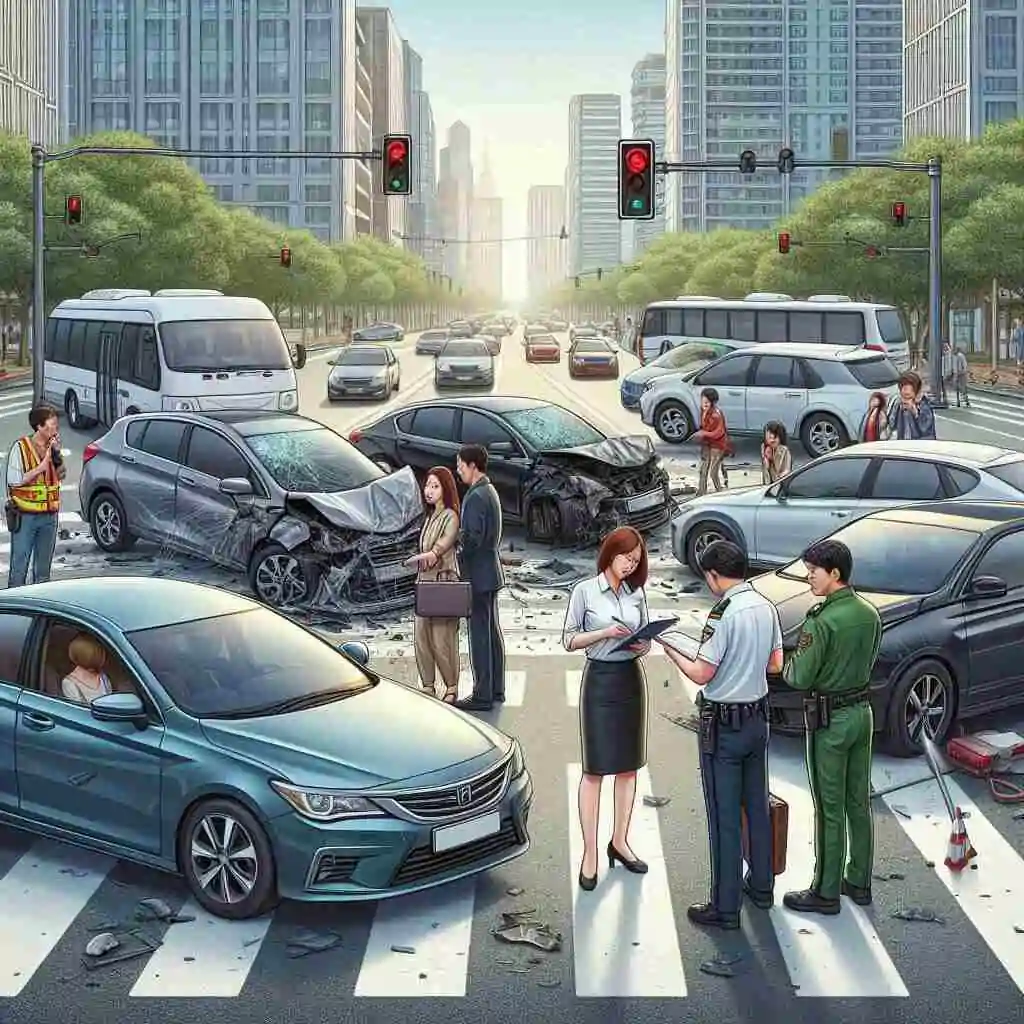
Multi-Vehicle Accident Fault Determination: Who Pays When More Than Two Cars Crash?
Being in a car accident involving just two vehicles is stressful enough. Add a third, fourth, or fifth car to the equation, and the legal and financial picture becomes dramatically more complicated. Multi-vehicle accidents — often called pileups or chain-reaction crashes — are among the most disputed cases in American personal injury law. Insurance companies fight hard, drivers blame each other, and the evidence can be ambiguous.
This guide walks you through exactly how fault is legally determined when multiple vehicles are involved, what evidence matters most, how your state’s negligence laws affect your rights, and what you must do immediately after the crash to protect your compensation.
What Makes Multi-Vehicle Fault Determination Different?
In a standard two-car accident, fault determination is relatively binary — one driver is primarily responsible, or both share some portion of blame. In a multi-vehicle crash, you may be dealing with:
- Multiple at-fault parties, each carrying a percentage of liability
- Chain-reaction dynamics, where the first impact causes subsequent collisions
- Multiple insurance companies, each investigating to minimize their own client’s exposure
- Conflicting witness accounts from drivers with financial stakes in the outcome
- State-specific negligence laws that can dramatically alter what you can recover
The fundamental legal question in every multi-vehicle accident is the same: which driver (or drivers) breached their duty of care to others on the road, and how did that breach cause the harm?
The Legal Foundation: Negligence and Duty of Care
Every driver on a public road in the United States owes a duty of care to other motorists, passengers, cyclists, and pedestrians. This duty requires drivers to operate their vehicles reasonably — obeying traffic laws, maintaining safe following distances, staying attentive, and adjusting to road conditions.
Negligence is established when a driver fails to meet this standard. To prove negligence in a multi-vehicle accident, four elements must all be present:
- Duty — The at-fault driver owed a duty of care to others on the road (this is always assumed for licensed drivers)
- Breach — The driver failed to meet that duty (speeding, distracted driving, following too closely, etc.)
- Causation — That breach directly caused the accident or contributed to it
- Damages — The accident resulted in measurable harm (injuries, property damage, medical bills)
In multi-vehicle crashes, multiple drivers may have breached their duty, and investigators must untangle which breaches actually caused which collisions in the chain.
How Fault Is Actually Determined: The Investigation Process
Step 1 — Law Enforcement Responds and Documents the Scene
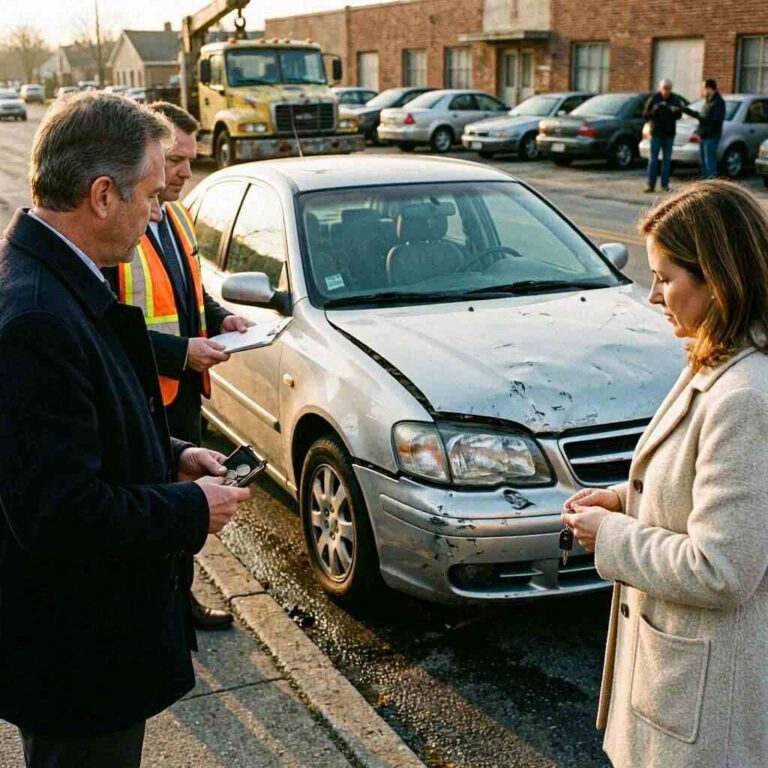
When police arrive at a multi-vehicle accident, their first priority is medical triage. Once safety is addressed, officers begin a systematic documentation of the scene. This becomes the foundation of all future fault determinations.
Officers typically collect:
- Written statements from all involved drivers
- Witness statements from bystanders, passengers, and nearby drivers who witnessed the chain of events
- Physical evidence photographs — vehicle positions, skid marks, debris trails, point-of-impact damage, and road markings
- Road and weather conditions at the time of the crash
- Traffic camera footage from nearby intersections or highway systems
- Field sobriety results if impairment is suspected
- Citations issued for any observed traffic violations
The police report that emerges is not a definitive legal determination of fault — but it carries enormous weight with insurance companies and in court. Officers will often include their professional opinion on probable cause, which becomes a key piece of evidence.
Step 2 — Insurance Companies Launch Parallel Investigations
Every insured driver’s carrier will open its own investigation. In a five-car pileup, you may have five separate insurance companies each trying to minimize the liability assigned to their own policyholder.
Insurance adjusters review:
- Police reports and officer statements
- Medical records and injury documentation
- Vehicle damage assessments (the location and nature of damage reveals impact angles and sequence)
- Cell phone records (to identify distracted driving)
- Dashcam or surveillance footage
- Black box (EDR) data from vehicles involved
This is the stage where many accident victims lose ground. Insurance adjusters are trained negotiators whose job is to reduce payouts. They may contact you quickly after the accident — before you’ve spoken with an attorney — and statements you make can be used to reduce your claim.
Step 3 — Accident Reconstruction (For Complex or Severe Crashes)
In serious multi-vehicle accidents involving significant injury or death, professional accident reconstruction experts are often brought in. These specialists use physics, engineering principles, and computer modeling to reconstruct the exact sequence of events.
Accident reconstructionists analyze:
- Vehicle speeds at the time of impact (from EDR/black box data and skid mark calculations)
- Impact angles — which direction each vehicle was traveling when contact occurred
- Crush damage — the depth and location of damage indicates how fast vehicles were moving
- Trajectory analysis — where vehicles came to rest relative to the point of impact
- Simulation modeling — computer reconstructions can recreate the crash moment by moment
Their findings can definitively establish which driver initiated the chain reaction, what speed each vehicle was traveling, and whether any driver had time to react and avoid contributing to the accident.
Common Multi-Vehicle Accident Scenarios and How Fault Is Assigned
1. Chain-Reaction Rear-End Pileups
The most common multi-vehicle scenario: Car A stops or slows, Car B fails to stop in time and strikes Car A, which is then pushed into Car C, and so on.
How fault works here: The rearmost driver (Car B in this example) is typically presumed to be at fault for the initial collision, since drivers are legally required to maintain a safe following distance. However, this presumption is rebuttable. If Car A stopped suddenly without reason, or if Car C was also following too closely, comparative fault may be shared.
Critically, the driver who caused the first impact is often held liable for all subsequent chain-reaction damages, since those damages would not have occurred but for their initial negligence.
2. Intersection Multi-Vehicle Crashes
Intersection accidents involving multiple vehicles typically originate from a right-of-way violation — someone runs a red light, fails to yield on a left turn, or blows through a stop sign.
How fault works here: The driver who violated traffic control laws or right-of-way rules bears primary fault. However, if secondary drivers could have avoided the accident with reasonable attention and failed to, they may share partial liability. Investigators examine light timing, signal visibility, vehicle speeds, and driver sight lines.
3. Highway Pileups in Poor Weather
Fog, ice, rain, and snow create conditions where multi-vehicle accidents can involve dozens of cars. These are among the most legally complex scenarios because weather itself cannot be sued — but drivers can be.
How fault works here: Every driver has an independent duty to adjust their speed and following distance for road conditions. A driver who is traveling 70 mph on an icy highway may be negligent even if that speed is the legal limit. Multiple drivers may share fault, each responsible for not adapting to conditions. In some cases, government entities may bear partial responsibility if road hazards were reported and not addressed (unmarked ice patches, missing guardrails, etc.).
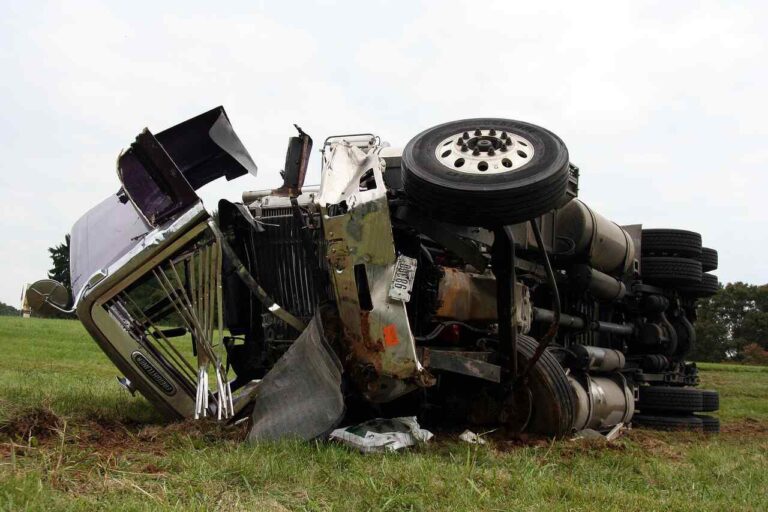
4. Truck-Involved Multi-Vehicle Accidents
When a commercial semi-truck is part of a multi-vehicle accident, the liability picture expands considerably. Fault may extend beyond the truck driver to include:
- The trucking company — for negligent hiring, inadequate training, or pressure to violate hours-of-service regulations
- The cargo loader — if improperly secured cargo shifted and caused loss of control
- The vehicle manufacturer — if a brake failure, tire blowout, or mechanical defect contributed
- A maintenance contractor — if negligent inspections or repairs played a role
These cases often involve federal regulations under the Federal Motor Carrier Safety Administration (FMCSA), adding another layer of complexity.
5. Left-Turn Multi-Vehicle Collisions
Left-turn accidents at intersections or driveways can involve multiple vehicles when the turning car blocks or clips traffic flowing from multiple directions.
How fault works here: Right-of-way laws generally place the burden on the left-turning driver to yield to oncoming traffic. However, if oncoming drivers were speeding or ran a red light, they may share liability. Investigators reconstruct the timing of the turn, signal status, and each vehicle’s speed.
6. Merging and Lane-Change Pileups
On highways, improper merging or sudden lane changes can trigger multi-vehicle accidents when surrounding traffic is forced to swerve or brake.
How fault works here: The merging driver bears primary responsibility if they failed to check mirrors, signal, and yield appropriately. Secondary fault may attach to drivers who failed to maintain adequate spacing or who reacted unreasonably.
How State Negligence Laws Affect Your Compensation
This is one of the most important — and most misunderstood — aspects of multi-vehicle accident claims. The state where your accident occurred governs which rules apply to fault sharing and compensation recovery.
Pure Comparative Negligence States
In states like California, New York, Florida, and Washington, you can recover compensation even if you are partially — or even mostly — at fault. Your recovery is simply reduced by your percentage of fault.
Example: If you are 40% at fault and your total damages are $100,000, you recover $60,000.
States using pure comparative negligence: California, New York, Florida, Alaska, Arizona, Kentucky, Louisiana, Mississippi, Missouri, New Mexico, Rhode Island, Washington.
Modified Comparative Negligence States (51% Rule)
Most states use a modified version where you can only recover if you are less than 51% at fault. If you are found 51% or more responsible, you recover nothing.
Example: In a Texas pileup where you are found 52% at fault, you recover $0 even if your injuries are severe.
States using modified comparative negligence (51% bar): Texas, Georgia, Illinois, Pennsylvania, Michigan, Wisconsin, Colorado, Minnesota, and many others.
Modified Comparative Negligence States (50% Rule)
A stricter version used by some states — you must be less than 50% at fault to recover anything.
States using the 50% bar: Arkansas, Colorado (certain circumstances), Georgia (certain circumstances), Idaho, Kansas, Maine, Nebraska, North Dakota, Tennessee, Utah, West Virginia.
Pure Contributory Negligence States
These states apply the harshest rule: if you contributed in any way to the accident — even 1% — you recover nothing from the other parties.
States still using contributory negligence: Alabama, Maryland, North Carolina, Virginia, and Washington D.C.
This makes multi-vehicle accident claims in these states exceptionally consequential. Even minor fault can bar complete recovery.
No-Fault Insurance States
In no-fault states, your own insurance covers your medical expenses and lost wages regardless of who caused the accident — up to your Personal Injury Protection (PIP) coverage limits. You can only step outside the no-fault system and sue an at-fault driver if your injuries meet a certain threshold of severity.
No-fault states include: Florida, Michigan, New York, New Jersey, Pennsylvania, Hawaii, Kansas, Kentucky, Massachusetts, Minnesota, North Dakota, Utah.
The Evidence That Makes or Breaks Multi-Vehicle Fault Claims
Dashcam Footage
Nothing resolves disputed fault faster than dashcam video. If your dashcam or another driver’s captured the sequence of events, it is typically the most compelling evidence available. In 2026, many commercial vehicles are required to have dashcams, and many personal vehicles have them as well.
Action: If you have dashcam footage, secure it immediately and do not overwrite it. If nearby commercial trucks were involved, their dashcam footage may be subpoenaed.
Black Box (Event Data Recorder) Data
Most vehicles manufactured after 2014 contain an Event Data Recorder (EDR), often called a “black box.” EDRs record pre-crash data including:
- Vehicle speed in the seconds before impact
- Brake application timing
- Throttle position
- Seatbelt use
- Airbag deployment timing
This data is extraordinarily difficult to dispute and can prove whether a driver was speeding, braking, or accelerating at the moment of impact. EDR data must be preserved quickly — some systems overwrite previous data after a new deployment event.
Cell Phone Records
Distracted driving is a contributing factor in a significant portion of multi-vehicle accidents. If a driver was texting or calling at the moment of impact, their cell phone carrier records can document this. Obtaining these records typically requires a legal subpoena, which is another reason having an attorney matters.
Traffic and Surveillance Camera Footage
Many intersections, highways, and commercial areas are covered by public traffic cameras, private business security cameras, or red light camera systems. This footage is often automatically overwritten after 24–72 hours. If you suspect camera footage exists, your attorney must act immediately to preserve it with a formal preservation letter.
Witness Statements
Independent witnesses — people with no financial stake in the outcome — carry significant weight. This includes passengers in other vehicles, pedestrians, cyclists, and drivers who were nearby but not involved in the crash.
Action at the scene: If you are physically able, collect contact information (name and phone number) from any witness before they leave.
Medical Records and Injury Documentation
Your medical records do more than document your treatment — they establish the connection between the accident and your injuries. Gaps in treatment, injuries inconsistent with the accident, or records that conflict with your account of the crash can all be used against you.
Action: Seek medical attention immediately after any multi-vehicle accident, even if you feel fine. Adrenaline can mask symptoms of whiplash, concussion, and internal injuries that appear hours or days later.
What to Do Immediately After a Multi-Vehicle Accident
At the Scene
1. Prioritize safety first. If you can safely exit your vehicle, do so. Move away from traffic lanes to prevent additional collisions.
2. Call 911 immediately. A police report is essential in multi-vehicle accidents. Do not agree to settle without a report.
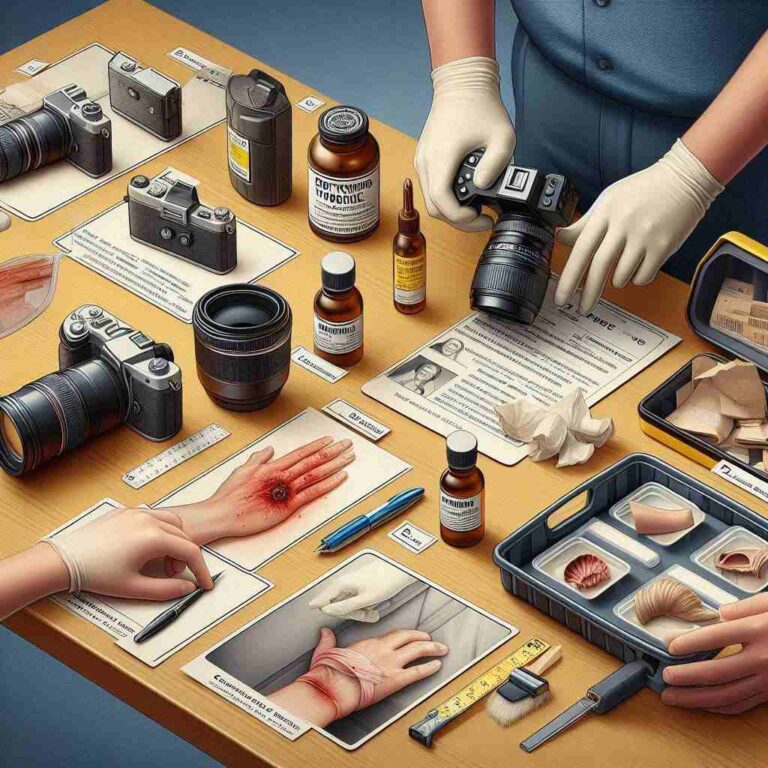
3. Document everything you can. If you are not seriously injured, use your phone to photograph:
- All vehicles involved and their positions
- License plates of all vehicles
- Visible damage on every car
- Skid marks and debris
- Road conditions, traffic signs, and signals
- Your own injuries (bruising, cuts, etc.)
- Wide-angle shots showing the full accident scene
4. Collect contact information. Get names, phone numbers, driver’s license numbers, insurance information, and vehicle registration details from all drivers involved. Collect contact details from witnesses.
5. Do not admit fault. Do not apologize, speculate about what happened, or make statements that could be interpreted as an admission of fault. Even “I’m sorry” can be used against you.
6. Speak to police officers factually. Provide accurate information about what you observed and experienced. Stick to facts, not interpretations.
After Leaving the Scene
7. Seek immediate medical attention. Go to an emergency room or urgent care, even if you feel okay. Document your symptoms and all treatment.
8. Notify your insurance company. Report the accident promptly as required by your policy. However, provide only factual information and do not speculate about fault.
9. Preserve all evidence. Save dashcam footage. Do not repair your vehicle before it has been photographically documented and ideally inspected by an expert.
10. Consult a personal injury attorney before giving statements to other drivers’ insurance companies. The other parties’ insurers are not on your side. An experienced attorney can guide your communications and protect your rights.
How Insurance Companies Assign Fault Percentages
Once investigations are complete, each insurance company will assign a fault percentage to each driver. This is not a neutral process — each insurer advocates for its own policyholder.
The process typically involves:
- Independent adjuster review of all collected evidence
- Inter-company negotiations between multiple insurers
- Application of state negligence law to the established facts
- Proportional settlement offers based on fault percentages
If you disagree with the fault determination made by insurance companies, you have options:
- Demand an independent appraisal if only property damage is disputed
- File a personal injury lawsuit to have fault determined by a judge or jury
- Request arbitration if your insurance policy includes an arbitration clause for unresolved disputes
When Multiple Parties Are Liable: Managing Complex Claims
In a multi-vehicle accident where three or more drivers share fault, your attorney must file claims against each at-fault party separately. This involves:
- Identifying all liable parties — which may include not just drivers but employers, vehicle manufacturers, and government entities
- Calculating each party’s proportional share of your total damages
- Filing within the statute of limitations — which varies by state (typically 2–3 years for personal injury claims)
- Pursuing each party’s insurance coverage — and evaluating umbrella policies or excess coverage if primary limits are insufficient
In catastrophic cases where your damages exceed the coverage available from all at-fault parties, your own underinsured motorist (UIM) coverage may fill the gap.
Frequently Asked Questions About Multi-Vehicle Accident Fault
Q: What if I was hit from behind and pushed into the car in front of me — am I at fault for hitting that front car?
Generally, no. If you were stationary or moving at a safe speed and were struck from behind, the driver who hit you is responsible for all impacts you caused as a result of being pushed forward. However, if you were following the front car too closely, you may share some fault.
Q: Can I still recover compensation if I was partly at fault?
In most states, yes — as long as you were not the majority at-fault driver. Your recovery will be reduced by your percentage of fault. In pure contributory negligence states (Alabama, Maryland, North Carolina, Virginia, D.C.), even minor fault can bar recovery.
Q: What if one of the drivers in the pileup was uninsured?
Your own uninsured motorist (UM) coverage can compensate you for damages caused by an uninsured driver. If you don’t have UM coverage, you may need to pursue the uninsured driver directly in civil court.
Q: How long does fault determination take in a multi-vehicle accident?
Straightforward multi-vehicle accidents may be resolved within weeks. Complex cases involving serious injuries, multiple parties, and disputed facts can take months to years, particularly if litigation is required.
Q: Is the driver who caused the first impact always responsible for everything?
Generally yes — the initiating negligent driver is often liable for all foreseeable chain-reaction damages. However, if subsequent drivers also acted negligently (tailgating, speeding, distracted driving), they may share proportional liability.
Q: Should I give a recorded statement to the other driver’s insurance company?
No — not without legal advice. You are typically not legally required to give a recorded statement to the other party’s insurer, and doing so without preparation can seriously harm your claim.
Why You Need an Attorney for Multi-Vehicle Accident Claims
The complexity of multi-vehicle fault determination is precisely why these cases benefit enormously from experienced legal representation. An attorney provides:
- Evidence preservation — acting immediately to secure dashcam footage, black box data, camera footage, and witness information before it disappears
- Accident reconstruction coordination — engaging experts who can authoritatively establish the sequence of events
- Insurance company negotiation — dealing with multiple carriers simultaneously, each trying to minimize their client’s exposure
- State law navigation — applying your state’s comparative or contributory negligence rules to maximize your recovery
- Litigation readiness — filing suit when insurance settlements are inadequate and presenting your case effectively in court
Most personal injury attorneys handle multi-vehicle accident cases on a contingency fee basis — you pay nothing upfront, and the attorney only collects a fee if you recover compensation.
The Bottom Line
Multi-vehicle accident fault determination is never simple. It involves overlapping negligence claims, conflicting insurance company investigations, state-specific legal rules, and a race to gather and preserve evidence before it disappears. The drivers who protect their rights most effectively are those who document thoroughly at the scene, seek medical attention immediately, and engage experienced legal counsel before making statements that could compromise their claims.
If you were involved in a multi-vehicle accident, understanding that fault is rarely black and white — and that you may have legal rights even if you played some role in the collision — is the first step toward fair compensation.
Disclaimer: This article is for informational purposes only and does not constitute legal advice. Multi-vehicle accident laws vary significantly by state. If you have been involved in a multi-vehicle collision, consult a licensed personal injury attorney in your jurisdiction for advice specific to your situation.