Eco-Friendly Craft Projects That Teach Children About Sustainability
Is your kitchen table currently covered in a fine dusting of glitter, or perhaps sticky with the remnants of a glue stick that didn’t quite make it back into the drawer? If so, you are likely in the thick of parenthood or caregiving. It is a messy business, looking after little ones, but amidst the chaos of cut-up paper and paint pots, there is a wonderful opportunity to instil values that will stick with them longer than that glitter sticks to the carpet. We are talking about sustainability, of course.
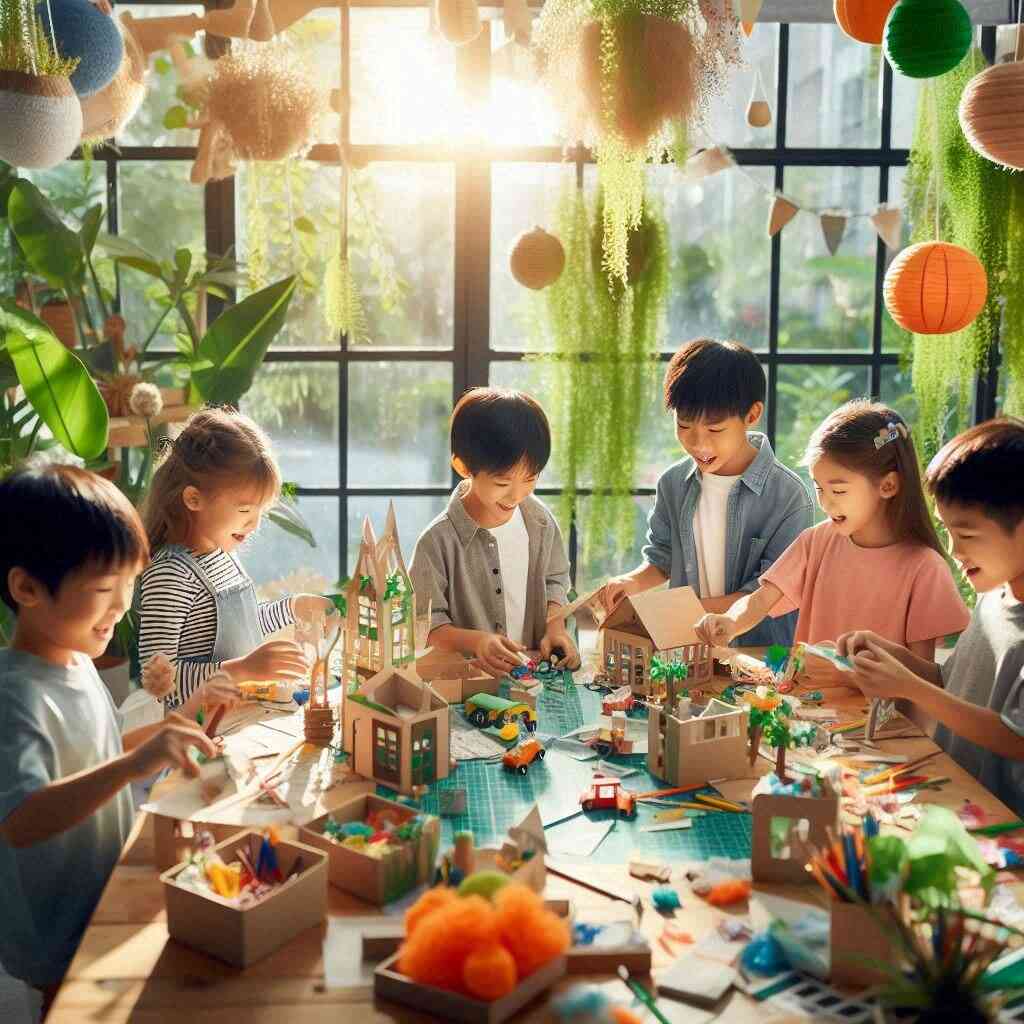
It can feel like a heavy topic to broach with a seven-year-old who just wants to watch cartoons, yet the best way to introduce these big concepts is rarely through a lecture. Instead, it happens through doing. It happens through play. By turning what we might consider ‘rubbish’ into treasure, we teach children that resources are finite and that imagination is infinite. Plus, it saves a trip to the shops, which is always a bonus on a rainy Sunday.
The Potential in a Cardboard Box
One of the simplest places to start is with the humble cardboard box. It is a cliché for a reason: you buy a child an expensive electronic gadget, and they end up having more fun with the packaging. Rather than fighting this, why not lean into it? A large box can be a car, a rocket ship, or a secret den. With a few crayons and some safety scissors, children can modify their new home. It teaches them to look at an object and see its potential, rather than just seeing waste.
Give Plastic a Second Life
Moving on from cardboard, let’s talk about plastic. It is the bane of the eco-conscious household, but since it is nearly impossible to avoid entirely, giving it a second life is the next best thing. Plastic bottles make excellent bird feeders or hanging planters. By cutting a hole in the side of a bottle, filling it with a bit of soil and some seeds, a child can watch life grow from something that was destined for the landfill.
This project has a double benefit. Not only does it reuse materials, but it also connects children with nature. They learn that plants need water and light, and they develop a sense of responsibility. Watching a seedling push through the soil because they remembered to water it is a small triumph, but a significant one.
Crafting as a Connection
It is interesting to note that many support networks, such as a local foster agency, often recommend these sorts of grounded, sensory activities. They are fantastic for calming anxiety and building a bond between a carer and a child. When you are sitting side-by-side, painting a pebble or threading pasta onto a string, the pressure to talk face-to-face vanishes. It creates a safe space where conversations can flow naturally. The focus is on the hands, which frees up the mind.
Forage for Art Supplies
We should also consider the natural world as a supplier of art materials. Why buy plastic sequins when autumn leaves provide such a stunning array of reds and golds? A nature walk to collect twigs, pinecones, conkers, and interesting stones can be an adventure in itself. Once you are back home, these items can be arranged into collages or painted to create ‘pet rocks’.
This approach encourages children to observe the seasons and the rhythm of the natural world. It slows them down. In an age of instant gratification and high-speed internet, the patience required to press a flower or wait for paint to dry on a pinecone is a virtue worth cultivating. It grounds them in the here and now.
The Value of Being Thrifty
And then there is the financial side of things. Crafting with recycled materials is essentially free. While money shouldn’t be the only motivation, it is a practical lesson for children. They learn that fun doesn’t always have to be purchased. For families operating on a budget, or perhaps managing the household finances alongside a foster care allowance, being resourceful is a key skill.
Even though that allowance is there to ensure the child’s needs are fully met, demonstrating how to be thrifty and creative is a life lesson that prepares them for their own independence one day. It shows them that you can make do and mend, and that often, the homemade version has more heart than the store-bought one anyway.
Of course, the end result of these projects isn’t really the point. The wonky robot made of cereal boxes or the slightly leaking bottle-planter might not win any design awards. But that isn’t why we do it. We do it to spend time together. We do it to show the next generation that we can make beautiful things without destroying the planet in the process.