
50+ Bible Verses About Forgiveness
Forgiveness is one of the Bible’s most enduring and transformative themes, yet it’s also one of the most searched and frequently misunderstood. Many people looking for passages in the Bible about forgiveness aren’t beginning an in-depth theological study. They’re searching for something more immediate: where Scripture talks about forgiveness, which verses apply to their situation, and what those passages actually mean.
Whether you’re preparing a Bible study, looking for encouragement after a difficult relationship, seeking verses about God’s mercy, or simply wondering where the Bible discusses forgiveness, finding the right passage can feel overwhelming. Dozens of verses speak about forgiveness, but they don’t all address the same question. Some reveal God’s willingness to forgive repentant sinners. Others teach believers how to forgive one another. Still others connect forgiveness with repentance, love, reconciliation, or healing after personal failure.
This guide is designed to make those passages easy to find and easier to understand.
Rather than presenting an unorganized list of verses, you’ll find forgiveness Scriptures grouped by real-life situations and biblical themes. Each passage includes concise context, a clear explanation of its central message, and a practical takeaway to help you understand how it fits within the broader story of Scripture. The goal isn’t to replace deeper biblical study, but to help you locate the right passage quickly and understand why it matters.
If you’re looking for a comprehensive explanation of what forgiveness means in the Bible, how it develops from Genesis to Revelation, or the theological relationship between forgiveness, grace, mercy, reconciliation, and the work of Christ, continue your study with our pillar guide on Forgiveness in the Bible. This article focuses instead on helping you discover, compare, and apply the Bible’s most important forgiveness passages.
By the end of this guide, you’ll be able to:
- Quickly locate Bible verses about forgiveness for different situations.
- Understand the basic context behind each passage.
- Compare Old Testament and New Testament teachings on forgiveness.
- Identify which verses are best for personal study, prayer, encouragement, counseling, or Bible teaching.
- Build a meaningful Scripture reading path that leads from individual verses to a deeper understanding of God’s Word.
Let’s begin by helping you find the exact category of forgiveness passages you’re looking for.
50+ Bible Verses About Forgiveness (Quick Navigation)
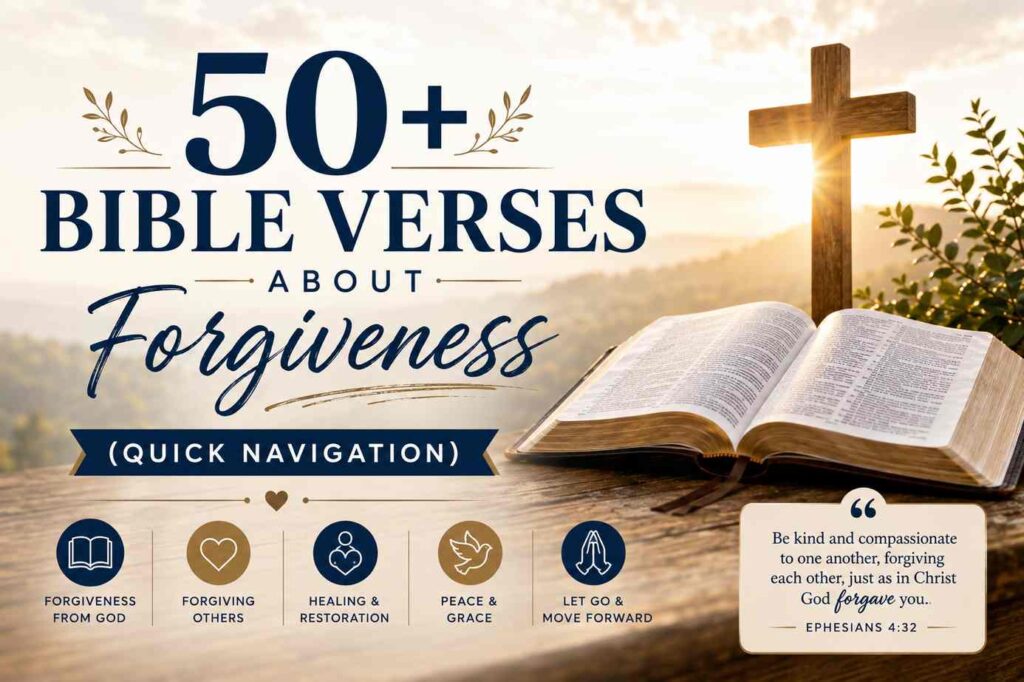
If you’re looking for a specific type of forgiveness verse, use the categories below to jump directly to the passages most relevant to your needs.
| If You’re Looking For… | Go to This Section |
| God’s forgiveness and mercy | Bible Verses About God’s Forgiveness |
| Forgiving other people | Bible Verses About Forgiving Others |
| Receiving forgiveness for sin | Bible Verses About Forgiveness of Sin |
| Love and forgiveness | Bible Verses About Love and Forgiveness |
| Repentance and restoration | Bible Verses About Repentance and Forgiveness |
| Marriage, family, and relationships | Bible Verses About Forgiveness in Relationships |
| Anger, bitterness, and letting go | Bible Verses About Anger, Bitterness, and Letting Go |
| Short Scriptures for memorization | Short Bible Verses About Forgiveness |
| Finding the right verse for your situation | Which Bible Verse About Forgiveness Fits Your Situation? |
| Common questions about forgiveness | Frequently Asked Questions |
Quick Category Overview
| Category | Primary Focus | Best Starting Verse |
| God’s Forgiveness | God’s mercy toward sinners | Psalm 103:10–12 |
| Forgiving Others | Extending grace to people who have hurt us | Ephesians 4:32 |
| Forgiveness of Sin | Receiving God’s forgiveness through Christ | 1 John 1:9 |
| Love and Forgiveness | Mercy expressed through Christian love | Colossians 3:13 |
| Repentance and Forgiveness | Turning back to God | Isaiah 55:6–7 |
| Relationships | Restoring peace within families, friendships, and the church | Colossians 3:13 |
| Anger and Letting Go | Releasing resentment and bitterness | Proverbs 17:9 |
| Memory Verses | Short passages for daily encouragement | Luke 6:37 |
Before You Explore the Verses
Not every forgiveness passage addresses the same situation, and that’s worth remembering before you dive in.
Some passages reveal how God forgives us. Others explain how believers should forgive one another. Some focus on repentance, while others emphasize mercy, compassion, reconciliation, or the freedom that comes from releasing bitterness. Reading each verse within its immediate context prevents misunderstanding and allows Scripture to speak with greater clarity.
Throughout this guide, each featured passage follows the same easy-to-use format:
- Scripture Reference — the passage to read.
- Historical or Literary Context — who is speaking, to whom, and why.
- Why This Verse Matters — the unique contribution this passage makes to the Bible’s teaching on forgiveness.
- Practical Application — how the verse can encourage or guide readers today.
- Related Scriptures — additional passages worth exploring next.
This consistent structure makes it easier to compare verses, understand their distinct emphasis, and choose passages that best fit your current study or life situation.
While the Bible presents one unified message of God’s redeeming love, it explores forgiveness from many different perspectives. The following section begins with the passages that many Christians consider the foundational Scriptures on forgiveness—verses that have shaped personal devotion, Bible study, counseling, and Christian teaching for generations.
Best Bible Verses About Forgiveness

While the Bible speaks about forgiveness in many different ways, certain passages stand out because they capture its central message with exceptional clarity. These verses reveal God’s heart toward repentant sinners, teach believers how to forgive others, and show why forgiveness remains at the center of Christian faith and daily living.
The passages below aren’t ranked by importance—every verse contributes something unique to Scripture’s teaching. Instead, they’ve been selected because they’re among the most frequently studied, quoted, and applied when Christians seek biblical guidance on forgiveness.
Each entry includes its immediate context, the key lesson it teaches, and practical insight into why it continues to resonate with believers today.
1. Ephesians 4:32 — Forgive as God Forgave You
“Be kind to one another, tenderhearted, forgiving one another, as God in Christ forgave you.” (Ephesians 4:32)
Context
The Apostle Paul wrote Ephesians to encourage believers to live in a way that reflects their new life in Christ. In the closing chapters, he shifts from explaining God’s saving work to describing how that truth should shape everyday relationships within the Christian community.
Why This Verse Matters
Rather than presenting forgiveness as an optional virtue, Paul roots it in God’s own example. Christians forgive not simply because forgiveness improves relationships, but because they’ve already experienced God’s undeserved mercy through Christ.
The verse also links forgiveness with kindness, compassion, and a transformed heart, a reminder that biblical forgiveness grows from an attitude shaped by God’s grace rather than mere obligation.
Practical Application
When forgiveness feels difficult, this verse redirects attention from the offense itself to God’s forgiveness toward us. Remembering the mercy we’ve received often reshapes how we respond to those who have wronged us.
Related Scriptures
- Colossians 3:13
- Matthew 6:14–15
- Romans 5:8
2. 1 John 1:9 — God’s Promise to Forgive
“If we confess our sins, he is faithful and just to forgive us our sins and to cleanse us from all unrighteousness.” (1 John 1:9)
Context
John wrote to believers facing confusion about sin, truth, and genuine fellowship with God. Rather than encouraging denial of sin, he teaches that honest confession is part of walking in God’s light.
Why This Verse Matters
This passage is one of Scripture’s clearest promises regarding God’s forgiveness. It emphasizes God’s faithfulness and righteousness rather than human worthiness. Forgiveness rests on God’s character, making this verse a source of hope for believers seeking restoration after failure.
Practical Application
Confession is more than admitting mistakes—it’s bringing our lives honestly before God, trusting His promise to forgive and restore those who turn to Him.
Related Scriptures
- Psalm 32:5
- Proverbs 28:13
- James 5:16
3. Psalm 103:10–12 — God’s Mercy Is Greater Than Our Sin
“He does not deal with us according to our sins… as far as the east is from the west, so far does he remove our transgressions from us.” (Psalm 103:10–12)
Context
Psalm 103 is David’s song of praise celebrating God’s compassion, steadfast love, and mercy toward His people.
Why This Verse Matters
The imagery of east and west illustrates complete separation rather than measurable distance. David celebrates not merely God’s willingness to forgive but the completeness of His mercy toward those who fear Him.
Practical Application
Many believers continue carrying guilt long after seeking God’s forgiveness. This passage reminds readers that God’s forgiveness is meant to restore fellowship, not leave people permanently defined by past failures.
Related Scriptures
- Isaiah 43:25
- Micah 7:18–19
- Hebrews 8:12
4. Matthew 6:14–15 — A Forgiving Heart Reflects God’s Grace
“For if you forgive others their trespasses, your heavenly Father will also forgive you…” (Matthew 6:14–15)
Context
Jesus speaks these words immediately after teaching the Lord’s Prayer during the Sermon on the Mount.
Why This Verse Matters
These verses frame forgiveness as a defining characteristic of those who’ve experienced God’s grace. Rather than encouraging believers to keep score, Jesus points toward a transformed heart that naturally extends mercy to others.
Practical Application
This passage invites believers to examine not only whether they’ve been forgiven by God but whether that forgiveness is shaping their relationships with others.
Related Scriptures
- Matthew 18:21–35
- Luke 6:37
- Ephesians 4:32
5. Colossians 3:13 — Forgiveness Strengthens Christian Community
“Bearing with one another and, if one has a complaint against another, forgiving each other; as the Lord has forgiven you, so you also must forgive.”
Context
Paul encourages believers to put on the character of Christ within the life of the church.
Why This Verse Matters
Conflict is inevitable wherever people live and work together, and Paul doesn’t assume Christians will never hurt one another. Instead, he teaches that forgiveness becomes one of the primary ways Christian communities remain united.
Practical Application
Healthy relationships are built not on perfection but on humility, patience, and a willingness to extend grace when conflict arises.
Related Scriptures
- Romans 12:18
- Galatians 6:1–2
- Philippians 2:1–5
6. Luke 6:37 — Mercy Instead of Judgment
“Judge not, and you will not be judged; condemn not, and you will not be condemned; forgive, and you will be forgiven.”
Context
Jesus teaches His followers what life in God’s kingdom should look like.
Why This Verse Matters
This verse highlights the connection between mercy, humility, and forgiveness. Rather than encouraging believers to become careless about right and wrong, Jesus warns against a harsh, condemning spirit.
Practical Application
Before responding to someone else’s failure, ask whether your attitude reflects the same mercy God continually shows His people.
Related Scriptures
- James 2:13
- Romans 14:10–13
- Matthew 7:1–5
7. Isaiah 55:6–7 — God Invites the Repentant
“Seek the Lord while he may be found… let him return to the Lord, that he may have compassion on him… for he will abundantly pardon.”
Context
Isaiah calls God’s people to return to Him with sincere repentance.
Why This Verse Matters
Rather than presenting forgiveness reluctantly, Isaiah portrays God as abundantly willing to pardon those who genuinely seek Him.
Practical Application
No matter how distant someone feels from God, this passage reminds readers that His invitation to return remains open.
Related Scriptures
- Joel 2:12–13
- Jeremiah 31:34
- Acts 3:19
8. Proverbs 17:9 — Choosing Love Over Resentment
“Whoever covers an offense seeks love, but he who repeats a matter separates close friends.”
Context
The book of Proverbs offers wisdom for daily relationships.
Why This Verse Matters
This proverb teaches the difference between lovingly overlooking minor offenses and continually reopening wounds that damage trust and friendship.
Practical Application
Not every disagreement needs to become a lasting conflict. Wisdom often means knowing when to extend grace instead of prolonging division.
Related Scriptures
- Proverbs 19:11
- 1 Peter 4:8
- Romans 12:18
9. Mark 11:25 — Forgiveness and Prayer
“Whenever you stand praying, forgive, if you have anything against anyone…”
Context
Jesus connects prayer with the condition of the believer’s heart.
Why This Verse Matters
Prayer isn’t merely about speaking to God; it also invites believers to examine unresolved resentment that may hinder their spiritual life.
Practical Application
Before bringing requests to God, take time to ask whether bitterness or unforgiveness has taken root in your heart.
Related Scriptures
- Matthew 5:23–24
- Ephesians 4:31–32
- Hebrews 12:15
10. Micah 7:18–19 — A God Who Delights in Mercy
“Who is a God like you, pardoning iniquity… He will again have compassion on us… You will cast all our sins into the depths of the sea.”
Context
Micah concludes his prophecy by celebrating God’s covenant faithfulness after announcing both judgment and future restoration.
Why This Verse Matters
The closing verses reveal that forgiveness is rooted in God’s steadfast character. He delights in showing mercy and remains faithful to His covenant promises.
Practical Application
When guilt feels overwhelming, this passage reminds believers that God’s mercy is stronger than their failures.
Related Scriptures
- Exodus 34:6–7
- Psalm 86:5
- Hebrews 10:17
Comparing the Bible’s Most Well-Known Forgiveness Verses
| Bible Passage | Primary Emphasis | Best For |
| Ephesians 4:32 | Forgiving others because God forgave us | Christian relationships |
| 1 John 1:9 | Confession and God’s forgiveness | Personal repentance |
| Psalm 103:10–12 | God’s mercy removes guilt | Encouragement and worship |
| Matthew 6:14–15 | Forgiving as evidence of a transformed heart | Self-examination |
| Colossians 3:13 | Grace within Christian community | Church and family life |
| Luke 6:37 | Mercy over condemnation | Everyday relationships |
| Isaiah 55:6–7 | Returning to God | Spiritual renewal |
| Proverbs 17:9 | Protecting relationships through grace | Friendship and conflict |
| Mark 11:25 | Forgiveness and prayer | Personal devotion |
| Micah 7:18–19 | God’s delight in mercy | Hope after failure |
These foundational passages offer an excellent starting point, but together they represent only one dimension of the Bible’s teaching. Many readers are specifically searching for verses that reveal God’s willingness to forgive, offering reassurance that no sincere repentance is beyond His mercy. The next section turns to passages that highlight God’s forgiving character and the confidence believers can have in His grace.
Bible Verses About God’s Forgiveness
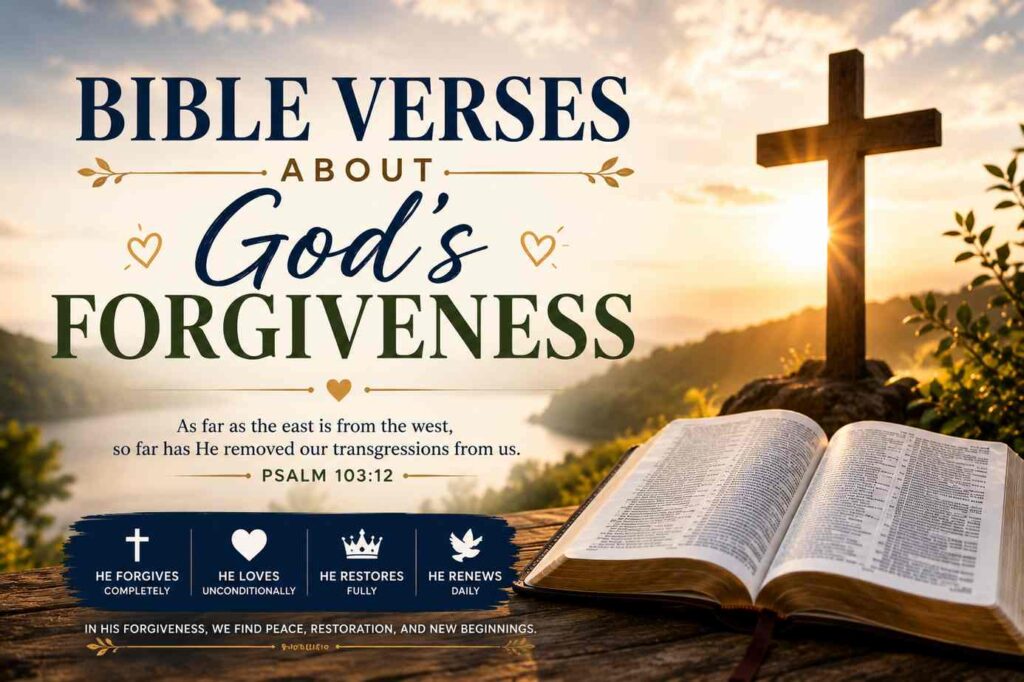
One of Scripture’s most reassuring truths is that forgiveness begins with God. Before the Bible instructs believers to forgive one another, it consistently reveals a God who is merciful, patient, and ready to restore those who genuinely turn to Him.
This distinction matters. Many people search for forgiveness verses because they’re carrying guilt, wondering whether God can forgive a particular sin or whether they’ve wandered too far from Him. The passages below answer those fears by highlighting God’s character rather than human achievement.
Together, they show that God’s forgiveness is rooted in His faithfulness, compassion, and covenant love—not in our ability to earn a second chance.
Psalm 103:10–12 — God Removes Our Sins Completely
“He does not deal with us according to our sins, nor repay us according to our iniquities… as far as the east is from the west, so far does he remove our transgressions from us.”
Context
David praises God by reflecting on His compassion, steadfast love, and mercy toward His people. Rather than focusing on human failure, the psalm celebrates God’s gracious response to those who fear Him.
Why This Verse Stands Out
The image of east and west communicates complete separation. Unlike north and south, which eventually meet, east and west continue indefinitely. David uses this picture to emphasize the completeness of God’s forgiveness rather than suggesting God merely overlooks sin.
Practical Reflection
When past mistakes continue to define your thinking, this verse reminds you that God’s forgiveness is intended to restore your relationship with Him, not leave you permanently imprisoned by guilt.
Isaiah 43:25 — God Chooses Not to Hold Forgiven Sin Against His People
“I, I am he who blots out your transgressions for my own sake, and I will not remember your sins.”
Context
Isaiah speaks to God’s covenant people during a period marked by repeated unfaithfulness. Even while confronting their rebellion, God promises future restoration because of His own faithful character.
Why This Verse Matters
The phrase “I will not remember your sins” doesn’t suggest divine forgetfulness. Instead, it expresses covenant language—God no longer counts forgiven sin against His people or allows it to define their restored relationship with Him.
Practical Reflection
Many people struggle more to forgive themselves than to believe God forgives them. Isaiah reminds readers that God’s promise rests on His faithfulness rather than on our ability to feel forgiven.
Related Scriptures
- Jeremiah 31:34
- Hebrews 10:17
- Micah 7:18–19
1 John 1:9 — Confession Opens the Way to Restoration
“If we confess our sins, he is faithful and just to forgive us our sins and to cleanse us from all unrighteousness.”
Context
John encourages believers to walk honestly before God. Instead of pretending sin doesn’t exist, Christians are called to acknowledge it openly and trust God’s promise of forgiveness.
Why This Verse Matters
Notice that John points readers to God’s character. The confidence of forgiveness rests on God’s faithfulness and justice—not on the intensity of our emotions or the perfection of our repentance.
Practical Reflection
Confession isn’t about convincing God to become merciful. It’s about agreeing with Him, turning toward Him, and trusting the forgiveness He’s already promised to those who sincerely come before Him.
Micah 7:18–19 — God Delights in Showing Mercy
“Who is a God like you, pardoning iniquity… He does not retain his anger forever, because he delights in steadfast love.”
Context
Micah concludes his prophecy by celebrating God’s covenant faithfulness after announcing both judgment and restoration.
Why This Verse Matters
Rather than portraying forgiveness as reluctant, Micah presents mercy as something that flows naturally from God’s character. His compassion isn’t an afterthought—it’s part of who He is.
Practical Reflection
This passage offers hope to anyone who wonders whether God still welcomes those who return to Him after failure.
Jeremiah 31:34 — The Promise of Lasting Forgiveness
“For I will forgive their iniquity, and I will remember their sin no more.”
Context
Jeremiah announces God’s promise of a New Covenant during one of Judah’s darkest periods, when exile and judgment seemed unavoidable.
Why This Verse Matters
Unlike repeated sacrifices under the Old Covenant, Jeremiah points toward a future relationship characterized by lasting forgiveness and transformed hearts.
Practical Reflection
Forgiveness here isn’t a temporary pause in judgment but part of God’s enduring plan to restore His people.
Exodus 34:6–7 — God’s Character Revealed
“The Lord, the Lord, a God merciful and gracious, slow to anger, and abounding in steadfast love and faithfulness…”
Context
After Israel’s rebellion with the golden calf, Moses intercedes for the nation. In response, God reveals His own character.
Why This Verse Matters
This description becomes one of the most frequently echoed portraits of God throughout the Old Testament. It shows that forgiveness is grounded in His compassionate nature while remaining consistent with His holiness and justice.
Practical Reflection
Understanding who God is helps readers understand why forgiveness appears so consistently throughout Scripture.
Daniel 9:9 — Mercy Belongs to God
“To the Lord our God belong mercy and forgiveness, for we have rebelled against him.”
Context
Daniel prays on behalf of Israel during the Babylonian exile, confessing the nation’s sin while appealing to God’s mercy.
Why This Verse Matters
Daniel contrasts human rebellion with God’s unwavering compassion. Even in exile, hope remains because forgiveness originates with God rather than human achievement.
Practical Reflection
When circumstances highlight past failures, Daniel reminds believers that God’s mercy remains greater than their rebellion.
Nehemiah 9:17 — A God Ready to Forgive
“But you are a God ready to forgive, gracious and merciful, slow to anger and abounding in steadfast love.”
Context
Following the return from exile, Israel publicly reflects on its history of repeated disobedience while celebrating God’s continued faithfulness.
Why This Verse Matters
Rather than dwelling on Israel’s failures, the prayer repeatedly returns to God’s willingness to forgive throughout generations of covenant history.
Practical Reflection
God’s patience encourages believers not to delay returning to Him after failure.
Hebrews 8:12 — God’s Promise Fulfilled in Christ
“For I will be merciful toward their iniquities, and I will remember their sins no more.”
Context
The writer of Hebrews quotes Jeremiah’s New Covenant promise to explain how God’s redemptive plan reaches its fulfillment through Jesus Christ.
Why This Verse Matters
The passage connects Old Testament promises with New Testament fulfillment, showing the remarkable unity of Scripture’s message about forgiveness.
Practical Reflection
God’s forgiveness isn’t an isolated promise but part of His unfolding plan of redemption fulfilled through Christ.
Romans 8:1 — Freedom from Condemnation
“There is therefore now no condemnation for those who are in Christ Jesus.”
Context
After describing humanity’s struggle with sin, Paul celebrates the freedom believers experience through Christ.
Why This Verse Matters
While this verse doesn’t use the word forgiveness, it describes one of forgiveness’s greatest results: freedom from condemnation before God.
Practical Reflection
Many people continue living under accusations that God has already removed. This verse encourages believers to live in the assurance of God’s grace rather than continual fear.
What These Verses Reveal About God’s Forgiveness
| Theme | Representative Passage | Key Insight |
| God’s mercy | Psalm 103:10–12 | God removes guilt completely. |
| Covenant faithfulness | Isaiah 43:25 | Forgiveness reflects God’s faithful character. |
| Confession and restoration | 1 John 1:9 | Honest confession leads to renewed fellowship. |
| Compassion | Micah 7:18–19 | God delights in showing mercy. |
| New Covenant hope | Jeremiah 31:34 | Lasting forgiveness is part of God’s redemptive plan. |
| God’s character | Exodus 34:6–7 | Mercy and holiness exist together. |
| Hope after failure | Daniel 9:9 | Forgiveness is available despite human rebellion. |
| God’s patience | Nehemiah 9:17 | God remains ready to forgive those who return. |
| Fulfillment in Christ | Hebrews 8:12 | God’s promises reach completion through Jesus. |
| Assurance | Romans 8:1 | Forgiveness brings freedom from condemnation. |
These passages provide confidence that forgiveness begins with God’s gracious initiative. Yet Scripture doesn’t stop there. Having received God’s mercy, believers are repeatedly called to extend that same grace to others. The next section explores the Bible’s most significant verses about forgiving others, examining what they teach, what they don’t teach, and how they apply to everyday relationships.
Bible Verses About Forgiving Others
Receiving God’s forgiveness is one of the Bible’s greatest gifts. But Scripture consistently teaches that those who’ve experienced God’s mercy are also called to extend mercy to others. This doesn’t mean forgiveness is always easy, nor does it mean every broken relationship is immediately restored. Instead, the Bible encourages believers to cultivate a heart that reflects the compassion, patience, and grace they themselves have received.
The verses in this section focus on interpersonal forgiveness—how Christians respond when they’ve been hurt, disappointed, or wronged by others. Together, they show that forgiveness isn’t about pretending an offense never happened. Rather, it’s a deliberate choice to release personal vengeance to God while pursuing a response shaped by His character.
Ephesians 4:32 — Forgive as Christ Forgave You
“Be kind to one another, tenderhearted, forgiving one another, as God in Christ forgave you.”
Context
Paul concludes his practical instructions for Christian living by describing attitudes that strengthen unity within the church. He contrasts bitterness, anger, and malice with kindness, compassion, and forgiveness.
Why This Verse Matters
The standard for Christian forgiveness isn’t based on how deserving the offender appears. Instead, it’s measured by God’s forgiveness through Christ—a perspective that shifts the focus from the offense to the grace believers have already received.
Practical Application
When conflict arises, ask not only, “What did this person do?” but also, “How has God responded to my own failures?” That change in perspective often transforms how we approach difficult conversations.
Related Scriptures
- Colossians 3:13
- Romans 12:17–21
- Matthew 18:21–35
Colossians 3:13 — Bear with One Another
“Bearing with one another and, if one has a complaint against another, forgiving each other; as the Lord has forgiven you, so you also must forgive.”
Context
Paul encourages believers to put on qualities that reflect their new identity in Christ, including humility, patience, gentleness, and love.
Why This Verse Matters
Paul acknowledges that disagreements will occur even among faithful believers. Christian community isn’t built on the absence of conflict but on a willingness to respond with grace when conflict inevitably arises.
Practical Application
Healthy relationships often require patience before forgiveness, forgiveness before reconciliation, and continued grace as trust is rebuilt over time.
Related Scriptures
- Galatians 6:1–2
- Philippians 2:1–4
- Romans 15:5–7
Matthew 18:21–22 — How Many Times Should We Forgive?
“Then Peter came up and said to him, ‘Lord, how often will my brother sin against me, and I forgive him? As many as seven times?’ Jesus said to him, ‘I do not say to you seven times, but seventy-seven times.’”
Context
Peter asks Jesus a practical question about the limits of forgiveness while Jesus is teaching about relationships within the community of believers.
Why This Verse Matters
Jesus isn’t establishing a numerical limit. His response challenges the very idea of counting offenses. Instead of asking, “How many times must I forgive?” disciples are encouraged to develop hearts continually shaped by God’s mercy.
Practical Application
Keeping a record of every offense often fuels resentment. Releasing the desire to keep score allows forgiveness to become a posture rather than a calculation.
Related Scriptures
- Matthew 18:23–35
- Luke 17:3–4
- Ephesians 4:32
Matthew 18:23–35 — The Parable of the Unforgiving Servant
“…Should not you have had mercy on your fellow servant, as I had mercy on you?”
Context
Jesus immediately follows Peter’s question with a parable about a servant whose enormous debt is forgiven by his king but who refuses to forgive someone who owes him far less.
Why This Verse Matters
The contrast between the two debts highlights the immeasurable mercy believers have received from God. Jesus’ emphasis falls not on minimizing human hurt but on magnifying divine grace.
Practical Application
Remembering God’s mercy can soften hearts that have become hardened by resentment, even when forgiveness remains emotionally difficult.
Related Scriptures
- Matthew 6:14–15
- Romans 5:8
- James 2:13
Luke 6:37 — Choose Mercy Instead of Condemnation
“Judge not, and you will not be judged; condemn not, and you will not be condemned; forgive, and you will be forgiven.”
Context
Jesus describes the character of those who belong to God’s kingdom, emphasizing mercy, generosity, and humility.
Why This Verse Matters
The verse doesn’t discourage discernment. Rather, it warns against developing a condemning spirit that refuses to show the same mercy believers continually receive from God.
Practical Application
Responding with humility instead of immediate judgment often opens the door to restoration rather than deeper conflict.
Related Scriptures
- James 2:13
- Romans 14:10–13
- Matthew 7:1–5
Mark 11:25 — Forgiveness and Prayer
“Whenever you stand praying, forgive, if you have anything against anyone…”
Context
Jesus teaches His disciples about faith and prayer while reminding them that their relationship with God influences their relationships with others.
Why This Verse Matters
Prayer provides an opportunity to examine the heart honestly before God. Lingering bitterness often becomes visible during quiet moments of worship and reflection.
Practical Application
Before asking God to work in your circumstances, ask Him to work within your own heart where resentment may still remain.
Related Scriptures
- Psalm 139:23–24
- Ephesians 4:31–32
- Hebrews 12:15
Romans 12:17–21 — Leave Justice to God
“Do not be overcome by evil, but overcome evil with good.”
Context
Paul explains how Christians should respond to hostility and persecution in everyday life.
Why This Verse Matters
Forgiveness doesn’t require abandoning justice. Instead, Paul encourages believers to surrender personal revenge while trusting God, the perfectly righteous Judge, to deal justly with wrongdoing.
Practical Application
Choosing not to retaliate doesn’t ignore evil. It reflects confidence that justice ultimately belongs to God rather than personal vengeance.
Related Scriptures
- Deuteronomy 32:35
- Proverbs 20:22
- 1 Peter 2:23
Luke 17:3–4 — Forgiveness and Repentance
“If your brother sins, rebuke him, and if he repents, forgive him.”
Context
Jesus teaches His disciples about life within the believing community, emphasizing both accountability and grace.
Why This Verse Matters
The passage demonstrates that forgiveness doesn’t eliminate honest conversations about wrongdoing. Love sometimes requires confronting sin while remaining willing to forgive genuine repentance.
Practical Application
Healthy forgiveness combines truth with compassion. Ignoring serious wrongdoing rarely produces lasting restoration.
Related Scriptures
- Galatians 6:1
- Matthew 18:15–17
- James 5:19–20
Proverbs 19:11 — Wisdom Over Anger
“Good sense makes one slow to anger, and it is his glory to overlook an offense.”
Context
The book of Proverbs offers practical wisdom for everyday relationships.
Why This Verse Matters
Not every offense requires confrontation. Wisdom includes recognizing which matters should be addressed and which can be graciously overlooked for the sake of peace.
Practical Application
Before responding to a hurtful comment or minor disagreement, consider whether the situation calls for correction or whether extending grace would better preserve the relationship.
Related Scriptures
- Proverbs 17:9
- Ecclesiastes 7:21–22
- Romans 12:18
1 Peter 4:8 — Love Covers Many Sins
“Above all, keep loving one another earnestly, since love covers a multitude of sins.”
Context
Peter encourages believers facing hardship to remain united through sincere love and humble service.
Why This Verse Matters
Peter isn’t suggesting that love hides serious sin or prevents accountability. Instead, he highlights love’s willingness to overlook many everyday failures that would otherwise create unnecessary division.
Practical Application
Strong relationships endure because people consistently choose grace over constant criticism.
Key Lessons from These Verses
| Biblical Principle | What Scripture Teaches | Representative Passage |
| Forgive because God forgave you | God’s mercy becomes the model for Christian relationships. | Ephesians 4:32 |
| Don’t keep score | Forgiveness is a continual disposition rather than a numerical obligation. | Matthew 18:21–22 |
| Mercy reflects spiritual maturity | A forgiving heart demonstrates God’s transforming work. | Luke 6:37 |
| Leave vengeance to God | Christians release personal revenge while trusting God’s justice. | Romans 12:17–21 |
| Forgiveness and wisdom work together | Grace does not eliminate healthy boundaries or accountability. | Luke 17:3–4 |
| Love strengthens relationships | Many everyday offenses are best answered with patience and compassion. | 1 Peter 4:8 |
These passages reveal that forgiving others is one of the clearest ways believers reflect the character of Christ. At the same time, they raise another important question: How does the Bible describe God’s forgiveness of sin itself? Understanding that distinction helps explain why forgiveness is central to the gospel and why it offers lasting hope to every person who turns to God.
Bible Verses About Forgiveness of Sin
At the heart of the Bible’s message is the promise that God forgives sin. While many passages encourage believers to forgive one another, these verses focus on humanity’s relationship with God and His gracious provision for restoring what sin has broken.
The Bible consistently teaches that forgiveness of sin isn’t something people earn through good works or moral achievement. Instead, it’s God’s gracious response to those who turn to Him in repentance and faith. These passages help explain why forgiveness stands at the center of the gospel and why it remains one of Scripture’s greatest messages of hope.
1 John 1:9 — Confess Your Sins to God
“If we confess our sins, he is faithful and just to forgive us our sins and to cleanse us from all unrighteousness.”
Context
John writes to believers about walking in God’s light with honesty and integrity. Rather than pretending to be without sin, Christians are encouraged to bring their failures openly before God.
Why This Verse Matters
This passage highlights two important truths. First, forgiveness begins with God’s faithfulness rather than human merit. Second, forgiveness includes cleansing, emphasizing God’s desire not only to remove guilt but also to restore fellowship with Him.
Practical Application
Confession is an act of trust. It acknowledges our need for God’s mercy while relying on His promise to forgive those who sincerely come before Him.
Related Scriptures
- Psalm 32:5
- Proverbs 28:13
- James 5:16
Acts 3:19 — Repent and Turn to God
“Repent therefore, and turn back, that your sins may be blotted out.”
Context
Peter addresses the crowds in Jerusalem after the healing of a man at the temple, calling his listeners to respond to the message about Jesus Christ.
Why This Verse Matters
Peter presents repentance as more than regret. It involves turning toward God, resulting in the removal of sin and the promise of spiritual renewal.
Practical Application
Biblical repentance isn’t simply feeling sorry for past actions. It’s responding to God’s invitation by changing direction and placing confidence in His mercy.
Related Scriptures
- Isaiah 55:6–7
- Joel 2:12–13
- Luke 24:46–47
Psalm 32:5 — The Freedom of Honest Confession
“I acknowledged my sin to you… and you forgave the iniquity of my sin.”
Context
David reflects on the relief that came after confessing his sin to God instead of attempting to hide it.
Why This Verse Matters
The psalm illustrates the freedom that follows honest confession. David contrasts the burden of concealed sin with the peace that comes through God’s forgiveness.
Practical Application
Carrying hidden guilt often produces emotional and spiritual exhaustion. Bringing our failures honestly before God opens the way to renewed fellowship and peace.
Related Scriptures
- Psalm 51:1–12
- 1 John 1:9
- Proverbs 28:13
Isaiah 1:18 — From Scarlet to Snow
“‘Come now, let us reason together,’ says the Lord: ‘Though your sins are like scarlet, they shall be as white as snow.’”
Context
Isaiah calls Judah to genuine repentance after exposing the nation’s outward religion and inward rebellion.
Why This Verse Matters
The vivid contrast between scarlet and snow emphasizes God’s power to cleanse completely. The invitation demonstrates that forgiveness is available because of God’s mercy, even after serious failure.
Practical Application
No one needs to conclude that their past places them beyond God’s grace. Isaiah’s invitation points readers toward hope instead of despair.
Related Scriptures
- Psalm 51:7
- Ezekiel 36:25–27
- Hebrews 10:22
Hebrews 10:17 — God No Longer Holds Forgiven Sin Against Us
“I will remember their sins and their lawless deeds no more.”
Context
The writer of Hebrews explains how Jesus fulfills God’s promise of a New Covenant announced through Jeremiah.
Why This Verse Matters
The passage emphasizes the completeness of Christ’s saving work. Rather than repeated sacrifices, believers have confidence in the lasting forgiveness God provides through Christ.
Practical Application
God’s forgiveness allows believers to move forward in confidence rather than continually living under accusations from the past.
Related Scriptures
- Jeremiah 31:34
- Hebrews 8:12
- Romans 8:1
Colossians 1:13–14 — Redemption and Forgiveness
“He has delivered us from the domain of darkness… in whom we have redemption, the forgiveness of sins.”
Context
Paul begins his letter by celebrating God’s saving work accomplished through Jesus Christ.
Why This Verse Matters
Forgiveness is presented alongside redemption, illustrating that salvation includes rescue from the power of sin as well as freedom from its guilt.
Practical Application
Forgiveness isn’t only about the past. It also marks the beginning of a new life shaped by God’s grace.
Related Scriptures
- Ephesians 1:7
- Romans 6:22–23
- 2 Corinthians 5:17
Ephesians 1:7 — Forgiveness Through God’s Grace
“In him we have redemption through his blood, the forgiveness of our trespasses, according to the riches of his grace.”
Context
Paul opens Ephesians by praising God for every spiritual blessing believers receive through Christ.
Why This Verse Matters
Rather than emphasizing human effort, Paul points entirely to God’s abundant grace. Forgiveness is presented as one of the greatest gifts flowing from God’s redemptive plan.
Practical Application
Remembering that forgiveness is rooted in God’s grace encourages humility, gratitude, and worship.
Related Scriptures
- Romans 3:23–26
- Titus 3:4–7
- Hebrews 9:22
Psalm 51:1–2 — David’s Prayer for Mercy
“Have mercy on me, O God… Wash me thoroughly from my iniquity, and cleanse me from my sin.”
Context
David prays after the prophet Nathan confronts him regarding his sin involving Bathsheba.
Why This Verse Matters
Psalm 51 demonstrates sincere repentance. Rather than making excuses, David appeals entirely to God’s steadfast love and abundant mercy.
Practical Application
This prayer remains one of Scripture’s most meaningful examples for believers seeking restoration after personal failure.
Related Scriptures
- Psalm 32:5
- Isaiah 43:25
- Micah 7:18–19
Romans 8:1 — No Condemnation in Christ
“There is therefore now no condemnation for those who are in Christ Jesus.”
Context
After describing humanity’s struggle with sin, Paul celebrates the freedom believers experience through Christ.
Why This Verse Matters
Forgiveness removes condemnation. Instead of remaining defined by past guilt, believers are invited to live in the assurance of God’s grace.
Practical Application
When feelings of shame continue after sincere repentance, this verse reminds believers to trust God’s promise more than their changing emotions.
Related Scriptures
- John 5:24
- Hebrews 10:22
- 2 Corinthians 5:17
Luke 24:46–47 — Forgiveness Proclaimed to All Nations
“…that repentance for the forgiveness of sins should be proclaimed in his name to all nations.”
Context
Following His resurrection, Jesus commissions His disciples before His ascension.
Why This Verse Matters
Forgiveness isn’t presented as a message for one nation or one generation. It becomes the heart of the gospel proclamation carried throughout the world.
Practical Application
Every believer is invited to receive God’s forgiveness and to share the hope of that forgiveness with others.
Key Truths About the Forgiveness of Sin
| Biblical Truth | Representative Verse | What It Teaches |
| Confession restores fellowship | 1 John 1:9 | God faithfully forgives those who confess their sins. |
| Repentance involves turning to God | Acts 3:19 | Forgiveness accompanies genuine repentance. |
| Honest confession brings freedom | Psalm 32:5 | Hidden guilt gives way to peace through God’s mercy. |
| God’s cleansing is complete | Isaiah 1:18 | God’s grace can completely cleanse the repentant sinner. |
| Christ provides lasting forgiveness | Hebrews 10:17 | The New Covenant offers enduring assurance. |
| Redemption includes forgiveness | Colossians 1:13–14 | Salvation rescues believers from both guilt and the power of sin. |
| Forgiveness flows from grace | Ephesians 1:7 | God’s mercy is a gift, not something we earn. |
| Mercy is available after failure | Psalm 51:1–2 | Genuine repentance finds compassion in God. |
| Forgiveness removes condemnation | Romans 8:1 | Believers can live with confidence rather than fear. |
| The gospel proclaims forgiveness | Luke 24:46–47 | God’s invitation extends to people everywhere. |
These passages reveal that forgiveness of sin is one of God’s greatest gifts, restoring broken fellowship and offering lasting hope through His grace. Yet forgiveness is closely connected with two other biblical themes that frequently appear alongside it: love and repentance. Understanding how these themes work together provides a richer picture of what Scripture teaches about a life transformed by God’s mercy.
Bible Verses About Love and Forgiveness
Throughout the Bible, love and forgiveness are inseparable. God’s love is demonstrated through His willingness to forgive, and believers are called to reflect that same love in their relationships with others. Forgiveness without love can become a reluctant obligation, while love without forgiveness remains incomplete. Scripture consistently brings these two themes together, showing that genuine love seeks restoration, extends mercy, and chooses grace over resentment.
The following passages reveal how love motivates forgiveness and why forgiving others is one of the clearest expressions of Christlike character.
Colossians 3:13–14 — Love Binds Everything Together
“Bearing with one another and… forgiving each other… And above all these put on love, which binds everything together in perfect harmony.”
Context
Paul encourages believers to clothe themselves with qualities that reflect their new identity in Christ. After mentioning compassion, humility, patience, and forgiveness, he concludes by highlighting love as the virtue that unites them all.
Why This Verse Matters
Forgiveness and love are presented as complementary rather than separate virtues. Forgiveness restores relationships, while love sustains them through continued patience, kindness, and grace.
Practical Application
Lasting relationships rarely depend on never making mistakes. They grow when people consistently choose love that’s willing to forgive, encourage, and restore.
Related Scriptures
- Ephesians 4:32
- 1 Peter 4:8
- Romans 13:8–10
1 Peter 4:8 — Love Covers a Multitude of Sins
“Above all, keep loving one another earnestly, since love covers a multitude of sins.”
Context
Peter writes to Christians facing hardship, urging them to remain united through sincere love, hospitality, and faithful service.
Why This Verse Matters
“Love covers a multitude of sins” doesn’t mean ignoring serious wrongdoing or refusing accountability. Instead, it describes love’s willingness to overlook many everyday offenses that could otherwise create unnecessary conflict and division.
Practical Application
Every close relationship requires grace. Choosing not to magnify every fault often strengthens unity and reflects mature Christian love.
Related Scriptures
- Proverbs 17:9
- Proverbs 19:11
- Colossians 3:13
1 Corinthians 13:4–7 — Love Keeps No Record of Wrongs
“Love is patient and kind… it is not irritable or resentful.”
Context
Paul explains the character of biblical love while addressing divisions within the church at Corinth.
Why This Verse Matters
One description of love is particularly relevant to forgiveness: it doesn’t keep a record of wrongs. Rather than maintaining a mental list of every offense, biblical love refuses to let resentment define the relationship.
Practical Application
Healthy relationships are strengthened when past mistakes aren’t continually used as weapons during future disagreements.
Related Scriptures
- Ephesians 4:31–32
- Romans 12:9–21
- Philippians 2:1–5
Luke 6:27–28 — Love Your Enemies
“Love your enemies, do good to those who hate you, bless those who curse you, pray for those who abuse you.”
Context
During the Sermon on the Plain, Jesus teaches His followers that God’s kingdom calls them to respond differently than the surrounding culture.
Why This Verse Matters
Jesus expands love beyond family and friends to include even those who oppose or mistreat us. While this doesn’t eliminate wisdom or appropriate boundaries, it transforms the attitude believers are called to have toward others.
Practical Application
Praying for someone who has caused pain can become one practical step toward releasing bitterness and entrusting the situation to God.
Related Scriptures
- Matthew 5:43–48
- Romans 12:20–21
- 1 Peter 2:21–23
Romans 12:9–10 — Genuine Love in Action
“Let love be genuine… Love one another with brotherly affection. Outdo one another in showing honor.”
Context
Paul describes the practical characteristics of Christian living after explaining God’s saving grace.
Why This Verse Matters
Authentic love is demonstrated through actions rather than words alone. Honoring others, showing patience, and responding with kindness create an environment where forgiveness becomes possible.
Practical Application
Forgiveness often begins with small acts of humility that rebuild trust one step at a time.
Related Scriptures
- Galatians 5:13–14
- John 13:34–35
- Colossians 3:12–14
John 13:34–35 — Love as Christ Loved
“A new commandment I give to you, that you love one another: just as I have loved you.”
Context
Jesus speaks these words to His disciples during the Last Supper shortly before His arrest and crucifixion.
Why This Verse Matters
Christ’s love becomes the pattern for Christian relationships. Because His love included mercy, patience, and forgiveness, believers are called to display those same qualities toward one another.
Practical Application
When deciding how to respond in a difficult relationship, ask whether your actions reflect the kind of love Jesus demonstrated to His followers.
Related Scriptures
- John 15:12–13
- Ephesians 5:1–2
- 1 John 4:7–12
Proverbs 10:12 — Love Overcomes Conflict
“Hatred stirs up strife, but love covers all offenses.”
Context
The book of Proverbs contrasts the outcomes of wisdom and foolishness in everyday life.
Why This Verse Matters
Hatred tends to magnify conflict, while love seeks peace whenever possible. The proverb emphasizes the constructive power of love in preserving relationships.
Practical Application
Choosing love often means refusing to allow minor offenses to become major divisions.
Related Scriptures
- Proverbs 17:9
- Romans 12:18
- James 3:17–18
1 John 4:19–21 — God’s Love Shapes Our Relationships
“We love because he first loved us.”
Context
John explains that God’s love is both the source and the model for Christian love.
Why This Verse Matters
Love toward others is presented as a response to God’s prior love. The more believers understand God’s grace, the more naturally they extend grace to those around them.
Practical Application
Remembering God’s love provides the motivation needed to forgive even when emotions make forgiveness difficult.
Related Scriptures
- Ephesians 4:32
- Colossians 3:13
- Romans 5:5–8
Love and Forgiveness: What These Verses Teach
| Principle | Representative Verse | Practical Insight |
| Love strengthens forgiveness | Colossians 3:13–14 | Love and forgiveness work together to preserve healthy relationships. |
| Love overlooks many minor offenses | 1 Peter 4:8 | Grace often prevents unnecessary conflict. |
| Love refuses to keep score | 1 Corinthians 13:4–7 | Healthy relationships are not built on remembering every wrong. |
| Love extends even to enemies | Luke 6:27–28 | Christians are called to respond differently from the world. |
| Genuine love produces humble action | Romans 12:9–10 | Love is demonstrated through attitudes and actions. |
| Christ is the model | John 13:34–35 | Jesus’ example shapes how believers love and forgive. |
| Love promotes peace | Proverbs 10:12 | Love seeks restoration instead of prolonged conflict. |
| God’s love motivates ours | 1 John 4:19–21 | We forgive because we have first experienced God’s love. |
These passages show that forgiveness never exists in isolation—it grows naturally from a heart shaped by God’s love. Closely connected to both love and forgiveness is another recurring biblical theme: repentance. Many readers wonder how repentance relates to receiving God’s forgiveness and why the Bible so often mentions these two ideas together. The next section explores that relationship through some of Scripture’s most significant passages on repentance and restoration.
Bible Verses About Repentance and Forgiveness
Throughout Scripture, repentance and forgiveness are closely connected. The Bible consistently presents repentance as turning back to God with sincerity, while forgiveness is God’s gracious response to those who come to Him in faith. Understanding this relationship helps readers avoid two common misunderstandings: that repentance is merely feeling guilty, or that forgiveness removes the need for genuine heart change.
These passages reveal that biblical repentance is an invitation to restoration. Rather than pushing people away, God repeatedly calls them to return so they can experience His mercy.
Acts 3:19 — Turn Back to God
“Repent therefore, and turn back, that your sins may be blotted out, that times of refreshing may come from the presence of the Lord.”
Context
Peter delivers this message in Jerusalem after the healing of a man who had been unable to walk. Speaking to a crowd gathered at the temple, he explains that the miracle points beyond itself to Jesus Christ and calls his listeners to respond to the gospel.
Why This Verse Matters
Repentance is described as more than admitting wrongdoing. Peter uses the language of turning back, emphasizing a change in direction rather than simply experiencing regret. Forgiveness is accompanied by the promise of spiritual renewal, showing that God’s desire is not merely to remove guilt but to restore relationship.
Practical Application
When you recognize areas where you’ve drifted from God, remember that repentance is an invitation to return rather than a reason to hide in shame.
Related Scriptures
- Luke 24:46–47
- Isaiah 55:6–7
- Joel 2:12–13
Isaiah 55:6–7 — God’s Invitation to Return
“Seek the Lord while he may be found; call upon him while he is near; let the wicked forsake his way… and let him return to the Lord, that he may have compassion on him… for he will abundantly pardon.”
Context
Isaiah speaks to God’s covenant people during a time of spiritual decline, urging them to seek the Lord while His invitation remains open.
Why This Verse Matters
The passage emphasizes both human responsibility and divine compassion. People are called to turn away from sinful ways, but the focus ultimately rests on God’s abundant willingness to forgive.
Practical Application
Repentance isn’t about earning God’s acceptance. It’s responding to His gracious invitation with humility and trust.
Related Scriptures
- Jeremiah 31:34
- Ezekiel 18:30–32
- Acts 17:30
Joel 2:12–13 — Return with Your Whole Heart
“‘Yet even now,’ declares the Lord, ‘return to me with all your heart… for he is gracious and merciful, slow to anger, and abounding in steadfast love.’”
Context
Joel addresses Judah during a devastating national crisis, calling the people to sincere repentance rather than outward religious display.
Why This Verse Matters
Joel distinguishes between external rituals and genuine heart transformation. God desires authentic repentance rather than empty religious performance.
Practical Application
True repentance begins within the heart before it becomes visible in outward actions and attitudes.
Related Scriptures
- Psalm 51:16–17
- Hosea 6:6
- James 4:8–10
Luke 15:7 — Joy Over One Repentant Sinner
“There will be more joy in heaven over one sinner who repents than over ninety-nine righteous persons who need no repentance.”
Context
Jesus tells the Parable of the Lost Sheep in response to criticism from religious leaders who questioned why He welcomed sinners.
Why This Verse Matters
Rather than portraying repentance as something that reluctantly gains God’s attention, Jesus reveals heaven rejoicing whenever someone returns to God.
Practical Application
Repentance should never be viewed as approaching an unwilling God. Scripture presents it as returning to a Father who welcomes those who seek Him.
Related Scriptures
- Luke 15:11–32
- Ezekiel 18:23
- Romans 2:4
Psalm 51:10–12 — A Prayer for a Renewed Heart
“Create in me a clean heart, O God, and renew a right spirit within me.”
Context
After confessing his sin, David asks not only for forgiveness but for inward renewal.
Why This Verse Matters
Repentance involves more than receiving pardon. David longs for transformation, recognizing that restored fellowship with God includes a changed heart.
Practical Application
When praying after failure, ask not only for forgiveness but also for wisdom and strength to grow beyond the patterns that led to sin.
Related Scriptures
- Ezekiel 36:26–27
- Romans 12:2
- Philippians 1:6
Ezekiel 18:30–32 — Turn and Live
“‘Repent and turn from all your transgressions… Cast away from you all the transgressions that you have committed… Why will you die?… I have no pleasure in the death of anyone… so turn, and live.’”
Context
Ezekiel speaks to Israel during the Babylonian exile, correcting the belief that people were trapped by the failures of previous generations.
Why This Verse Matters
God’s appeal reveals His desire for restoration rather than destruction. Judgment is real, but His invitation to repent demonstrates His compassionate character.
Practical Application
No matter what has happened in the past, God’s call remains the same: turn toward Him and receive the life He offers.
Related Scriptures
- Deuteronomy 30:19–20
- Acts 3:19
- Isaiah 55:7
Proverbs 28:13 — Confession Brings Mercy
“Whoever conceals his transgressions will not prosper, but he who confesses and forsakes them will obtain mercy.”
Context
The book of Proverbs offers practical wisdom for living faithfully before God.
Why This Verse Matters
The proverb connects honest confession with turning away from sin. Mercy is linked not to hiding failure but to acknowledging it before God.
Practical Application
Covering sin often deepens its consequences, while honest confession opens the way for healing and restoration.
Related Scriptures
- Psalm 32:5
- 1 John 1:9
- James 5:16
2 Chronicles 7:14 — Humility and Restoration
“If my people who are called by my name humble themselves, and pray and seek my face and turn from their wicked ways, then I will hear from heaven and will forgive their sin and heal their land.”
Context
God speaks to Solomon after the dedication of the temple, explaining how His covenant people should respond when they drift away from Him.
Why This Verse Matters
The verse highlights humility, prayer, seeking God, and turning from sin as essential elements of covenant renewal.
Practical Application
Spiritual renewal often begins with humble dependence on God rather than confidence in personal strength.
Related Scriptures
- Jeremiah 29:12–13
- Isaiah 55:6–7
- Joel 2:12–13
Luke 24:46–47 — The Gospel Includes Repentance
“…that repentance for the forgiveness of sins should be proclaimed in his name to all nations, beginning from Jerusalem.”
Context
Following His resurrection, Jesus explains the mission His disciples will carry into the world.
Why This Verse Matters
Repentance and forgiveness stand together at the heart of the gospel message. The good news is not merely about recognizing sin but about God’s gracious provision for dealing with it.
Practical Application
The Christian message offers both truth about humanity’s need and hope through God’s forgiveness.
Repentance and Forgiveness: Key Themes
| Theme | Representative Verse | What It Teaches |
| Turning back to God | Acts 3:19 | Repentance involves a genuine change of direction. |
| God’s invitation | Isaiah 55:6–7 | God abundantly pardons those who return to Him. |
| Heart transformation | Joel 2:12–13 | God desires sincere repentance rather than outward ritual. |
| Heaven rejoices | Luke 15:7 | God welcomes repentant sinners with joy. |
| Renewal | Psalm 51:10–12 | Forgiveness is accompanied by spiritual transformation. |
| Hope for restoration | Ezekiel 18:30–32 | God’s desire is life, not destruction. |
| Honest confession | Proverbs 28:13 | Mercy follows openness before God rather than concealment. |
| Humility before God | 2 Chronicles 7:14 | Repentance includes prayer, humility, and seeking God’s face. |
| The message of the gospel | Luke 24:46–47 | Repentance and forgiveness are proclaimed together. |
These passages demonstrate that repentance isn’t an obstacle placed between people and God’s mercy—it’s the pathway by which they return to the God who is already calling them home. While these truths apply to every believer, many readers are searching for forgiveness in a much more personal setting. They want guidance for marriages, families, friendships, and everyday relationships. The next section gathers Bible verses that speak directly to forgiveness in relationships, showing how God’s grace shapes the way we live with others.
Bible Verses About Forgiveness in Relationships
Every relationship eventually encounters disappointment, misunderstanding, or failure. Whether it’s within a marriage, family, friendship, church, or workplace, conflict is part of living alongside imperfect people. The Bible doesn’t ignore these realities. Instead, it provides practical wisdom for responding in ways that protect relationships, encourage reconciliation where possible, and reflect God’s grace.
These passages focus on forgiveness within everyday relationships. While each situation is unique, together they show that forgiveness is often the foundation upon which trust, peace, and healthy communication can begin to grow again.
Colossians 3:13 — Forgiveness Strengthens Relationships
“Bearing with one another and, if one has a complaint against another, forgiving each other; as the Lord has forgiven you, so you also must forgive.”
Context
Paul writes to believers living together in Christian community, recognizing that disagreements and misunderstandings are inevitable wherever people share life together.
Why This Verse Matters
The instruction begins with “bearing with one another,” reminding readers that healthy relationships require patience long before forgiveness becomes necessary. Minor frustrations, personality differences, and occasional failures are all part of community life.
Practical Application
Strong relationships are built by people who choose patience before conflict, grace during conflict, and forgiveness after conflict.
Relationships Where This Verse Applies
- Marriage
- Parent-child relationships
- Friendships
- Church communities
- Workplace relationships
Related Scriptures
- Ephesians 4:32
- Romans 12:18
- Philippians 2:1–4
Ephesians 4:31–32 — Replace Bitterness with Compassion
“Let all bitterness and wrath and anger and clamor and slander be put away from you… Be kind to one another, tenderhearted, forgiving one another, as God in Christ forgave you.”
Context
Paul contrasts destructive attitudes with Christlike character, showing believers what mature relationships should look like.
Why This Verse Matters
Rather than addressing forgiveness alone, Paul identifies attitudes that often prevent it. Bitterness, unresolved anger, and harsh speech gradually damage relationships if left unchecked.
Practical Application
Forgiveness often begins by addressing the attitudes that make reconciliation difficult. Choosing kindness and compassion creates space for healing conversations.
Related Scriptures
- James 1:19–20
- Proverbs 15:1
- Colossians 3:12–14
Matthew 5:23–24 — Pursue Reconciliation
“If you are offering your gift at the altar and there remember that your brother has something against you… first be reconciled to your brother, and then come and offer your gift.”
Context
During the Sermon on the Mount, Jesus emphasizes that outward worship cannot be separated from the way believers treat one another.
Why This Verse Matters
Jesus encourages initiative. Rather than waiting indefinitely for someone else to act, believers are called to take reasonable steps toward restoring broken relationships whenever possible.
Practical Application
Sometimes the most meaningful act of obedience is beginning an honest conversation instead of allowing conflict to continue unresolved.
Related Scriptures
- Romans 12:18
- Matthew 18:15
- Hebrews 12:14
Romans 12:18 — Live Peaceably Whenever Possible
“If possible, so far as it depends on you, live peaceably with all.”
Context
Paul offers practical instructions for Christian living in a world where conflict and opposition are unavoidable.
Why This Verse Matters
This verse balances responsibility with realism. Paul recognizes that reconciliation requires more than one willing person. Believers are responsible for their own attitudes and actions but cannot control another person’s response.
Practical Application
Seek peace sincerely, but don’t assume every relationship can be restored immediately or completely. Faithfulness includes doing what is within your responsibility while recognizing your limitations.
Related Scriptures
- Hebrews 12:14
- Proverbs 15:1
- 1 Peter 3:8–11
Proverbs 17:9 — Protect Friendships Through Grace
“Whoever covers an offense seeks love, but he who repeats a matter separates close friends.”
Context
The wisdom literature of Proverbs frequently addresses everyday relationships and the importance of careful speech.
Why This Verse Matters
Continually revisiting old conflicts often prevents relationships from moving forward. Wisdom includes knowing when to address an issue and when to let it remain in the past after forgiveness has been extended.
Practical Application
Avoid using forgiven mistakes as ammunition during future disagreements. Healthy friendships grow when people allow forgiveness to remain genuine.
Related Scriptures
- Proverbs 19:11
- James 3:17–18
- Colossians 3:13
James 1:19–20 — Listen Before Responding
“Let every person be quick to hear, slow to speak, slow to anger; for the anger of man does not produce the righteousness of God.”
Context
James writes practical instruction for believers seeking to live out their faith in everyday situations.
Why This Verse Matters
Many relationship conflicts become larger because people react before they fully understand each other. Listening carefully often prevents unnecessary misunderstandings.
Practical Application
Before responding during a difficult conversation, pause long enough to understand the other person’s perspective. Patient listening frequently opens the door to meaningful forgiveness.
Related Scriptures
- Proverbs 18:13
- Ecclesiastes 7:9
- Ephesians 4:26
1 Peter 3:8–9 — Respond with Blessing
“Finally, all of you, have unity of mind, sympathy, brotherly love, a tender heart, and a humble mind. Do not repay evil for evil… but on the contrary, bless.”
Context
Peter encourages believers facing hardship to respond with humility rather than retaliation.
Why This Verse Matters
The natural response to hurt is often to return hurt. Peter points believers toward a different pattern—responding with humility, compassion, and blessing instead of revenge.
Practical Application
Choosing not to retaliate may not immediately resolve conflict, but it reflects the character Christ calls His followers to develop.
Related Scriptures
- Romans 12:17–21
- Luke 6:27–28
- Matthew 5:44
Ecclesiastes 7:21–22 — Don’t Take Every Offense Personally
“Do not take to heart all the things that people say… Your heart knows that many times you yourself have cursed others.”
Context
Ecclesiastes offers wisdom for navigating life’s complexities with humility and perspective.
Why This Verse Matters
Not every careless remark deserves prolonged attention. Remembering our own imperfections often produces patience toward the imperfections of others.
Practical Application
Learning to overlook occasional thoughtless comments can preserve relationships that would otherwise be damaged by constant offense.
Related Scriptures
- Proverbs 19:11
- Proverbs 17:9
- James 1:19
Relationship Situations and Helpful Bible Verses
| Relationship Situation | Helpful Bible Passage | Primary Lesson |
| Marriage conflict | Ephesians 4:31–32 | Replace bitterness with compassion. |
| Family disagreements | Colossians 3:13 | Practice patience and forgiveness. |
| Friendship challenges | Proverbs 17:9 | Love protects relationships from unnecessary division. |
| Church conflict | Romans 12:18 | Pursue peace whenever possible. |
| Workplace tension | James 1:19–20 | Listen carefully before responding. |
| Ongoing resentment | 1 Peter 3:8–9 | Choose blessing over retaliation. |
| Minor misunderstandings | Ecclesiastes 7:21–22 | Don’t become easily offended. |
Forgiveness Does Not Mean Every Relationship Looks the Same Again
One of the most common misunderstandings about biblical forgiveness is the belief that forgiving someone always requires immediately returning a relationship to its previous level of trust. The Bible encourages forgiveness, but it also values wisdom, truth, and discernment.
For example:
- Forgiveness releases personal resentment and entrusts justice to God.
- Reconciliation is the restoration of a relationship when both parties are willing to pursue peace.
- Trust is rebuilt over time through consistent honesty, repentance, and faithful actions.
Recognizing these distinctions helps readers apply biblical principles wisely without expecting every situation to follow the same path.
The Bible therefore encourages believers to pursue peace wherever possible while also exercising wisdom appropriate to each relationship and circumstance.
Many relationship conflicts begin with unresolved anger or lingering bitterness. Before those emotions grow into lasting division, Scripture offers practical guidance for addressing them in healthy, God-honoring ways. The next section explores Bible verses about anger, bitterness, and letting go, showing how God’s Word helps believers move from resentment toward peace.
Bible Verses About Anger, Bitterness, and Letting Go
Unresolved anger and bitterness can quietly influence every area of life. They strain relationships, affect emotional well-being, and often make forgiveness seem impossible. The Bible doesn’t deny that people experience deep hurt or righteous sorrow after being wronged. Instead, it offers wisdom for responding to those emotions before they take root and grow into lasting resentment.
The passages below focus on releasing bitterness, exercising self-control, and choosing responses that reflect God’s wisdom. Together, they remind believers that letting go of resentment isn’t ignoring injustice—it’s refusing to allow anger to become the controlling force in life.
Ephesians 4:31–32 — Replace Bitterness with Kindness
“Let all bitterness and wrath and anger and clamor and slander be put away from you… Be kind to one another, tenderhearted, forgiving one another, as God in Christ forgave you.”
Context
Paul concludes his practical teaching on Christian conduct by contrasting destructive attitudes with Christlike character.
Why This Verse Matters
Rather than focusing only on outward actions, Paul addresses the attitudes that often prevent forgiveness. Bitterness rarely appears suddenly; it grows when hurt is continually rehearsed without being surrendered to God.
Practical Application
If resentment has lingered for months or years, begin by honestly acknowledging it before God. Spiritual healing often starts with recognizing attitudes that need His transforming grace.
Related Scriptures
- Hebrews 12:15
- Colossians 3:13
- James 1:19–20
Hebrews 12:15 — Guard Against the Root of Bitterness
“See to it… that no root of bitterness springs up and causes trouble, and by it many become defiled.”
Context
The writer of Hebrews encourages believers to persevere faithfully while protecting the health of their spiritual community.
Why This Verse Matters
Bitterness is compared to a root because it often grows beneath the surface before becoming visible. Left unchecked, it not only affects the individual but also influences families, friendships, churches, and communities.
Practical Application
Address unresolved hurt early. Waiting until bitterness becomes deeply rooted usually makes healing much more difficult.
Related Scriptures
- Ephesians 4:31–32
- Proverbs 4:23
- Romans 12:18
James 1:19–20 — Be Slow to Anger
“Let every person be quick to hear, slow to speak, slow to anger, for the anger of man does not produce the righteousness of God.”
Context
James offers practical wisdom for believers seeking to live out genuine faith in everyday situations.
Why This Verse Matters
Anger itself isn’t always sinful, but uncontrolled anger often leads to words and actions that damage relationships rather than restore them.
Practical Application
Before responding during conflict, pause long enough to listen carefully and consider whether your response will move the situation toward peace or further division.
Related Scriptures
- Proverbs 15:1
- Ecclesiastes 7:9
- Ephesians 4:26
Proverbs 15:1 — A Gentle Answer Changes Conflict
“A soft answer turns away wrath, but a harsh word stirs up anger.”
Context
The book of Proverbs repeatedly highlights the power of wise speech in maintaining healthy relationships.
Why This Verse Matters
Many disagreements escalate because both people respond emotionally. Gentle speech often interrupts that cycle and creates opportunities for productive conversation.
Practical Application
Choosing calm words during disagreement doesn’t weaken your position. It often makes honest communication far more effective.
Related Scriptures
- Proverbs 12:18
- James 3:17–18
- Colossians 4:6
Ecclesiastes 7:9 — Don’t Let Anger Control You
“Be not quick in your spirit to become angry, for anger lodges in the heart of fools.”
Context
Ecclesiastes reflects on wisdom for navigating life’s complexities with patience and humility.
Why This Verse Matters
The warning isn’t against every emotional response but against allowing anger to become a permanent resident in the heart.
Practical Application
Ask yourself whether your anger is helping you pursue wisdom and reconciliation or simply keeping old wounds alive.
Related Scriptures
- James 1:19–20
- Proverbs 14:29
- Ephesians 4:26–27
Romans 12:17–21 — Overcome Evil with Good
“Do not be overcome by evil, but overcome evil with good.”
Context
Paul explains how believers should respond to hostility, persecution, and personal injustice.
Why This Verse Matters
Rather than encouraging retaliation, Paul teaches believers to entrust justice to God while responding with goodness and integrity.
Practical Application
Letting go of revenge frees your heart from being controlled by another person’s wrongdoing.
Related Scriptures
- Deuteronomy 32:35
- Luke 6:27–28
- 1 Peter 3:9
Proverbs 19:11 — Wisdom Overlooks Minor Offenses
“Good sense makes one slow to anger, and it is his glory to overlook an offense.”
Context
Proverbs emphasizes practical wisdom for maintaining healthy relationships.
Why This Verse Matters
Not every offense deserves equal attention. Wisdom includes discerning which matters require discussion and which are better answered with grace.
Practical Application
Learning to overlook minor irritations prevents unnecessary conflict and preserves valuable relationships.
Related Scriptures
- Proverbs 17:9
- Ecclesiastes 7:21–22
- Romans 12:18
Psalm 37:8 — Release Anger
“Refrain from anger, and forsake wrath! Fret not yourself; it tends only to evil.”
Context
David encourages believers not to become consumed by the apparent success of those who do wrong.
Why This Verse Matters
Persistent anger can gradually shape attitudes and decisions in destructive ways. David redirects attention from resentment toward trusting God’s justice.
Practical Application
When anger continually returns, redirect your focus toward God’s faithfulness instead of replaying the offense repeatedly.
Related Scriptures
- Psalm 73:1–3
- Romans 12:19
- Proverbs 20:22
1 Peter 3:9 — Respond with Blessing
“Do not repay evil for evil or reviling for reviling, but on the contrary, bless.”
Context
Peter instructs believers living in difficult circumstances to imitate Christ’s example.
Why This Verse Matters
Responding graciously to mistreatment demonstrates confidence that God sees every injustice and remains faithful to His people.
Practical Application
Choosing blessing instead of retaliation reflects spiritual maturity and protects the heart from growing bitter.
Related Scriptures
- Matthew 5:44
- Luke 6:27–28
- Romans 12:20–21
Moving from Bitterness to Peace
| Challenge | Helpful Bible Passage | Biblical Response |
| Lingering bitterness | Hebrews 12:15 | Address bitterness before it takes root. |
| Uncontrolled anger | James 1:19–20 | Listen first and respond with wisdom. |
| Heated arguments | Proverbs 15:1 | Gentle speech reduces conflict. |
| Holding grudges | Ephesians 4:31–32 | Replace bitterness with compassion and forgiveness. |
| Desire for revenge | Romans 12:17–21 | Trust God with justice. |
| Becoming easily offended | Proverbs 19:11 | Exercise patience and overlook minor offenses wisely. |
| Ongoing resentment | Psalm 37:8 | Release anger and trust God’s timing. |
| Responding to mistreatment | 1 Peter 3:9 | Return blessing instead of retaliation. |
Short Bible Verses About Forgiveness
Sometimes a single verse communicates a powerful biblical truth with remarkable clarity. These shorter passages are especially helpful for Scripture memorization, personal encouragement, prayer, greeting cards, devotionals, and sharing with someone who needs hope.
Although brief, each verse captures an important aspect of God’s teaching on forgiveness.
Luke 6:37 — “Forgive, and you will be forgiven.” Best For: Daily reminders about extending mercy to others.
Ephesians 4:32 — “Be kind to one another, tenderhearted, forgiving one another, as God in Christ forgave you.” Best For: Christian relationships and personal reflection.
Colossians 3:13 — “…As the Lord has forgiven you, so you also must forgive.” Best For: Marriage, family, church, and friendships.
Proverbs 17:9 — “Whoever covers an offense seeks love.” Best For: Building healthier friendships and resolving everyday conflict.
Psalm 86:5 — “For you, O Lord, are good and forgiving, abounding in steadfast love to all who call upon you.” Best For: Prayer, worship, and confidence in God’s mercy.
Micah 7:18 — “Who is a God like you, pardoning iniquity…?” Best For: Reflecting on God’s compassionate character.
Romans 8:1 — “There is therefore now no condemnation for those who are in Christ Jesus.” Best For: Encouragement after repentance and assurance of God’s grace.
1 John 1:9 — “If we confess our sins, he is faithful and just to forgive us our sins.” Best For: Personal confession and spiritual renewal.
Psalm 103:12 — “As far as the east is from the west, so far does he remove our transgressions from us.” Best For: Remembering the completeness of God’s forgiveness.
Proverbs 19:11 — “Good sense makes one slow to anger, and it is his glory to overlook an offense.” Best For: Developing patience and wisdom in everyday relationships.
Quick Reference: Short Forgiveness Verses by Need
| If You Need… | Recommended Verse |
| Assurance of God’s forgiveness | 1 John 1:9 |
| Freedom from guilt | Romans 8:1 |
| Remembering God’s mercy | Psalm 103:12 |
| Forgiving someone else | Ephesians 4:32 |
| Restoring relationships | Colossians 3:13 |
| Letting go of resentment | Proverbs 19:11 |
| Daily encouragement | Luke 6:37 |
| Prayer and worship | Psalm 86:5 |
These shorter passages provide encouragement for everyday life and serve as excellent starting points for memorizing Scripture. Yet because every situation is different, readers often ask a practical question: Which Bible verse about forgiveness best fits what I’m facing right now? The next section answers that question with a simple decision guide that helps you identify the most relevant passages based on your specific circumstances.
Which Bible Verse About Forgiveness Fits Your Situation?
Not every forgiveness passage answers the same question. Someone carrying guilt after personal failure needs different encouragement than someone struggling to forgive another person. Likewise, a believer seeking peace after a broken relationship may benefit from different Scriptures than someone preparing a Bible study or looking for a memory verse.
The guide below matches common situations with passages that directly address those needs. Rather than replacing careful Bible study, it provides a practical starting point for finding relevant Scriptures.
| If You’re Facing… | Start With | Why This Passage Helps |
| I need God’s forgiveness | 1 John 1:9 | Emphasizes God’s faithfulness to forgive those who confess their sins. |
| I feel overwhelmed by guilt | Romans 8:1 | Reminds believers that there is no condemnation in Christ. |
| I want to let go of resentment | Ephesians 4:31–32 | Encourages replacing bitterness with kindness and forgiveness. |
| Someone deeply hurt me | Romans 12:17–21 | Teaches believers to leave vengeance to God and overcome evil with good. |
| I struggle to forgive repeatedly | Matthew 18:21–22 | Jesus teaches that forgiveness should become a way of life rather than a calculated limit. |
| I need wisdom during conflict | James 1:19–20 | Encourages listening, patience, and self-control. |
| I want peace in my family | Colossians 3:13 | Highlights patience and forgiveness in everyday relationships. |
| I need hope after failure | Psalm 103:10–12 | Celebrates God’s complete and compassionate forgiveness. |
| I’m returning to God after drifting away | Isaiah 55:6–7 | Invites people to return to the Lord, who abundantly pardons. |
| I want a verse to memorize | Luke 6:37 | A short reminder to practice mercy and forgiveness daily. |
Choosing a Verse for Personal Study
If you’re beginning a focused study on forgiveness, it helps to start with one primary question rather than reading dozens of passages without direction.
Consider asking yourself:
- Am I seeking reassurance about God’s forgiveness?
- Am I learning how to forgive someone else?
- Am I dealing with guilt or shame?
- Am I trying to restore a relationship?
- Am I looking for encouragement during a difficult season?
- Am I preparing a Bible lesson, devotional, or group discussion?
Identifying your primary need makes it easier to explore the passages that speak most directly to your situation.
A Simple Scripture Reading Plan
If you’d like to explore what the Bible teaches about forgiveness over several days, the following reading plan provides a balanced overview.
| Day | Bible Passage | Primary Focus |
| Day 1 | Psalm 103 | God’s compassion and forgiveness |
| Day 2 | Ephesians 4 | Forgiving others with kindness |
| Day 3 | Luke 15 | God’s joy in welcoming repentant sinners |
| Day 4 | Colossians 3 | Forgiveness in everyday relationships |
| Day 5 | Psalm 51 | Repentance and restoration |
| Day 6 | Romans 12 | Responding to conflict with grace |
| Day 7 | 1 John 1 | Confession, cleansing, and assurance |
Reading these passages together reveals how forgiveness appears across different books of the Bible while maintaining a consistent message of God’s mercy and His call for believers to extend that mercy to others.
Common Misunderstandings About Biblical Forgiveness
Because forgiveness is deeply personal, it’s also frequently misunderstood. Reading individual verses without their broader context can sometimes lead to confusion. The following clarifications reflect recurring themes found throughout the passages we’ve explored.
| Misunderstanding | What Scripture Emphasizes |
| Forgiveness means pretending nothing happened. | The Bible encourages forgiveness while still acknowledging that wrongdoing is real. |
| Forgiveness always restores trust immediately. | Forgiveness can be immediate, while rebuilding trust often requires time, honesty, and consistent change. |
| Forgiving someone means approving of their actions. | Scripture distinguishes extending mercy from calling evil good. |
| If I still feel hurt, I haven’t forgiven. | Emotional healing often takes longer than the decision to forgive. |
| God’s forgiveness depends on earning His acceptance. | The Bible consistently presents forgiveness as an expression of God’s grace toward those who genuinely turn to Him. |
Understanding these distinctions helps readers apply biblical teaching wisely and compassionately in real-life situations.
Building a Balanced Understanding of Forgiveness
As you’ve seen throughout this guide, the Bible approaches forgiveness from several complementary perspectives.
- God offers forgiveness because of His gracious and faithful character.
- Believers are called to forgive others as they have been forgiven.
- Repentance opens the way for restored fellowship with God.
- Love strengthens forgiveness by replacing resentment with compassion.
- Wisdom helps believers navigate conflict without allowing bitterness to take root.
- Forgiveness promotes peace while recognizing that trust and reconciliation may require time.
Together, these themes provide a balanced understanding that avoids reducing forgiveness to a single verse or isolated principle.
Frequently Asked Questions About Bible Verses on Forgiveness
Even after reading many passages about forgiveness, people often have practical questions about how these verses apply to everyday life. The following answers summarize what Scripture consistently teaches while pointing readers to passages for further study.
What is the most powerful Bible verse about forgiveness?
Several passages are especially influential because they summarize key aspects of biblical forgiveness.
- Ephesians 4:32 emphasizes forgiving others because God has forgiven us.
- 1 John 1:9 highlights God’s promise to forgive those who confess their sins.
- Psalm 103:10–12 celebrates the completeness of God’s forgiveness.
- Colossians 3:13 connects forgiveness with everyday Christian relationships.
Rather than identifying one “best” verse, consider choosing the passage that most directly addresses your current need or question.
Does God forgive every sin?
The Bible consistently presents God as merciful and ready to forgive those who sincerely turn to Him in repentance and faith. Throughout both the Old and New Testaments, Scripture repeatedly invites people to return to God and receive His mercy.
Passages such as Isaiah 55:6–7, 1 John 1:9, Micah 7:18–19, and Acts 3:19 all emphasize God’s willingness to forgive those who seek Him.
Does forgiving someone mean trusting them again immediately?
Not necessarily.
The Bible encourages believers to forgive, but it also values wisdom, truth, and discernment. Forgiveness releases personal resentment, while trust is rebuilt through consistent honesty, repentance, and faithful actions.
This distinction helps explain why forgiveness can occur immediately even when rebuilding a relationship requires patience and time.
Can I forgive someone even if they never apologize?
Scripture consistently teaches believers to cultivate forgiving hearts and to leave ultimate justice to God. While reconciliation often involves both people, forgiveness begins with the attitude of the one who has been wronged.
Verses such as Romans 12:17–21, Ephesians 4:31–32, and Luke 6:27–28 encourage believers to release bitterness rather than remain controlled by it.
What if I still feel hurt after forgiving someone?
Emotional healing and forgiveness are closely related, but they aren’t always completed at the same pace.
The Bible recognizes that wounds can be deep while still encouraging believers to pursue forgiveness, peace, and trust in God. Continuing emotional pain doesn’t automatically mean forgiveness was insincere. Healing often develops gradually as believers continue walking with God.
How many times should I forgive someone?
When Peter asked Jesus this question, Jesus answered: “…not seven times, but seventy-seven times.” (Matthew 18:22)
The point was not to establish a mathematical limit. Jesus teaches that forgiveness should become a continual characteristic of His followers rather than something measured by counting offenses.
Does forgiveness mean ignoring injustice?
No.
The Bible never encourages calling evil good or pretending wrongdoing never occurred. Instead, it distinguishes between personal revenge and God’s perfect justice.
Believers are encouraged to forgive personally while trusting God to judge rightly and to pursue justice according to His wisdom.
Which Bible chapter should I read first about forgiveness?
If you’re beginning a study, these chapters provide an excellent foundation:
| Bible Chapter | Why Read It? |
| Psalm 103 | Celebrates God’s mercy and compassion. |
| Psalm 51 | A model prayer of repentance and restoration. |
| Luke 15 | Reveals God’s joy in welcoming repentant sinners. |
| Ephesians 4 | Explains forgiveness within Christian relationships. |
| Colossians 3 | Shows how forgiveness strengthens community. |
| Romans 12 | Teaches believers how to respond to conflict with grace. |
| 1 John 1 | Explains confession, cleansing, and assurance of forgiveness. |
Final Thoughts
Forgiveness is one of the Bible’s most hopeful themes because it reveals both the character of God and the kind of people He calls His followers to become. From Genesis to Revelation, Scripture consistently points toward a God who delights in showing mercy, restores those who sincerely return to Him, and invites His people to extend that same grace to others.
As you’ve explored these passages, you’ve seen that forgiveness appears in many different settings. Some verses offer reassurance to those seeking God’s mercy after personal failure. Others provide wisdom for restoring relationships, overcoming bitterness, responding to conflict, or learning to love with greater patience and compassion. Together, they present a picture that is both deeply theological and intensely practical.
Wherever you find yourself today, begin with the passage that best matches your situation. Read it carefully within its surrounding context. Spend time reflecting on what it reveals about God’s character, and let its message shape both your understanding and your response. Often, one verse studied thoughtfully has a greater impact than many verses read quickly.
If this guide has helped you locate the right Scriptures, consider continuing your study with our comprehensive guide on Forgiveness in the Bible. That companion resource explores the larger biblical story of forgiveness—from its foundations in the Old Testament to its fulfillment through Jesus Christ—providing deeper theological context that complements the verses you’ve discovered here.
Whether you’re seeking forgiveness, learning to forgive someone else, or simply growing in your understanding of Scripture, the Bible consistently points to the same enduring truth: God’s mercy is greater than human failure, and His grace continues to invite people toward hope, restoration, and renewed fellowship with Him.